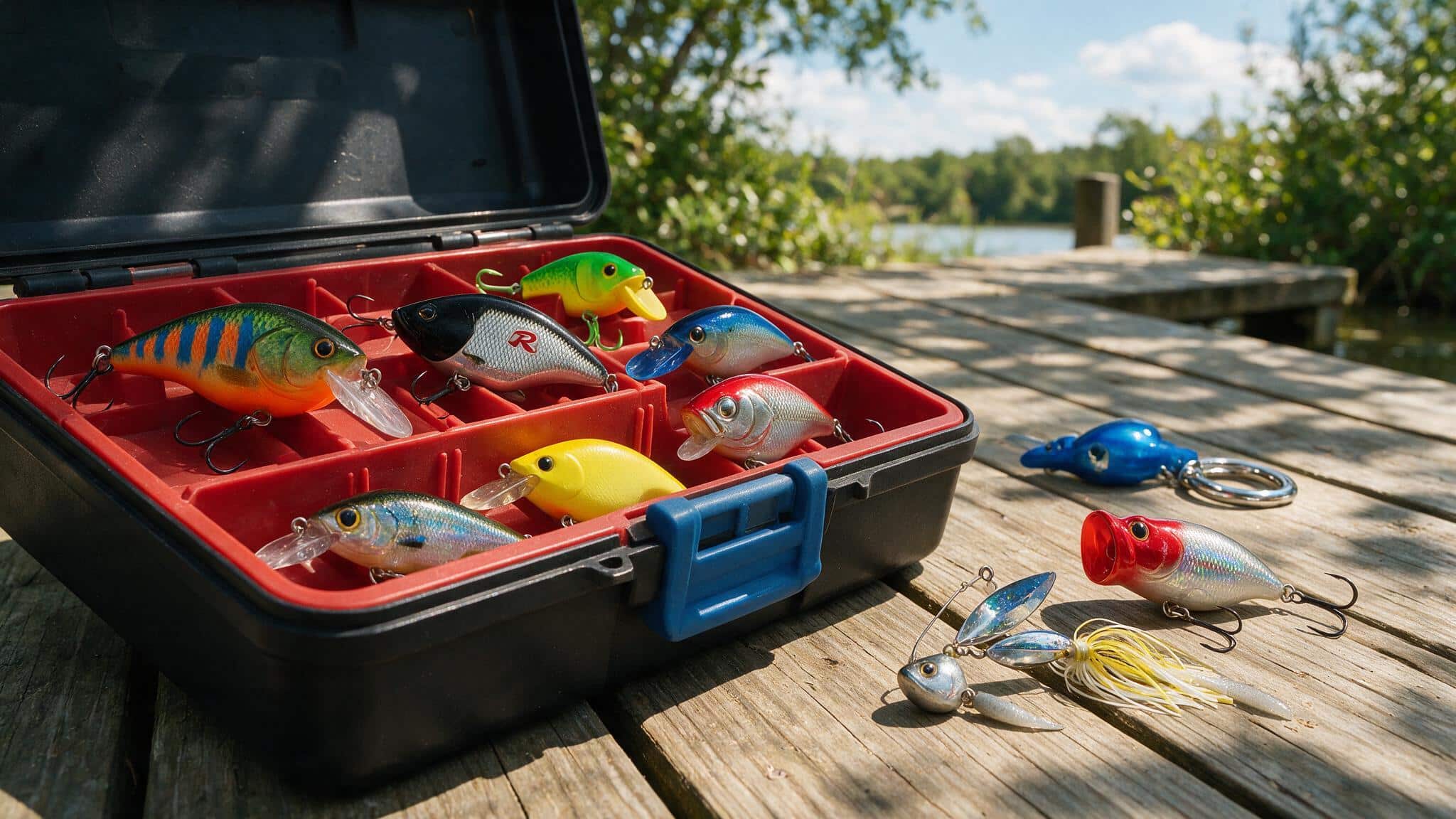
Walk into any tackle shop and the bass fishing lures section will take up more wall space than everything else combined. That is not an accident. Largemouth and smallmouth bass eat an enormous range of prey, from shad and crawfish to frogs and bluegill, and lure makers have spent decades building baits to imitate every one of them. This guide breaks down the main categories of bass fishing lures, when each one actually makes sense, and how to put together a starting lineup without buying one of everything in the store.
the core categories worth knowing
Bass fishing lures fall into a handful of broad families, and most experienced anglers carry something from each one. Our crankbait fishing guide covers that category in full, diving and wobbling on a steady retrieve, covering water fast and drawing reaction strikes from active fish. Spinnerbaits and chatterbaits combine flash and vibration, useful in stained water or around cover where bass cannot get a clean look at the bait. Our spinnerbait fishing guide covers that presentation in its own right. For a deep look at that category, our chatterbait fishing guide and best chatterbaits picks cover it in detail.
Topwater lures work the surface and produce some of the most exciting strikes in freshwater fishing, especially early and late in the day. Soft plastics, worms, craws, and stick baits, probably account for more bass caught each year than every other category combined, and our soft plastic baits guide covers rigging and selection in full. Jigs fish slow and heavy along the bottom or through cover, a favorite for bigger, less aggressive fish. Our jig fishing for bass guide covers presentation and rigging in full. Our swimbait fishing guide covers that range, from small paddle-tails to oversized trout imitations built to target trophy-class bass.
matching lures to water conditions
Water clarity and cover type matter more than the calendar when picking bass fishing lures. In clear water, natural colors and finesse presentations, drop shots, shaky heads, subtle jerkbaits, tend to outfish anything loud or flashy, because bass get a good long look before committing. In stained or muddy water, the opposite is true. Vibration and flash from spinnerbaits, chatterbaits, and lipless crankbaits help fish find the bait when they cannot see it clearly. Heavy cover like grass mats and laydowns calls for baits that come through weeds without fouling, frogs, punch rigs, and weedless jigs all fit that job. Open water and rock points favor moving baits like crankbaits and swimbaits that cover ground quickly.
seasonal patterns that actually hold up
Bass behavior shifts enough through the year that lure choice should shift with it. In spring, as fish move shallow to spawn, moving baits like spinnerbaits and shallow crankbaits around staging areas produce well, and soft plastics take over once fish are bedded and need a slow, non-threatening presentation. Summer often pushes bass deeper or into shade, where jigs, deep crankbaits, and slowly fished worms hold up better than fast reaction baits, though an early morning topwater bite can still be excellent before the sun gets high. Fall brings fish back shallow to chase baitfish, which is when reaction baits like lipless crankbaits and swimbaits shine. Winter slows everything down, and finesse soft plastics fished painfully slow near deeper structure usually outproduce anything else.
building a starting lineup without overspending
Nobody needs fifty bass fishing lures to catch fish consistently. A reasonable starting set covers a handful of jobs: one crankbait that dives to six or eight feet, a spinnerbait or chatterbait for stained water, a bag of Texas-rigged worms or craws, a topwater walking bait, and a jig for slow, deliberate fishing around cover. From there, color and size variations matter more than adding whole new categories. Our bass fishing lures buyer’s guide goes through specific picks in each category if you want a shopping list instead of a framework, and our guide to bass fishing gear you actually need covers rods, reels, and line to match.
mistakes anglers make with lure selection
The biggest mistake is treating every bass fishing lure as interchangeable and fishing the same three baits regardless of conditions. Water clarity, cover, and season all point toward different tools, and ignoring that costs bites. Another common error is fishing reaction baits too fast in cold water, when bass metabolism has slowed down and a fast retrieve just gets ignored. Buying based on how a lure looks on a shelf rather than what it is built to do wastes money too. A lure that looks incredible sitting still might do nothing useful once it hits the water. For the fundamentals of bass behavior and seasonal movement that all of this lure selection depends on, see our bass fishing complete guide.
Most anglers settle into two or three go-to bass fishing lures and lean on them too hard. That is fine once you know your water well, but it is worth forcing yourself to fish something unfamiliar every few trips. Some of the best patterns I have stumbled into on my local lakes came from tying on a bait I almost did not bring.