Walk into any tackle shop and the bass aisle alone can run twenty feet of wall space. None of that means you need twenty feet of gear to catch bass. A handful of items cover the vast majority of situations on the water, and most of what’s stacked around them is either a specialist tool for one narrow scenario or a duplicate of something already sitting in your box.
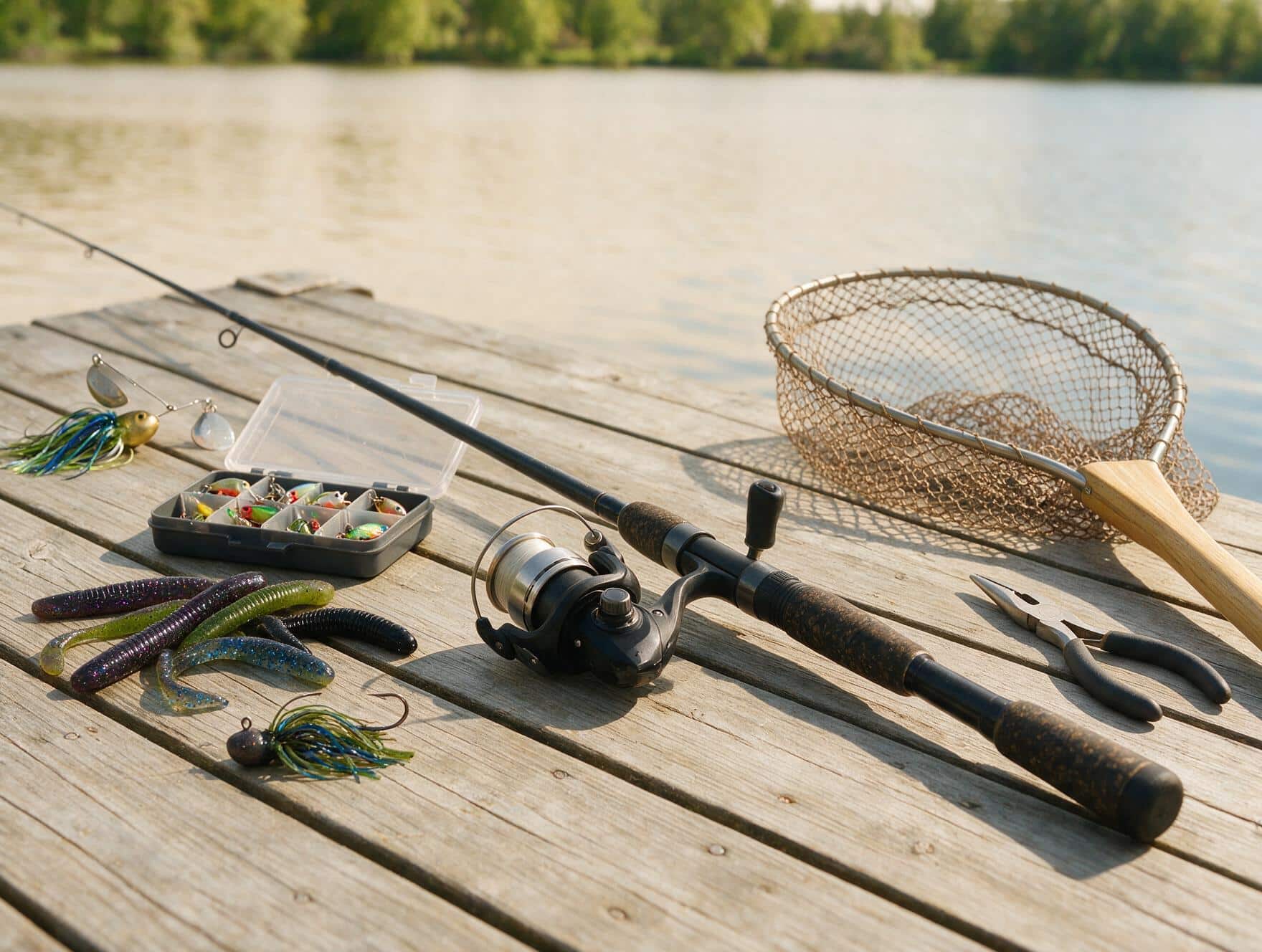
the rod and reel: one setup, not three
A medium-power, fast-action spinning rod between 6’6" and 7′ paired with a 2500 to 3000-size reel handles most bass fishing you’ll do: docks, weed lines, points, rocky banks. If you already own the combo from a beginner setup, it works fine for bass too. Once you’re fishing heavier cover or bigger baits, a 7′ medium-heavy baitcasting setup earns its keep, mostly because a baitcaster gives you more control casting heavier lures accurately into small gaps in cover. Action matters here too: a fast-action tip loads up quickly on a hookset, which matters with the single hooks on most soft plastics and jigs. You don’t need both a spinning and baitcasting setup to start. Pick one, learn it well, and add the second once you know exactly what it needs to do that your first one can’t.
line: fluorocarbon and braid cover almost everything
Fluorocarbon in 10 to 14 lb test is the default choice around clear water and finesse presentations, since it sinks and is close to invisible underwater compared to mono. Braid in 30 to 50 lb test earns its place fishing heavy vegetation or wood, where its lack of stretch and abrasion resistance let you horse a fish out before it wraps you around a branch. Plenty of anglers run a fluorocarbon leader off braid for the visibility advantage near the lure. Straight monofilament still has a place for topwater baits, where its buoyancy actually helps the lure sit right on the surface, but it’s not the main line you build a bass setup around anymore.
five lures that cover almost every situation
You don’t need forty colors of the same bait. A soft plastic worm in green pumpkin or black-blue, rigged on a Texas rig, gets bass out of cover in almost any water clarity. A quarter to three-eighths ounce spinnerbait covers water fast and works in murky conditions where bass are hunting by vibration more than sight. A jig in the same green pumpkin or black-blue range mimics a crawfish and is close to unbeatable around rock and wood. A lipless crankbait covers the middle of the water column fast, especially early in the season before vegetation fills in. A walking topwater bait draws reaction strikes at dawn and dusk when bass are shallow and aggressive. Adjust color with water clarity more than with confidence: natural, translucent colors in clear water, darker solid silhouettes in stained or muddy water. That’s five lure types, a handful of colors between them, and they’ll outfish a box stuffed with forty options you never developed confidence in.
terminal tackle: the stuff in the bottom of the box
Offset worm hooks in 3/0 to 5/0 cover most soft plastic rigging. Bullet weights from 1/8 to 1/2 ounce handle Texas rigs across most depths and cover types. A handful of size 6 to 4 barrel swivels keep line twist under control on retrieved baits like spinnerbaits. None of this is exciting to buy and none of it gets its own end-cap display at the front of the store, but running out of 4/0 hooks mid-trip will end a good bite faster than any lure decision will.
the net, the pliers, and the sunglasses
A rubber-coated landing net protects a bass’s slime coat far better than nylon mesh, which matters if you practice catch and release, as most bass anglers do most of the time. A pair of split-ring pliers with a built-in line cutter handles hook removal, split ring changes, and cutting braid cleanly, which regular fingernail clippers won’t do. Polarized sunglasses might be the single cheapest upgrade in this whole list: they cut surface glare and let you actually see submerged structure, cover, and sometimes the fish itself, instead of guessing where to cast based on the bank alone. None of these three show up in most "top lures" articles, and all three get used more times per trip than most of the lures do.
what to skip when you’re starting out
Specialty crankbaits designed to dive to one exact depth range you haven’t identified a need for yet. A second or third rod and reel combo before you’ve worn out the first one. Line heavier than the situation calls for, on the theory that heavier is always safer; it isn’t, it just costs you bites in clear water. And a tackle box organized by color instead of by rig type, which sounds minor until you’re standing in a boat trying to find your Texas rig hooks among forty colors of the same three lure types.
what actually matters
One rod and reel matched to the water you fish most, five lure types instead of five colors of everything, hooks and weights you don’t run out of mid-trip, and a net, pliers, and sunglasses that protect the fish and help you actually see what you’re fishing. Everything past that is optimization for a specific situation, not a gap in a starter setup. Build the basics first. The specialist gear makes a lot more sense once you’ve fished enough to know exactly what problem you’re solving with it.