Not all chatterbait fishing lures are built the same, and the differences show up exactly when you need the bait to perform, mid-retrieve, blade thumping, fish closing in. I learned that the hard way after a cheap blade bent out of true after a dozen casts and started spinning instead of vibrating. It still caught fish, technically, but nowhere near as many as it should have. Buying chatterbait fishing lures with the right specs matters more than most anglers assume before they’ve been burned once.
what separates a good chatterbait from a bad one
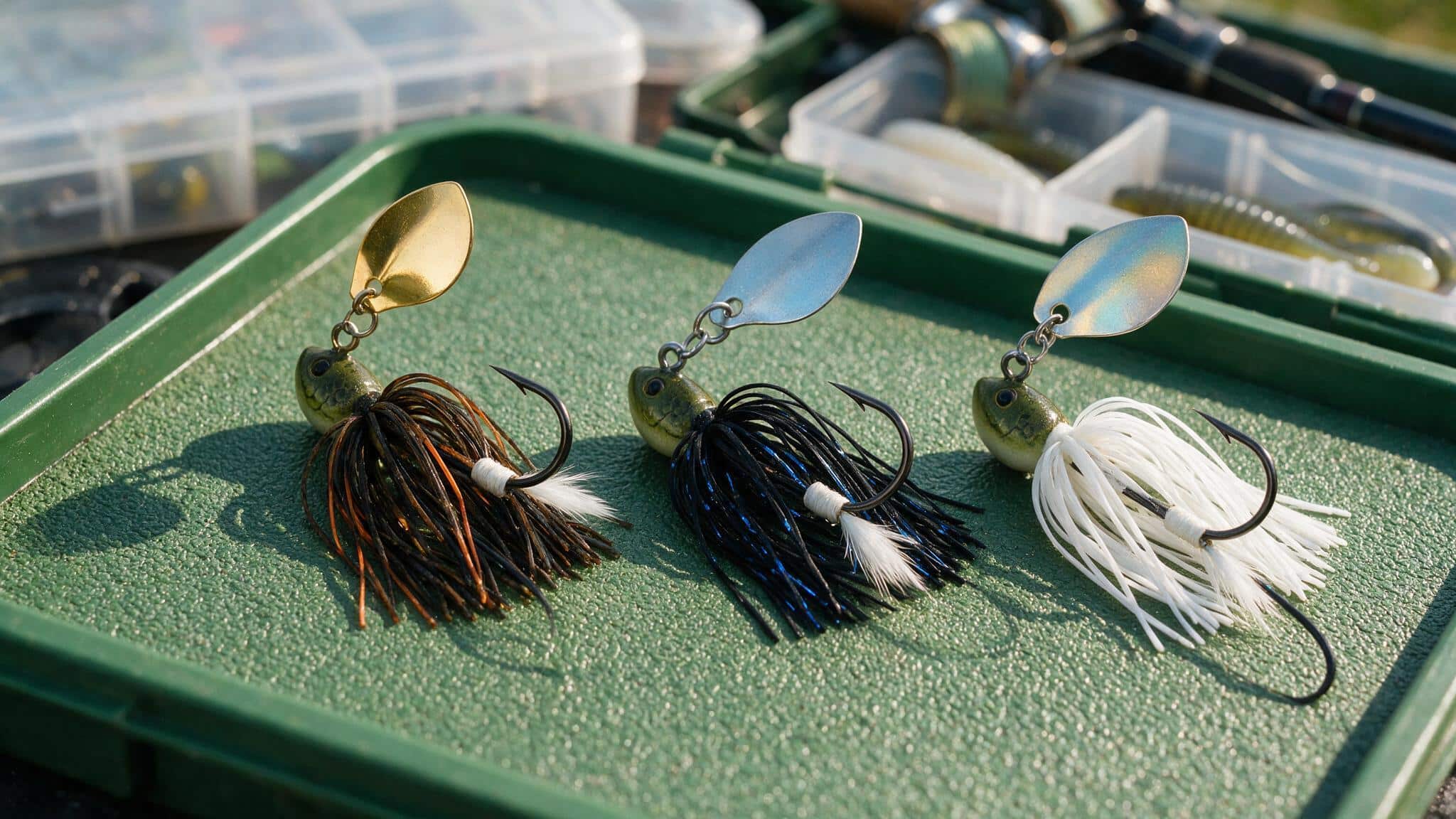
Three things determine whether a chatterbait performs: the blade, the hook, and the skirt collar. Get any one of them wrong and the bait either fishes poorly or falls apart faster than it should.
The blade needs to be stamped from decent gauge steel and attached with a strong, tight hinge point. A blade that’s too thin bends after contact with rock or wood, and once it’s bent, the vibration pattern changes and the bait starts spinning instead of wobbling. Hold a chatterbait up before buying and check that the blade sits flush and moves freely without excess play at the hinge.
The hook is where cheap chatterbait fishing lures fail most often. A thin wire hook bends open on a big fish or straightens out during a hard hookset in heavy cover. Look for a heavier gauge, wide-gap hook, ideally from a known hook manufacturer rather than a generic house brand welded onto an otherwise decent head. This is the single component I’d never compromise on, since it’s the only thing standing between a good hookset and a fish coming unbuttoned boatside.
The skirt collar, the band holding the silicone strands to the head, needs to grip tight enough that the skirt doesn’t slide or spin during a hard cast or a fish fighting against it. A loose collar is a small thing until it isn’t, usually right as a decent fish is coming to the net.
budget versus premium chatterbait fishing lures
Price does correlate with quality here, but not in a straight line. The jump from bargain-bin chatterbaits to a mid-tier option, usually five to eight dollars, buys a noticeably better hook and a blade that holds its shape. Past that point, into premium ten-plus dollar baits, you’re mostly paying for finish quality, skirt material, and brand reputation rather than a meaningfully different fishing performance.
My honest take: buy mid-tier chatterbait fishing lures in bulk rather than a handful of premium ones. You will lose some to snags no matter how careful you fish grass and wood, and having six or eight decent ones beats owning two expensive ones you start babying instead of fishing confidently through the cover where they actually produce.
blade shape and how it changes the action
Most chatterbait blades fall into two rough shapes. A more rounded, cupped blade throws a wider thump and more water resistance, which works well in dirty water and slower retrieves where you want maximum vibration. A narrower, more tapered blade gives a tighter wobble at higher retrieve speeds, useful for covering water fast or fishing clearer conditions where a subtler presentation gets more bites.
Neither shape is universally better. Match it to the water you’re fishing most, and if you fish a mix of clear reservoirs and stained ponds, it’s worth owning a few of each rather than committing to one blade style across every situation.
weed guards: worth the extra few dollars
Some chatterbait fishing lures come with a thin wire or hard plastic weed guard in front of the hook point, and it’s worth paying a little more for one if you fish grass or wood with any regularity. The guard deflects the hook point off vegetation on the retrieve, cutting down on fouled baits that come back with a strand of grass hung on the hook instead of a fish. It costs a little hookset efficiency in open water, since the guard adds slight resistance on the set, so I fish an unguarded chatterbait around isolated cover and switch to a guarded one the moment I’m working through anything matted or brushy.
color selection that actually matters
Skip the twenty-color starter packs. Three colors cover the overwhelming majority of situations: a natural green pumpkin or bream pattern for clear to moderately stained water, a black and blue combination for muddy water or low light, and a white or shad pattern for imitating baitfish in open water. Everything past those three is more about angler confidence than fish behavior, and confidence is worth something, but it’s not worth a twenty-color rotation sitting mostly unused in a tackle box.
trailers and terminal tackle worth pairing
A chatterbait is rarely fished bare. Pairing chatterbait fishing lures with a paddle tail swimbait trailer, a craw imitator, or a twin tail grub changes the action enough that trailer choice deserves its own attention, which our complete chatterbait fishing guide covers in more depth. On the terminal tackle side, a solid snap or a direct line tie both work, though I’ve settled on tying direct for the slightly better feel it gives on a subtle bite.
gear that gets the most out of a chatterbait
None of this matters much without a rod and reel that can actually work the bait properly. A medium-heavy casting rod with enough backbone to rip a chatterbait through grass, paired with a baitcasting reel in a mid-range gear ratio, covers the retrieve speeds a chatterbait calls for without over-investing in gear built for a completely different technique.
putting together a starter rotation
If you’re buying chatterbait fishing lures for the first time, start with a quarter ounce and a three-eighths ounce in two or three colors, a couple of trailer styles, and a rod capable of ripping the bait through cover. That’s a functional rotation for most bass water without overspending on options you won’t use in your first season. For a broader look at how chatterbaits stack up against other categories, our buyer’s guide to bass fishing lures breaks down where they fit alongside crankbaits, jigs, and soft plastics. Buy fewer baits with better components, replace the ones that get chewed up by grass and wood, and the rotation pays for itself several times over across a season.