A chatterbait is a jig with a blade bolted to the nose, and that one detail changes everything about how it fishes. Cast a plain jig and it falls straight, mostly silent. Cast a chatterbait and the blade catches water on the retrieve, kicks the whole lure into a tight side to side wobble, and throws off vibration that bass can feel through their lateral line before they ever see the thing. That’s the entire appeal of chatterbait fishing: it gives you jig-style bottom contact with crankbait-style commotion, in one bait, on one retrieve.
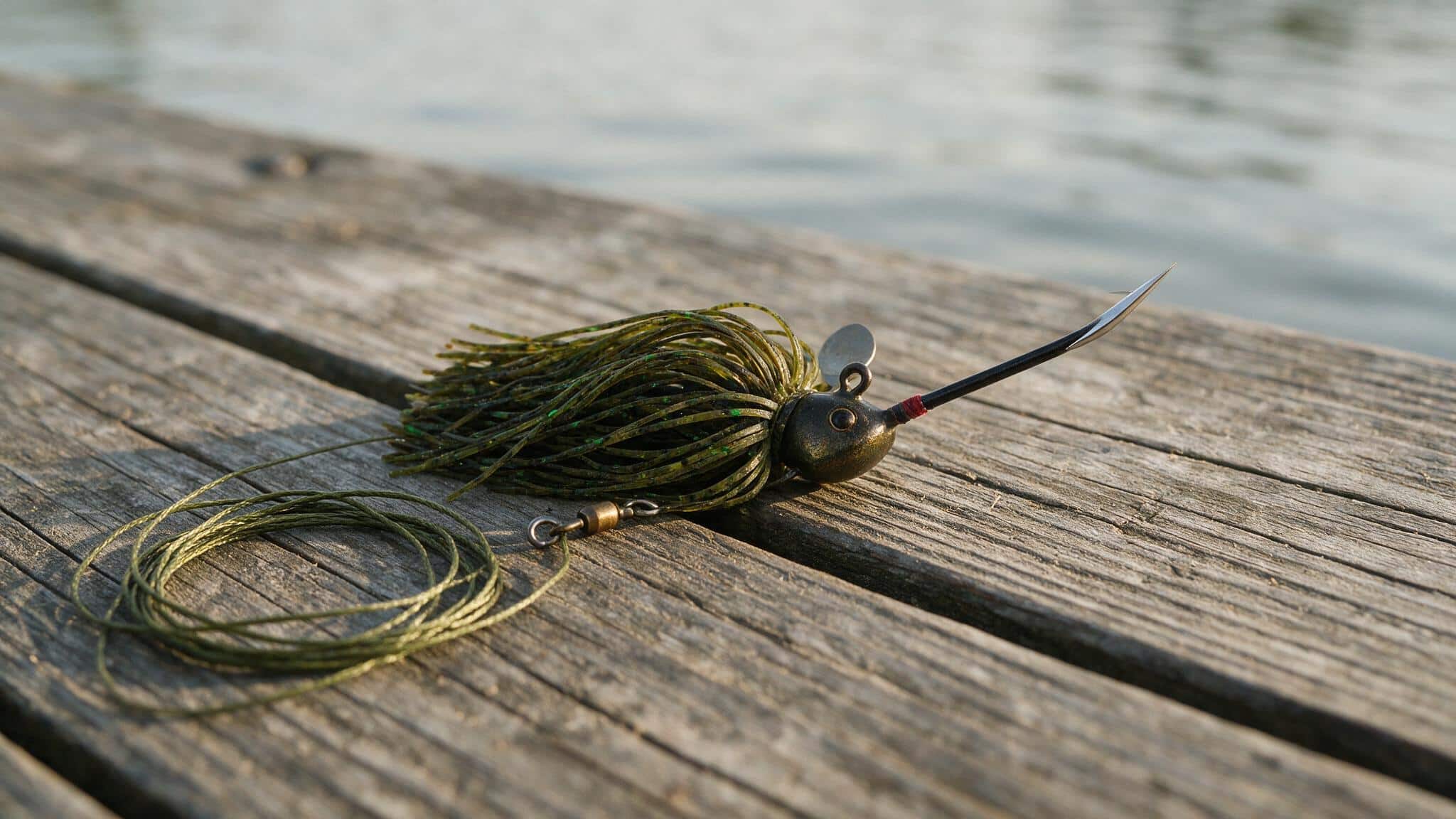
I got into chatterbait fishing almost by accident. A neighbor handed me a beat-up one out of his boat box years ago and said “just reel it, don’t overthink it,” and that turned out to be better advice than most of what I’d read online up to that point. The bait does a lot of the work itself. Your job is mostly picking the right size, the right trailer, and the right speed for the water in front of you.
what makes a chatterbait different from a spinnerbait
Both baits use a metal blade, but they’re not interchangeable. A spinnerbait’s blade spins on a wire arm above the hook, which means the lure rides with some separation between the blade and the body. A chatterbait’s blade is fixed to the jig head itself, right at the nose, so the vibration transfers straight into the skirt and trailer. That’s why chatterbaits tend to shine in stained water and around grass where a spinnerbait’s open wire frame either gets fouled or just doesn’t put off the same close-range thump.
The blade on a chatterbait also causes the whole bait to hunt slightly off a straight line during the retrieve, which is part of why bass eat it on a fairly mindless straight retrieve. You’re not working it. You’re reeling, and the bait is doing the seducing.
picking a chatterbait size and weight
Quarter ounce and three-eighths ounce cover most situations targeting largemouth in lakes and ponds. Go lighter, an eighth or three-sixteenths ounce, when you’re fishing skinny water or want a slower fall past isolated cover. Go heavier, a half ounce or more, when wind is up, you’re working deep grass edges, or need the bait down fast in current.
Blade size matters as much as head weight. A bigger blade throws more thump and more resistance, which is great in dirty water where fish need to find the bait by feel first. A smaller blade gives a tighter, subtler vibration that works better in clearer water where a bass gets a good look at the bait before committing. For specific picks across price points, our best chatterbaits guide breaks down what to actually buy.
trailers make or break a chatterbait
A chatterbait fished bare still catches fish, but a trailer changes the action enough that I rarely fish one without it. A paddle tail swimbait trailer adds extra tail kick and bulk, which is my default choice when I want the bait to look like a bream or shad cruising through cover. A twin tail grub trailer gives a slightly different vibration pattern and a bit more flash off the two tails. A straight craw-style trailer slows the fall and adds a subtler profile, which I lean on when bass seem to want something less aggressive.
Matching skirt and trailer colors matters less than tackle shop displays suggest. What matters more is silhouette and how the trailer moves in the water when you pause it, since most bites come right as the bait is falling or just restarting after a stop.
how to retrieve a chatterbait
The standard retrieve is a slow, steady reel just fast enough to keep the blade thumping and the bait ticking the tops of cover. That’s the retrieve to start with anytime you’re not sure what the fish want. From there, three adjustments cover almost every situation.
Slow rolling works when bass are sluggish, usually in cold water or right after a front, and it means reeling just fast enough to keep the bait from sinking, letting it bump stumps and brush on the way through. Ripping works in matted grass, where you rip the chatterbait free of the vegetation and let it fall on a semi-slack line, which triggers reaction strikes from fish sitting under the mat. A stop and go retrieve, reeling steadily then pausing for a second or two, works when fish are following but not committing, since the pause is usually where the strike happens.
gear for chatterbait fishing
A medium-heavy to heavy casting rod with a moderate to fast tip handles chatterbait fishing better than a spinning setup once you’re throwing anything over a quarter ounce. The rod needs enough backbone to rip the bait through grass but enough give in the tip to keep the hook pinned once a fish inhales it, since chatterbaits are notorious for pulling free on a stiff hookset. If you’re still shopping for a reel to pair with that rod, a baitcasting reel with a mid-range gear ratio keeps you fast enough for a stop and go retrieve without sacrificing cranking power on a hookset.
Line choice depends on cover. Straight fluorocarbon in the 14 to 17 pound range works around isolated cover and open water because it sinks and helps keep the bait down. Braid with a fluorocarbon leader, or straight heavy braid in matted grass, gives you the strength to horse a fish out before it wraps around vegetation. I’ve lost more fish to line stretch in heavy cover than to any other single mistake, and switching to braid around grass fixed most of that for me. If you’re not sure which line actually fits the water you fish, that decision matters more than most anglers give it credit for.
when chatterbait fishing works best
Pre-spawn is the classic chatterbait window, when bass are moving shallow and aggressive but the water is still cold enough that a slow presentation with built-in vibration outperforms a reaction bait like a crankbait. Stained water after rain is another prime window, any time of year, since the vibration lets fish find the bait when visibility drops. I also reach for one anytime I’m fishing new water fast, trying to locate fish before committing to something slower like a soft plastic worked one piece of cover at a time.
It’s not a bait that ever fully replaces a good spinnerbait, a jig, or a soft plastic worm rotation, but it fills a specific gap between them. If you fish bass water with any regularity and don’t have one tied on somewhere in the rotation, that’s the gap in your box worth filling first. Round out the rest of your box with the basics covered in our bass fishing gear guide, and chatterbait fishing turns into one of the easier ways to cover water and find active fish without overthinking every cast.