Soft plastic baits are probably the single most useful category of lure in a modern tackle box. They are cheap, they come in more shapes and colors than anyone could fish through in a lifetime, and they catch fish that ignore hard baits without a second look. If you fish for bass, walleye, or panfish on light tackle, there is a good chance a bag of soft plastics is already sitting in your boat somewhere, half open, smelling faintly of garlic or salt. This guide covers what soft plastic baits actually are, how the main styles differ, how to rig them without overthinking it, and where a lot of anglers go wrong.
what counts as a soft plastic bait
A soft plastic bait is any lure molded from a flexible plastic or silicone-style compound instead of hard wood, plastic, or metal. Most are unweighted on their own and get paired with a jighead, a bullet weight, or a bare hook to get them into the water column. What makes soft plastic baits different from crankbaits or spinnerbaits is not the shape, it is the texture. Fish hold on longer because the bait feels natural in their mouth, which buys you an extra second or two to feel the bite and set the hook. That single trait is why soft plastic baits catch fish that spit out hard lures instantly.
the main styles you will actually use
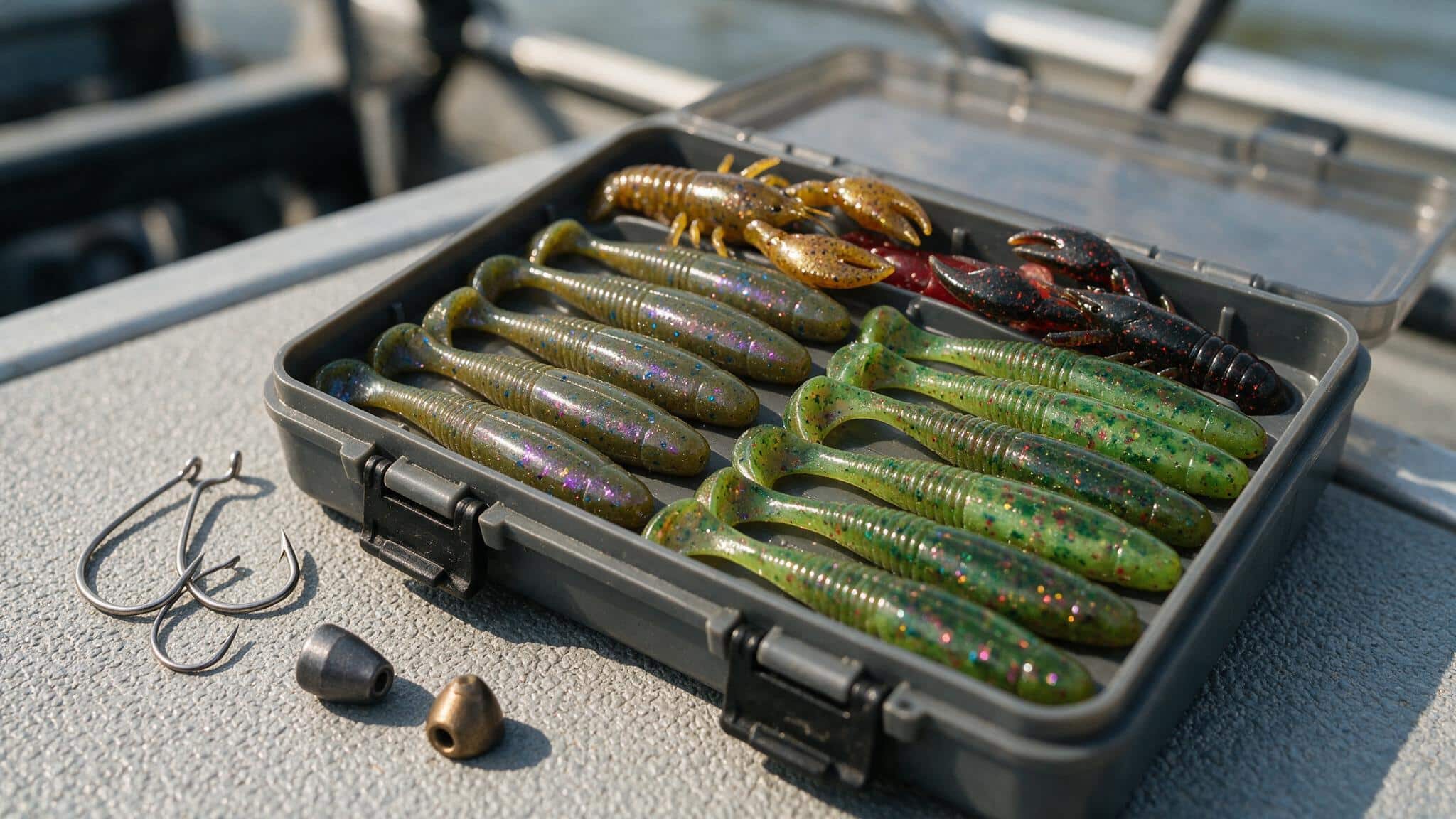
There are dozens of soft plastic shapes on the market, but most fall into a handful of families. Straight-tail and ribbon-tail worms are the oldest style and still catch as many fish as anything newer, especially on a Texas rig dragged along the bottom. Creature baits and craws imitate crawfish and other bottom-dwelling prey, and they work well around rock and wood where a smallmouth or largemouth is used to eating something with legs. Stick baits, the Senko-style baits, do almost nothing on their own and that is the point. Rigged weightless, they fall with a slow, twitching action that triggers strikes when nothing else will. Paddle-tail swimbaits give off vibration and flash on a straight retrieve, closer to a soft-bodied crankbait than a worm. Grubs and tubes round things out, useful for finesse fishing and for smallmouth especially.
rigging: how to actually get them in the water
The rig matters as much as the bait shape. A Texas rig, a bullet weight pegged or free-sliding above an offset worm hook, is the standard setup for fishing soft plastic baits through cover without constantly snagging. A wacky rig, hook through the middle of a stick bait, gives a totally different fall and works best in open water or around docks. Drop shot rigs hang the bait above the weight instead of below it, which keeps it in the strike zone longer when fish are suspended or picky. Carolina rigs use a sliding weight well up the line from the bait, good for covering large flats fast. None of these are hard to tie. The mistake most people make is picking one rig and using it for everything, when each one solves a different problem.
color and size, without the guesswork
Water clarity should drive color choice more than anything else. In clear water, natural colors like green pumpkin, watermelon, and shad patterns work because bass can actually see the detail. In stained or muddy water, darker colors like black-blue or junebug create a bolder silhouette that fish can find by feel and vibration rather than sight. A little chartreuse on the tail can help too when visibility drops. Size should roughly match what the fish are already eating. A lake full of three-inch shad does not need a ten-inch worm, and a lake with big bluegill and crawfish can handle a bulkier bait than most anglers assume. When bites go quiet, downsizing the soft plastic bait, not the fishing spot, is usually the first thing worth trying.
matching gear to the rig
Soft plastic baits do not need specialized rods so much as rods matched to the rig. Light and medium-light spinning gear with fluorocarbon line works well for wacky rigs, drop shots, and finesse presentations where feeling the bite matters more than horsepower. Medium-heavy to heavy baitcasting setups make more sense for Texas-rigged baits punched into heavy cover, where you need the backbone to pull a fish out of grass or brush. Braided main line with a fluorocarbon leader is a common compromise for anglers who want low stretch and abrasion resistance without spooking fish in clear water.
mistakes that cost bites
The most common mistake is fishing a soft plastic bait too fast, especially on a Texas rig, when the whole appeal of the bait is a slow, natural fall. Going too heavy on the weight out of habit is another one. It makes the bait drop faster than a real crawfish or worm ever would. Leaving the hook point buried too deep in weedless rigging is a real problem too. It keeps the bait weed-free but it also costs hookups, so it is worth checking that the point rides just under the plastic’s surface instead of fully covered. If you want specific bait and color picks instead of general categories, our best soft plastics for bass guide covers what to actually buy, and our bass fishing lures buyer’s guide rounds up picks across every category, not just plastics. For finesse-specific rigs like drop shots and shaky heads, see our finesse fishing lures guide.
None of this needs to be complicated. A few bags in green pumpkin and black-blue, a handful of jigheads and offset hooks in different weights, and an afternoon spent rigging them different ways until one starts getting bit, that is most of the learning curve right there. Soft plastic baits reward patience more than gear spending, and they are usually the first thing worth tying on when a moving bait stops working.