Largemouth and smallmouth bass pull more anglers to the water than any other freshwater species in North America. They live in ponds, reservoirs, rivers, and natural lakes in nearly every state, they tolerate a wide range of water conditions, and they reward anglers who study their behavior instead of just casting and hoping. This guide covers what actually matters: how largemouth and smallmouth differ, where bass sit through the seasons, which gear and lures earn a permanent spot in the boat, and the mistakes that keep casual anglers from catching more fish.
largemouth vs. smallmouth: two different fish with different rules
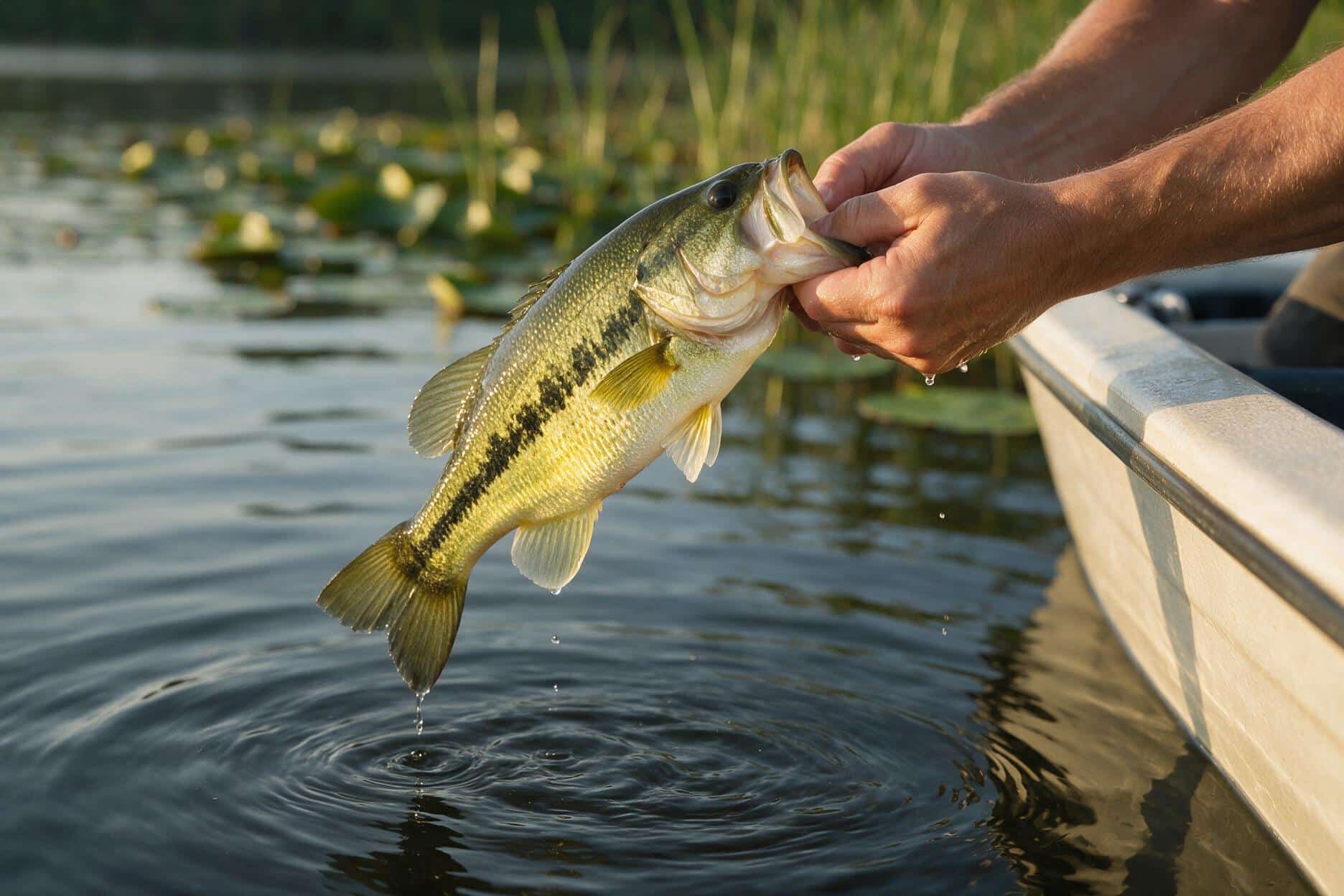
Treating largemouth and smallmouth as the same fish is probably the single biggest reason anglers struggle when they switch waters. Largemouth bass favor warm, shallow, cover-heavy water. They sit in weed beds, laydowns, docks, and thick brush, and they ambush prey rather than chase it far. A largemouth will often let a bait sit for a full second before committing, and they tend to hit hard and stay close to structure right after the strike.
Smallmouth bass want cooler, clearer, harder-bottomed water. Rock, gravel, and current are what smallmouth relate to, and they are far more willing to chase a bait a long distance before eating it. A smallmouth pulled off a rock hump in 15 feet of water fights differently too. Pound for pound, most anglers who have caught both will say smallmouth pull harder and jump more.
The practical takeaway: match your approach to the fish in front of you. Slow down and go weedless for largemouth in cover. Speed up and cover more water with reaction baits for smallmouth on rock and current.
where bass live through the season
Bass are not spread evenly across a lake at any given time of year. Water temperature drives almost everything about where they sit and how aggressively they feed. In cold water, bass metabolism drops and they hold in deeper, more stable water near their summer or wintering structure. As water warms into the 50s and low 60s, fish push shallow to feed and eventually to spawn. Through summer they often split into two groups: some stay shallow around thick cover in low light, others move out to deeper offshore structure like humps, ledges, and creek channels once the sun gets high. Fall triggers a feeding push as fish key on baitfish before winter, then everything slows down again as temperatures drop.
None of this is exact science on any single day. Wind, cloud cover, and recent weather swings shift fish location by several feet or several yards within hours. What stays consistent is the underlying logic: find the temperature range and structure combination the fish want for that season, and you will find concentrations of bass rather than isolated singles.
rods, reels, and line for bass
Gear choice matters less than technique, but it still matters. A rod that is too soft won’t set the hook through a jig in heavy cover, and one that is too stiff will tear hooks out of a fish’s mouth on a reaction bite with treble hooks. Medium-heavy, fast-action casting rods in the 6’6" to 7’3" range cover the majority of bass techniques, from worms to jigs to swimbaits. Spinning gear earns its place for finesse work: drop shots, small jigs, and light Texas rigs where a low-visibility presentation matters more than raw power.
Line choice follows the same logic as the technique. Fluorocarbon sinks and has less stretch, which suits finesse presentations and clear water. Braid excels in heavy cover where you need to horse a fish away from structure, or as a base under a fluorocarbon leader. Monofilament still has a place on topwater baits, where its buoyancy and stretch keep treble hooks pinned during a violent strike.
Our best bass fishing gear guide breaks down specific rod, reel, and line combinations by technique in more depth, our bass rod guide goes deeper on matching action and power to technique, and the general fishing rod buying guide covers action and power ratings if those terms are still unfamiliar.
lure selection: what actually catches fish
Every tackle shop sells hundreds of bass lures, and most anglers own far more than they need. A handful of categories cover nearly every situation. Soft plastics are the backbone of practical bass fishing: Texas-rigged worms and creature baits fish weedless through cover, and a drop shot puts a soft plastic in front of suspended or finicky fish with minimal disturbance. Jigs, particularly a flipping jig with a trailer, catch the biggest largemouth in a lake more consistently than almost any other bait once fish are locked onto heavy cover.
Crankbaits and spinnerbaits cover water fast and trigger reaction strikes from active fish, which makes them the right choice for searching new water or fishing stained conditions where fish rely on vibration and flash more than sight. Topwater baits are situational but produce some of the most memorable strikes in the sport during low-light windows in warm water.
The lure is rarely the actual problem when a day is slow. Presentation, depth control, and location account for far more missed fish than lure selection does.
techniques that catch more bass
Slow down. That is the single piece of advice that improves most anglers’ results the fastest, particularly with largemouth around cover. A worm or jig fished too fast never gives a fish enough time to find and commit to the bait. Letting a bait sit still for three or five seconds after it lands, especially after contact with a piece of cover, converts follows into strikes far more often than constant motion does.
Pay attention to your line for bites you can’t feel. Bass often inhale a soft plastic on the fall, and the only sign is the line twitching, jumping, or moving off to the side. Anglers who only set the hook when they feel a thump miss a large share of their opportunities.
Match retrieve speed to water temperature and clarity. Cold water calls for a slower presentation across the board. Stained water rewards baits with more vibration, like spinnerbaits and lipless crankbaits, since fish are reacting to feel and sound more than sight.
reading structure and cover
Bass relate to something: a change in depth, a rock pile, a weed edge, a laydown, a dock post, a creek channel bend. Fishing open water with nothing nearby wastes time on most lakes. Learn to identify the edges: where deep water meets shallow, where a weed line ends, where hard bottom transitions to soft. These transition zones concentrate fish because they offer both an ambush point and a quick escape to different depth or cover.
A decent understanding of knots pays off here too, since fishing tight to wood and rock means losing gear on snags and needing rigs that resist abrasion. Our fishing knots guide and fishing rigs guide cover the connections and setups that hold up when a big fish buries itself in cover.
seasonal patterns: spring through winter
Spring is spawn season, and bass move shallow onto flats, coves, and any protected area with a hard bottom near deeper water. Sight fishing for bedding bass is productive but polarizing among anglers, since a hooked bed fish sometimes abandons the nest.
Summer pushes fish into a daily pattern: shallow and active in early morning and evening, deeper and less aggressive once the sun is high. Offshore structure fishing becomes the more consistent approach for anglers willing to learn electronics and deep presentations.
Fall brings fish shallow again to chase baitfish schools, and this period often produces the best numbers of the year on reaction baits. Winter slows metabolism to a crawl. Fish group tightly in deep, stable water and want a slow, precise presentation right in their face rather than a bait they have to move to intercept.
common mistakes that cost you fish
Fishing too fast is the most common mistake, covered above, but a few others show up constantly. Anglers fish the wrong depth for the season, staying shallow in the heat of summer afternoons when fish have already moved out, or fishing deep in spring when the bite is shallow. Many anglers also fish with line and hooks that are simply too old or too light for the cover they’re fishing, and lose fish that were hooked cleanly.
Confidence in a small number of baits beats a huge, disorganized tackle box. Anglers who fish the same five or six lures across hundreds of trips build the feel for bites and structure that a rotating collection of novelty baits never builds.
the bottom line
Bass reward anglers who slow down, pay attention to water temperature and structure, and fish a small set of proven lures with confidence rather than chasing the newest bait on the shelf. Start with a jig or Texas rig around visible cover, learn to read the line for bites you can’t feel, and adjust depth before you second-guess your lure choice. That approach catches more bass than any single piece of tackle ever will.