I started tying and pouring my own lures three winters ago, mostly out of frustration. I was losing eight-dollar crankbaits to submerged brush on my local reservoir faster than my budget could handle, and buying from the same three or four color patterns everyone else uses felt boring. So I ordered a stack of lure making supplies off a hobby site, cleared off half my garage workbench, and ruined a fair amount of wood and resin before anything I made actually caught a fish.
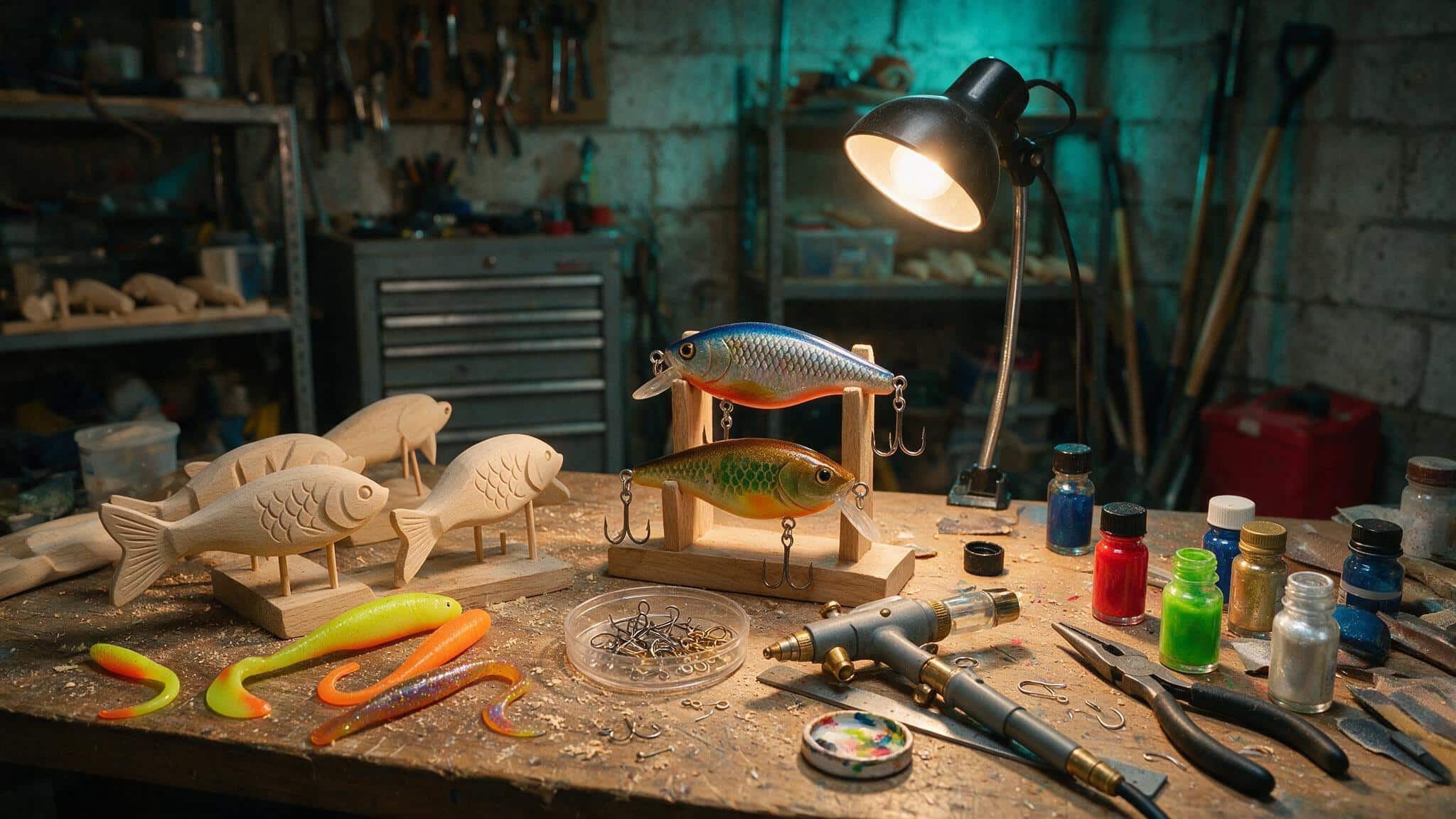
That’s the honest starting point for this guide. I’m not a lure designer and I don’t run a tackle company. I’m an engineer by training who fishes on weekends, and lure making turned out to be the part of the hobby that scratched the same itch as my day job: small technical problems with a physical result you can tie on a line. If you’re standing at the edge of this hobby wondering what lure making supplies actually matter versus what’s just marketing, here’s what I’ve learned by making a mess of my garage.
why bother making your own lures
The money argument gets made a lot and it’s mostly true after your first dozen lures, once the tools are paid off. But the real reason I stuck with it is control. Store shelves carry the ten or twelve color patterns that sell best nationally. Your local water might respond better to something nobody stocks. When I matched a hand-poured soft plastic to the exact shade of the crawfish in my home lake, I started getting bites on days my usual bass fishing lures were getting ignored. That’s not a guarantee it’ll work for you. It’s just the reason the hobby stuck for me.
the core lure making supplies list
Ignore the extensive kits marketed as "everything you need." Most of them pad the box with stuff you won’t touch for months. Here’s what actually sees regular use on my bench.
For hard baits, balsa wood is the classic starting material because it’s forgiving to shape and cheap to ruin. Basswood is denser and holds screw eyes better, which matters once you’ve split a few balsa bodies trying to seat hardware. Some beginners skip carving entirely and start with pre-cut, unpainted crankbait blanks, a reasonable shortcut if you want to learn painting before you learn shaping.
Soft plastic work is a separate track and honestly the cheaper one to start. You need plastisol, liquid dye, glitter, and a pour mold. A basic worm mold and a pound of plastisol cost less than a tackle box of name-brand soft plastics, and refills are inexpensive once you own the mold. If you’ve read our guide to soft plastic baits, you already know how much color and action variation exists in this category. Pouring your own is how you get access to all of it instead of whatever a shelf happens to carry that week.
Hooks, split rings, and screw eyes should come from a specialty supplier rather than a general tackle shop, bought in bulk. You’ll go through more than you expect, especially screw eyes, since the first several you install tend to strip out of soft balsa before you get the technique down.
For paint and finish, you want airbrush paint made for lures, a cheap airbrush and compressor setup, or paint pens if you’re not ready for that investment yet, plus a dip-and-turn epoxy or clear coat to seal everything. The clear coat matters more than people think. An unsealed paint job chips on the first submerged rock, and you’re back to bare wood by your third trip out.
As for tools, a hobby knife, sandpaper in a few grits, a drill for hook hangers, and pliers cover almost everything. None of it needs to be lure-specific. I use the same needle-nose pliers from my tackle bag for building and for fishing.
kits versus buying piece by piece
Starter kits aren’t a scam, but they’re built for someone testing the waters, not someone planning to stick with it. I bought a forty-dollar kit early on and used maybe half the contents before switching to buying plastisol and blanks separately in bulk. If you’re fairly sure this is going to become a habit, skip the kit. You’ll spend slightly more upfront on individual supplies and noticeably less per lure after that.
a first project that won’t discourage you
Don’t start with a topwater popper or anything that needs precise weighting for balance. Start with a soft plastic stick bait instead. The mold is cheap, the plastisol forgives mistakes, and a slightly lopsided pour still catches fish because the action doesn’t depend on the kind of symmetry a hard bait’s swimming motion needs. My first batch of pours looked like melted crayons. They still caught bass that spring.
mistakes i made so you don’t have to
I overheated my first batch of plastisol and it came out the color of weak tea instead of the chartreuse I was going for. I also learned the hard way that pouring indoors without ventilation gives you a headache that lasts the rest of the day, so do this in a garage or outside with the door open. On the hard bait side, I drilled a hook hanger too close to the belly edge of a balsa blank and split the wood in half the first time a fish hit it.
None of this cost much to fix. That’s the appeal of building your own lure making supplies inventory piece by piece instead of buying one expensive kit up front: the failures stay cheap enough that you keep going instead of quitting after the first bad batch.
is it worth the time
Depends what you’re after. If you just want more lures in your box, buying is faster and probably cheaper for the first year or two. If you want to understand why a bait swims the way it does, or you want colors nobody else on your lake is throwing, the bench time pays off in ways that are hard to put a price on. I still buy most of my crankbaits. I make almost all of my soft plastics now, partly because it’s cheap and partly because I like having an excuse to spend an evening in the garage instead of in front of the television.