A rig, in fishing, is any terminal setup built from multiple separate pieces, hook, weight, swivel, leader, rather than a lure tied straight to the line. The word covers a lot of ground: a drop shot rig and a Sabiki rig do almost nothing alike, but both count as rigs. What they share is that the pieces are chosen and assembled for a specific job, not molded together at the factory the way a crankbait is.
Picking the right rig matters more than picking the right lure in a lot of situations. A soft plastic worm fished on the wrong rig for the cover you are in will get stuck, ignored, or fished at the wrong depth no matter how good the worm is. The rig decides how the bait behaves; the bait itself is often secondary.
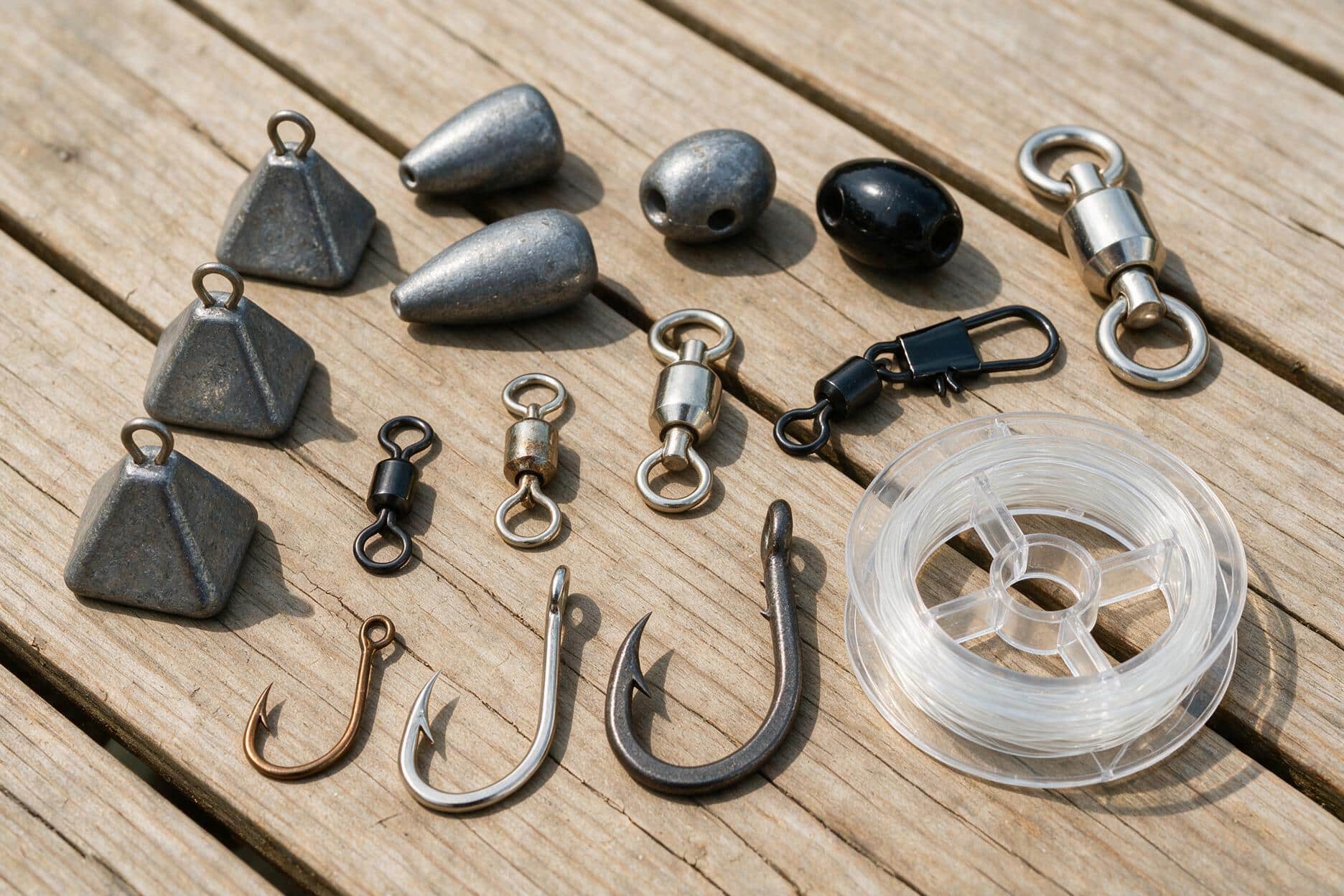
rigs for bottom contact
These are built to keep a soft plastic or bait near or on the bottom while staying relatively snag-resistant, which matters most around rock, timber, and grass.
The Carolina rig separates the weight from the bait with a leader, letting the bait float up and move naturally while the weight stays down and telegraphs bottom composition through the line. It covers water fast and works well for searching a large flat or point for active fish.
The drop shot rig does the opposite: the weight hangs below the hook instead of above it, and the bait sits suspended at a fixed height off the bottom while you work it in place with the rod tip. It is a finesse presentation built for pressured fish and precise vertical fishing over specific structure, not for covering water quickly.
Both rigs use a Carolina- or drop-shot-specific knot for the hook, usually a Palomar, and the leader length is the main variable worth adjusting: shorter in cold water when fish sit tighter to the bottom, longer in warm water when they range further off it.
rigs for bait and specific species
The catfish rig actually covers a handful of setups, slip sinker, three-way, and a couple of others, built around one shared problem: presenting cut bait or live bait near the bottom in current without the fish feeling resistance the moment it picks the bait up. Current speed decides which of the variations to use, not personal preference.
The Sabiki rig is not for gamefish at all. It is a string of tiny bare or feathered hooks used to catch baitfish, live bait for everything else on this list. If you fish cut bait rigs or troll live bait, a Sabiki rig is usually how that bait got caught in the first place. It gets its own guide because rigging and fishing it correctly is a different skill from anything else on this page.
rigs that imitate a school
The Alabama rig is the outlier here: a wire frame carrying four or five swimbaits at once, built to look like a small school of baitfish rather than a single lure. It is legal in most states for recreational fishing but restricted or banned in a lot of tournament formats, worth checking before tying one on for a competitive event.
A handful of other rigs work on a similar principle at a smaller scale, spinner rigs used for walleye being the most common example, running a string of blades and beads ahead of bait or a soft plastic to add flash without the bulk of a full umbrella frame.
choosing a rig for the situation
Start with what the fish are doing, not which rig looks the most interesting on the shelf. Fish holding tight to bottom structure and not actively chasing food call for a Carolina or drop shot rig, slow and precise. Fish suspended and actively feeding on schools of baitfish respond better to something like an Alabama rig that covers water and reads as a moving target. Bait fishing for catfish or anything that takes live or cut bait comes down to current speed and bottom composition more than fish behavior, which is what the different catfish rig variations are built to handle.
common mistakes across rig types
Using one rig for everything is the biggest one. An angler who fishes nothing but a Carolina rig will still catch fish, but will also leave fish on the table on days a drop shot or a bait rig would have worked better. Rigs are cheap and quick to retie; there is rarely a good reason to force one presentation on a day that is not producing.
The second is treating leader length and weight size as fixed numbers instead of starting points. Every rig in this guide has a "standard" weight or leader length quoted somewhere, and every one of those numbers is a starting point to adjust based on current, wind, and how the fish are responding that day, not a rule to follow exactly.
The third is skipping the connection knot. A leader knot that slips, or a swivel tied with the wrong knot, undoes the whole rig regardless of how well the rest of it is put together. The complete guide to fishing knots and the guide to choosing fishing line cover the connections and line choices that hold these rigs together, and are worth reading alongside any of the individual rig guides above.