The Carolina rig is one of those setups that gets called old-fashioned right up until it out-fishes everything else on the boat. It’s a bottom-contact rig built around a sliding weight ahead of a leader and hook, and it covers water other rigs can’t touch, especially when bass are holding deep or scattered over open bottom instead of sitting tight to visible cover.
what a carolina rig actually is
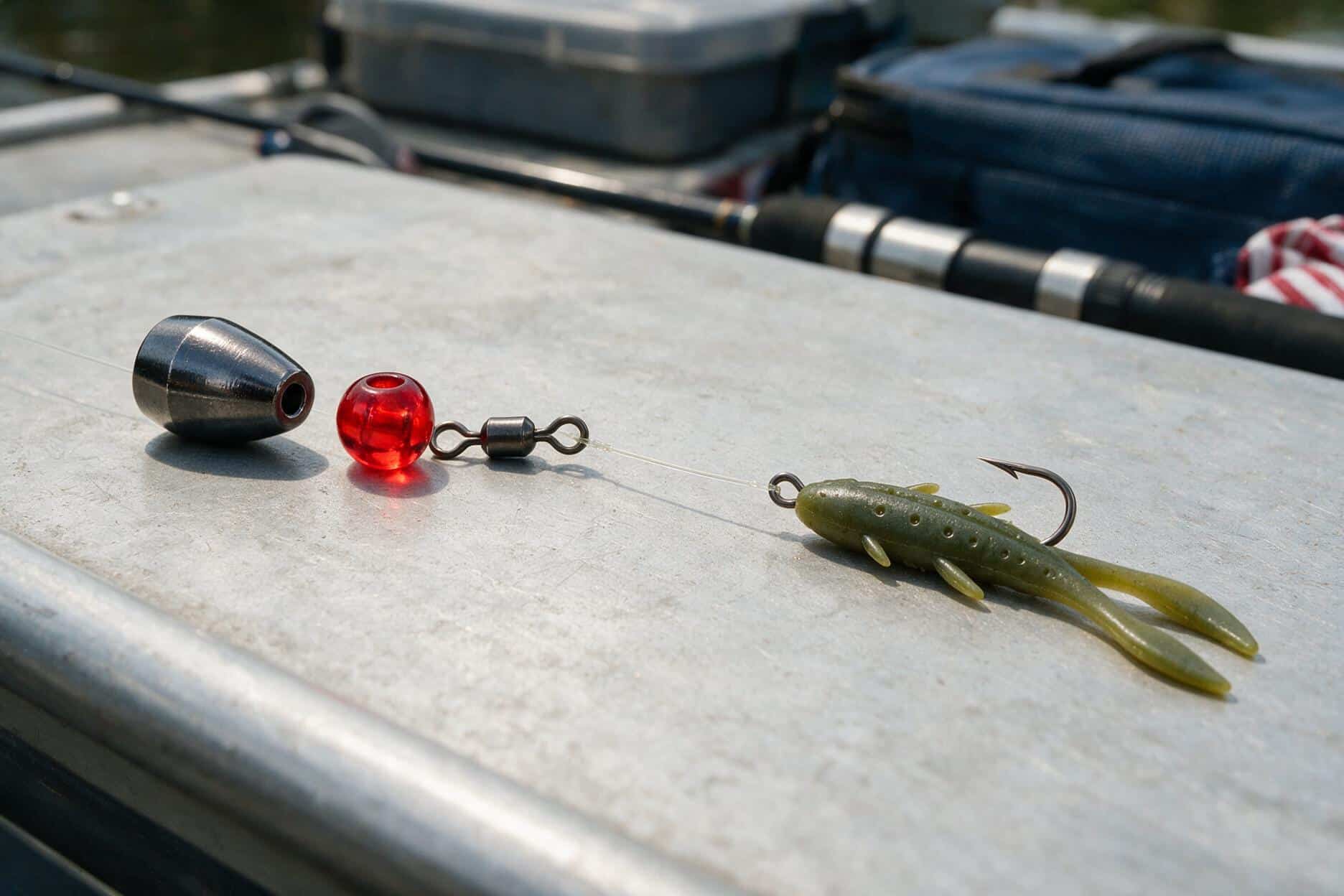
A Carolina rig strings a weight, a bead, a swivel, a leader, and a hook together in that order, but the weight isn’t tied to the leader the way it is on a Texas rig. It slides freely on the main line above the swivel. That single difference changes how the whole rig behaves on the bottom, and it’s the reason the rig exists at all.
why the sliding weight matters
Because the weight isn’t fixed to the leader, it can hit bottom, kick up a small puff of sediment, and keep moving while the bait drifts behind it almost weightless. A fish feels the bait first, not a mouthful of lead. On a Texas rig or jig, a bass that inhales the bait feels the weight instantly and can spit it before you ever feel the bite. The Carolina rig buys you time between the take and the fish figuring out something is wrong.
how to build it, piece by piece
Start with a bullet or egg-shaped sinker threaded onto your main line, typically 1/2 to 3/4 ounce depending on depth and current. Slide on a glass or plastic bead behind it, the bead protects your knot from the weight banging into it on every cast and adds a click that some anglers believe helps draw fish in, though the protection is the real reason to use one.
Tie a barrel swivel to the main line below the bead and weight. The swivel does two jobs: it stops the weight from sliding all the way down to the hook, and it keeps your leader from twisting as the bait spins on the retrieve.
From the swivel, tie on a leader of fluorocarbon, usually two to four feet long, lighter or the same test as your main line. Longer leaders fish slower and let the bait float higher off bottom, shorter leaders keep it closer to where the fish is holding. Finish with a wide-gap or offset worm hook, tied on with a strong connection like the Palomar or an improved clinch knot, most commonly rigged with a lizard, creature bait, or straight-tail worm.
fishing it: drag, don’t reel
The Carolina rig isn’t a retrieve-and-repeat presentation. Cast it out, let it settle, and drag it slowly along bottom with the rod, reeling up slack rather than winding the bait in. The weight bumping structure is often what triggers a strike, so dragging over rock, shell, or a hard bottom transition matters more than the exact bait you’ve tied on.
Most bites come as a solid thump or a sudden weight on the line rather than a classic tap-tap you’d feel on a jig. Because of the leader length and the slack between weight and bait, set the hook hard and reel down fast, the stretch in the system eats up a soft hookset.
where the carolina rig outfishes everything else
This rig earns its keep on big, largely featureless flats, points, and long secondary breaklines where covering ground matters more than working a single piece of cover. It struggles in heavy vegetation, the swivel and sliding weight catch on grass and wood in a way a Texas rig’s compact profile doesn’t. Save it for hard or sparsely covered bottom and lean on other rigs once you’re fishing thick cover.
leader length and line choice
Leader length isn’t a fixed number, it’s a response to how aggressive the fish are. Shorter leaders around 18 inches keep the bait close to the weight and work well when fish are aggressive and reacting fast to the disturbance. Longer leaders past three feet separate the bait from the commotion and suit finicky fish in clear water that need more distance between the noise and the meal.
Main line is typically 12 to 17 pound fluorocarbon or braid with a fluorocarbon leader, the same fishing line logic that applies everywhere else applies here: fluoro’s low visibility matters most right where the fish gets its closest look at your line, which is the leader.
mistakes that cost bites on a carolina rig
Tying the leader too heavy relative to the main line is common and backwards, if anything breaks off on a snag, you want it to be the cheap hook and leader, not your main line and weight. Fishing it too fast is the other one. This rig is built for a slow, deliberate drag, working it like a chatterbait defeats the entire point of the setup.
carolina rig FAQ
What’s the best weight for a Carolina rig? 1/2 ounce covers most depths under 15 feet, go to 3/4 or 1 ounce in deeper water or current where you need to keep bottom contact.
Can you fish a Carolina rig in grass? Not well. The sliding components snag easily in vegetation, a Texas rig is the better tool once you’re fishing matted or stemmy grass instead of open bottom.
What’s the difference between a Carolina rig and a Texas rig? The Texas rig’s weight is pegged or slides right down against the bait, the Carolina rig’s weight stays well above the bait on a separate leader, which changes how the bait falls and how a fish feels it.