The drop shot rig flips the usual order of things: instead of the weight below the bait, or dragging along with it, the weight hangs on a separate line beneath a bait that stays roughly still in the water column. That difference is the entire reason finesse anglers reach for it when fish won’t commit to anything more aggressive.
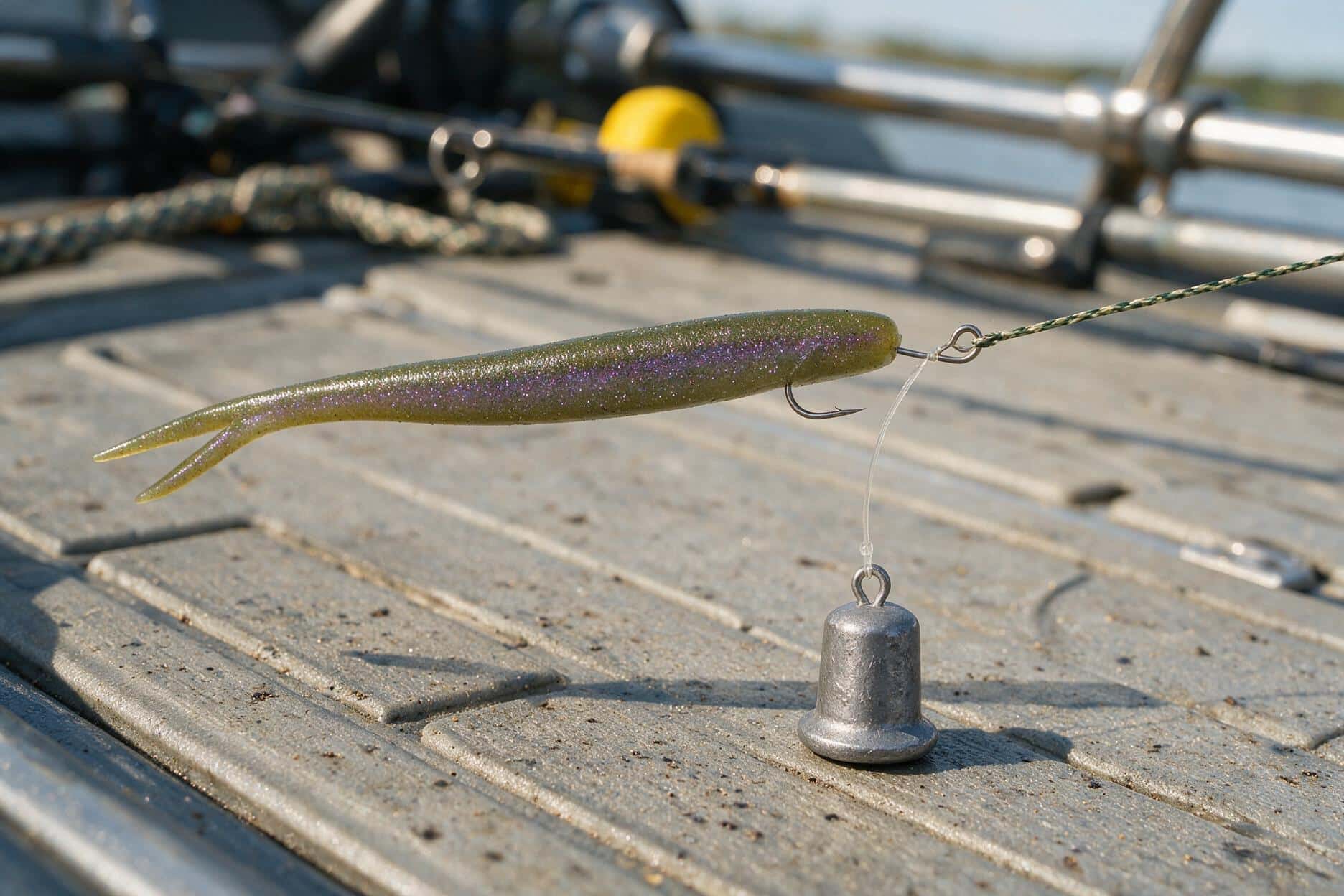
what makes a drop shot different
Every other rig on this site ties the weight somewhere near the bait, in front of it on a Carolina rig, right against it on a Texas rig. The drop shot ties the hook onto the main line first, then runs a length of line below it to a weight. The bait sits above the weight instead of getting dragged behind or beside it.
That setup lets you hold the bait nearly motionless just off bottom while the weight anchors everything below. Twitch the rod tip and the bait shimmies in place instead of moving across the bottom, which is exactly the subtle action that triggers bites from fish that have already refused a moving bait.
how to rig it
Tie a hook onto your line using a Palomar knot, but leave the tag end long instead of trimming it close, four to six inches past the knot. That tag end becomes the drop line down to the weight. Most anglers use a small, thin-wire hook, either a nose-hooked or Texas-rigged finesse worm, straight-tail or a small creature bait.
The hook needs to stand out from the line rather than lying flat against it, some anglers tie the Palomar so the hook rides perpendicular, others use a specific drop shot knot that achieves the same result more reliably. Either works, the perpendicular hook position is what matters.
Clip a drop shot weight onto the tag end below the hook, most weights use a simple wire clip that doesn’t require tying at all. Distance from hook to weight typically runs 12 to 18 inches for fish suspended off bottom, shorter when you need the bait closer to structure on the bottom itself.
matching hook and bait size
Small, thin-wire hooks in the number 1 to 2/0 range cover most drop shot baits. Thin wire matters more here than on other rigs, since the whole point is a bait that moves naturally with almost no added resistance, a heavy hook shank fights that motion. Match hook size to bait length rather than to the fish size you’re targeting, a 4-inch finesse worm wants a smaller hook than a 6-inch straight-tail.
fishing it
Cast out, let the weight hit bottom, and hold still more than you’d think is productive. The rod stays mostly stationary while small wrist twitches shake the bait without moving the weight’s anchor point. This is a rig for patient, precise presentation, not for covering water fast.
Bites often feel like nothing more than added weight or a subtle tick, softer than the thump you’d feel on a Carolina rig, because the fish isn’t fighting the weight the way it would on a rig where weight and bait move together. Stay ready to set on anything that doesn’t feel like your own twitch.
line and leader choice
Fluorocarbon is the standard for drop shot, straight through as main line on spinning gear in clear water, or as a leader off braid when you want the sensitivity of zero-stretch fishing line with fluoro’s low visibility right where the fish gets its closest look. Light line, 6 to 10 pound test, matches the finesse presentation this rig is built around.
Heavier line kills the subtlety that makes a drop shot work in the first place. If you’re tying it on 15 or 20 pound test out of habit from other rigs, that’s worth reconsidering specifically for this presentation.
where it earns its keep, and where it doesn’t
Drop shot shines on fish suspended over deep structure, points, ledges, and standing timber where you need to hold a bait in the strike zone without it constantly sinking or drifting off target. It’s a finesse tool for pressured or finicky fish, not a search bait for covering a lot of water quickly.
It struggles in heavy cover for the same reason a Carolina rig does, the hanging weight and exposed line catch on wood and grass. Save it for open water and hard bottom, the same conditions where a Carolina rig performs, just fished with a completely different retrieve philosophy.
mistakes anglers make with a drop shot
Fishing it too fast is the most common one, treating it like a swimbait and reeling it steadily defeats the entire finesse concept. The bait is supposed to stay close to one spot, not travel.
The second is using a hook too heavy for the bait, which kills the subtle, suspended action a drop shot is built around. Match hook weight to the worm’s natural fall rate, not to what feels sturdy in your hand.
drop shot rig FAQ
How far should the weight be from the hook? 12 to 18 inches for fish suspended off bottom, as short as 6 inches when the fish are holding tight to the bottom itself.
What size weight works best? 1/8 to 1/4 ounce covers most conditions, going heavier only when current or depth demands faster bottom contact.
Can you fish a drop shot rig on a baitcaster? You can, but spinning gear is standard for the light lines and finesse presentation this rig calls for, most anglers reserve baitcasters for heavier drop shot work around deeper structure.
Do you need a swivel on a drop shot rig? No, the tag end running straight to the weight is standard, a swivel adds bulk and a failure point for no real benefit at these light lines.