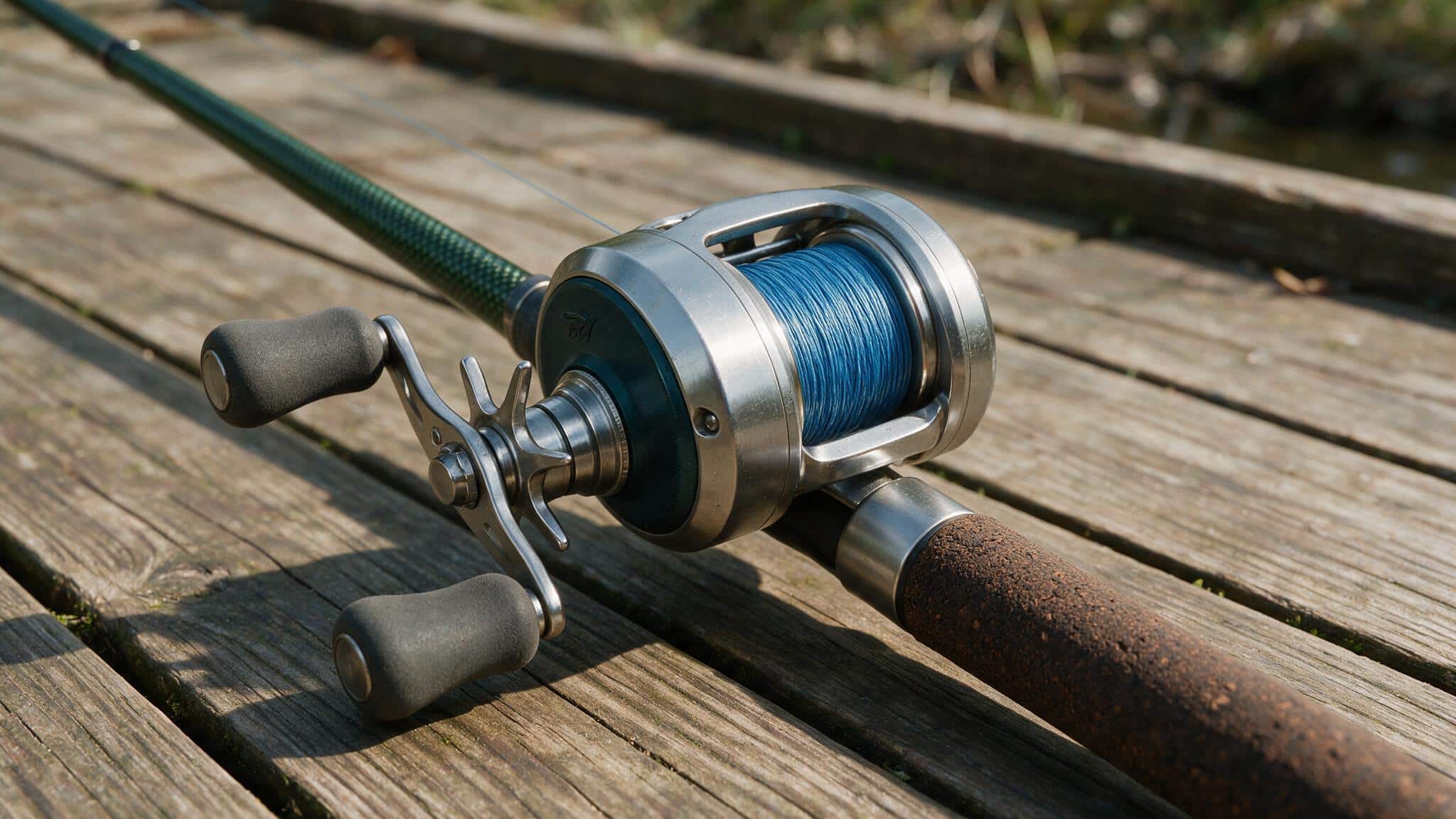
Baitcasting reels sit on top of the rod instead of below it, the spool rotates during the cast instead of staying fixed, and that rotating spool is exactly what makes them both more powerful and more punishing than a spinning reel. Get the cast timing wrong and the spool keeps spinning after the lure stops, and you get a backlash: a tangled mess of line that can take ten minutes to pick apart on the water. That’s the tradeoff. More casting accuracy and more cranking power, in exchange for a real learning curve.
## who should actually make the jump
If you’ve never fished before, start on a spinning reel. Baitcasters reward anglers who already understand casting rhythm and thumb control, and they punish anglers who don’t with backlash after backlash until it’s discouraging enough to quit. Once you’re casting a spinning reel accurately and you’re fishing techniques that benefit from a baitcaster, heavier lures, thicker line, precision pitching and flipping around cover, it’s worth the jump. Trying to skip the fundamentals and start on a baitcaster because it looks more advanced is the single biggest reason people give up on them within a week.
## braking systems: this is what actually prevents backlash
Every baitcaster uses one of three braking systems to control spool speed during the cast. Centrifugal brakes use small weights or pins around the spool that engage through friction, adjusted by physically moving pins in or out, usually by popping off a side plate. Magnetic brakes use magnets positioned near the spool to slow it with no physical contact, adjusted with an external dial, and they’re the easier system to tune on the fly since you don’t need to open the reel. Hybrid systems combine both. Our Shimano vs Abu Garcia comparison breaks down how two of the most popular baitcaster brands handle each system. For anyone newer to baitcasters, a reel with an external magnetic dial, or a hybrid with strong magnetic control, is far more forgiving to learn on than a pure centrifugal system that requires opening the reel to adjust. Whatever system you’re running, set the brake stronger than you think you need when you start with a new lure weight, and back it off gradually as your thumb control improves. For the full breakdown on fixing an actual tangle when it happens, see how to clear a baitcaster backlash.
## gear ratio and what technique it matches
Baitcaster gear ratios run from around 5.4:1 up past 8.0:1. Low ratios, 5.4:1 to 6.4:1, suit techniques where you need power over speed: deep crankbaits, big swimbaits, slow-rolled spinnerbaits. High ratios, 7.0:1 and up, suit techniques where you need to move a lot of line fast: flipping and pitching in cover, topwater, worm fishing where you need to catch up to a fish swimming toward you. A 6.4:1 to 7.2:1 ratio covers the widest range of techniques if you’re buying one reel to do most things.
## spool material and tension
Aluminum spools are heavier but hold their shape and spin true for longer. Graphite spools are lighter, which helps casting distance with light lures, but they can lose their true shape under repeated hard use. The spool tension knob, usually on the same side as the handle, is not a set-it-and-forget-it control. It needs adjusting every time you change lure weight, tightened enough that the lure drops slowly and under control when you disengage the reel and let it fall, without a backlash on the drop. Skipping this step is one of the most common causes of an otherwise well-set-up baitcaster still backlashing constantly.
## handle, star drag, and power
Baitcasters use a star-shaped drag adjustment wheel next to the handle, rated in pounds of max drag, generally higher than comparable spinning reels because baitcasters are built for heavier lines and bigger fish more often. Longer handles give more cranking torque for horsing fish out of cover; shorter handles turn faster with less leverage, better suited to finesse techniques. Left-hand retrieve baitcasters let right-handed casters keep the rod in their dominant hand through the whole cast-and-retrieve cycle without switching hands, worth considering if you haven’t committed to a handedness yet.
## line pairing matters more here than on a spinning reel
Baitcasters generally perform best with heavier line, thicker mono, fluorocarbon, or braid, partly because thinner, lighter lines are more prone to digging into the spool under pressure and partly because the techniques baitcasters excel at usually call for stronger line anyway. If you’re just starting on a baitcaster, practicing with a heavier, stiffer mono is more forgiving than starting on thin fluorocarbon, which backlashes more easily and digs into the spool when it does tangle.
## common mistakes
Cranking the star drag as tight as it goes because tighter feels more secure is a common instinct, and it’s wrong. An overly tight drag doesn’t let line pay out under a hard run, which puts the full shock of the fight straight onto your line and knots instead of the drag system, and that’s how you lose fish and snap line on hooksets.
Ignoring the spool tension knob when you switch lure weight causes most of the “this reel backlashes constantly” complaints, when the reel itself is fine and the setup is off.
Buying a high-end baitcaster before you’ve learned the fundamentals on something more forgiving just moves the cost of learning higher. Spend $200 on your first baitcaster and you’ll likely backlash an expensive reel instead of a cheap one while you’re still building thumb control.
## what to actually buy
Skip baitcasters entirely under about $60. Cheap centrifugal brakes on bargain reels are inconsistent and hard to tune, and they’ll teach you bad habits while making backlash more likely, not less. For a first baitcaster, look for an external magnetic or hybrid brake, a 6.4:1 to 7.2:1 gear ratio, and a star drag rated for at least 15 lbs, in the $80 to $150 range from an established brand. Our picks for the best beginner baitcaster narrow that list down to specific models. Pair it with a rod rated for the lure weights you’ll actually be throwing, spend an afternoon practicing on open water with no cover before you fish it around structure, and expect the first few sessions to include some backlash no matter how good the reel is. That’s the learning curve, not a defective reel.