Carp get dismissed by a lot of American anglers as a trash fish, which says more about how carp fishing developed here than it does about the fish. In Europe, carp fishing is close to a religion, with anglers investing in gear built specifically for the species and spending entire weekends camped on a single swim waiting for one good take. Actually targeting carp on purpose, instead of catching them by accident while fishing for something else, changes how you see the species completely.
## what carp are and why they fight so hard
Common carp are a member of the minnow family, believe it or not, just scaled up to sizes that can hit 20, 30, even 40 pounds in the right water. They were introduced to North America in the 1800s and have since spread into nearly every warm, slow-moving river, lake, and pond on the continent. Mirror carp and leather carp are the same species with different scale patterns, both showing up wherever common carp have been stocked or have naturally spread.
What makes carp worth targeting on purpose is the fight. Pound for pound, a carp pulls harder and longer than most freshwater fish anglers chase in the same waters. A 15 pound carp on light tackle can strip drag for a sustained run that a bass or walleye of similar size simply cannot match. That single fact converts a lot of skeptical anglers the first time they hook one properly.
## where to find carp
Carp tolerate warm, low-oxygen water that would stress out trout or bass, which means they thrive in water other species avoid: shallow coves, silty bays, slow backwaters, and the muddy stretches of rivers that most anglers drive right past. Look for water with a soft or silty bottom, since carp feed by rooting through mud and silt for insect larvae, crustaceans, and plant material.
Warm, shallow flats in spring and early summer hold feeding carp, especially on sunny afternoons when the water warms fastest. You will often see them before you catch them, either tailing in skinny water with their backs breaking the surface, or rolling and jumping in a pattern that looks almost playful. Both behaviors mark active, catchable fish in the area.
In summer heat, carp often drop into deeper water during the hottest part of the day and push back into the shallows during low light. Cloudy, overcast days can keep carp shallow and feeding all day, which is often the single best condition to plan a trip around.
## what carp eat and how they feed
Carp feed with their mouths pointed down and slightly forward, built for vacuuming food off the bottom rather than chasing prey through the water column. That single anatomical fact should drive almost every decision you make about bait and rigging. A bait sitting up off the bottom, or moving too fast, does not match how a carp actually forages.
Corn, both canned sweet corn and the specialized boilies European carp anglers developed over decades, produce consistently across the country. Bread, either flaked on the surface or mashed into a paste on a hook, works well in park ponds and slow rivers where carp have gotten used to being fed. Nightcrawlers and dough baits round out a short list of options that catch carp almost everywhere they swim. Our roundup of best carp bait picks goes deeper into boilies, pop-ups, and other specialty options.
Carp are also notably cautious for a fish, and heavily fished water produces carp that grow suspicious of anything that looks unnatural. Adding unscented, unflavored pieces of bait alongside your hook bait, a tactic borrowed from European carp fishing called loose feed, gets fish confident and feeding in an area before your baited hook ever goes in.
## rigs and terminal tackle
The hair rig changed carp fishing more than any other single piece of tackle, and if you fish for carp seriously, learn it first. Instead of threading bait directly onto the hook, the bait sits on a short piece of line just behind the hook, with the hook itself riding bare. A feeding carp sucks in the bait, the bare hook goes in right along with it, and the fish hooks itself against the weight of the rig as it moves off. This one adjustment alone will out-fish a directly baited hook by a wide margin once you get the length dialed in for your bait size.
A simple running rig, a sliding weight above a swivel with a hook length and hair rig tied below, covers most bottom fishing situations. Keep the weight heavy enough to hold bottom in current but no heavier than it needs to be, since a carp that feels too much resistance on the take will often drop the bait before the hook sets. If rig-building terminology is new to you, our overview of fishing rigs covers the basic building blocks that carry over into carp rigging.
For still water without much current, a method feeder, a hollow cage packed with groundbait or particle feed around a central hair-rigged hook, both anchors your bait and creates a small cloud of scent and loose feed that pulls fish in from a distance. It is one of the more effective inventions in still-water carp fishing and worth the modest cost of the feeders themselves.
## gear that handles a hard-fighting fish
A medium-heavy to heavy rod in the 10 to 12 foot range, paired with a reel that has a smooth, reliable drag and holds plenty of line, covers the vast majority of carp fishing situations. Our carp gear and tackle guide breaks down those choices in more depth. Carp do not need finesse gear so much as they need gear that will not fail during a long, hard run, since a big carp hooked on tackle that is too light can spool a reel or snap a line that seemed plenty strong on paper.
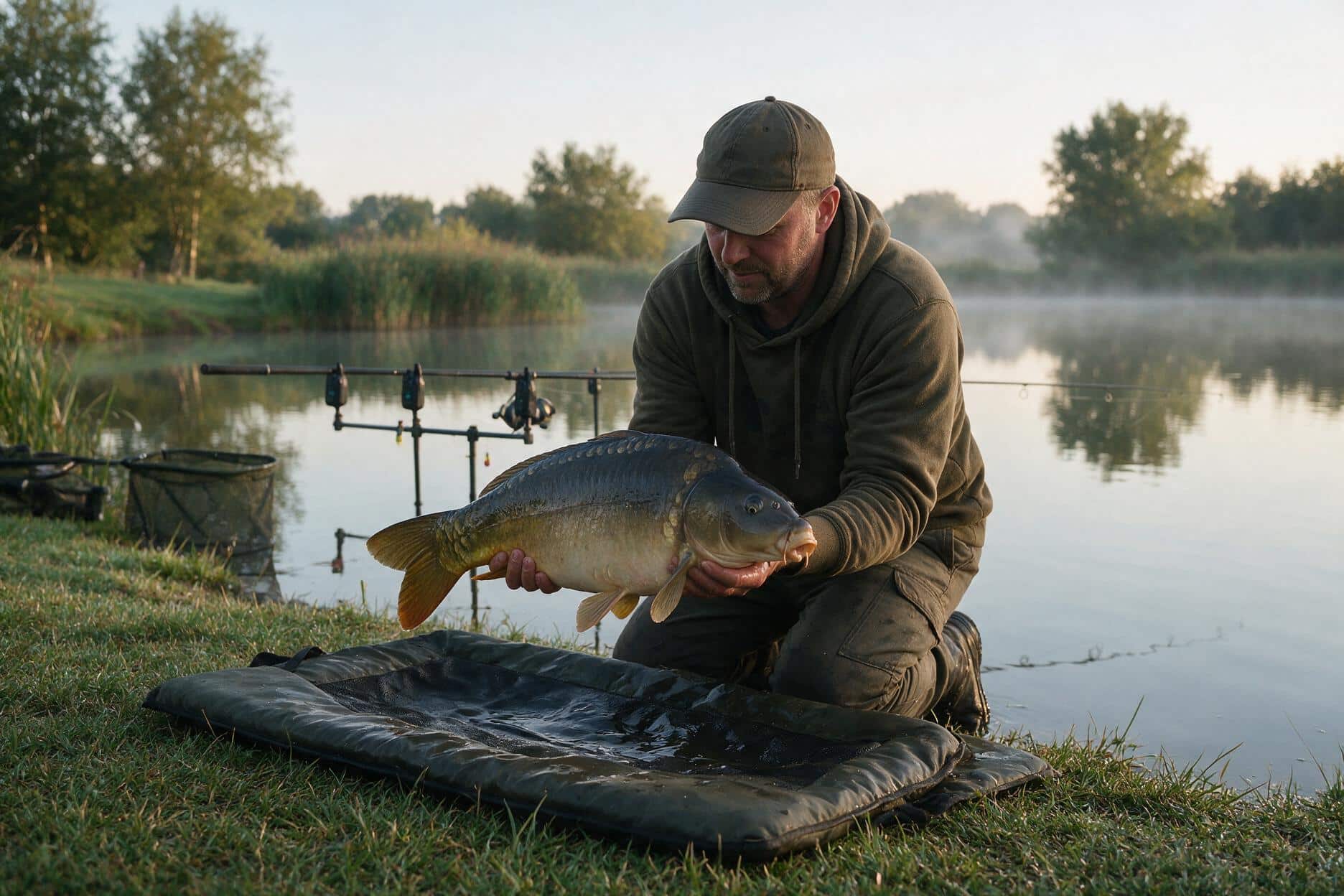
Bite alarms, common in European carp fishing and increasingly available in the US, let you fish multiple rods at once and detect the subtle taps of a carp mouthing bait before it commits to a real take. A simple setup with a rod pod and two or three alarms turns a passive waiting game into something closer to an active, monitored session.
Landing a big carp calls for a proper landing net with a wide, deep hoop, since these fish are heavy, wide-bodied, and prone to one last surge right at the net. An unhooking mat protects the slime coat if you plan to take photos before release, which, given how hard these fish fight and how long some individuals live, is worth the extra minute of care.
## a straightforward first outing
Pick a warm afternoon in late spring, find a shallow bay or backwater with a soft bottom, and prebait the spot with a handful of corn or bread a few hours before you plan to fish, or even the evening before if you can manage it. Rig a simple hair rig with corn on a running rig, cast to the baited area, and wait. Our full walkthrough on getting started with carp covers this same first outing in more detail.
Patience matters more here than with most freshwater species. Carp often feed cautiously and take time to commit fully to an area, especially if they have any history of being caught there before. A slow, quiet approach beats a rushed one, and putting in an hour of prebaiting before you ever make a cast usually beats showing up and casting blind.
Once you land your first real carp and feel that first hard run, the trash fish reputation stops making sense. It rewards patience and a bit of technique, and going back to catching them by accident feels like a downgrade after that.