Carp get a bad rap in a lot of American fishing circles, treated like a rough fish that clogs up the water column and doesn’t deserve a rod bent over a rest. I disagree, and so does most of Europe, where carp fishing is practically its own sport with its own tackle industry. Once you switch your mindset and treat carp as a genuine target instead of an accident, bait selection becomes the single biggest factor in whether you go home with sore arms or an empty net.
I’ve spent a lot of weekends parked on the bank of slow rivers and farm ponds figuring out what these fish actually want, and the honest answer is that carp are not picky in the way trout can be picky. They are cautious, not fussy. Get the bait right and get it presented without spooking the fish, and carp will eat almost anything digestible. Here is what actually works, ranked by how often I reach for it.
boilies are still the gold standard
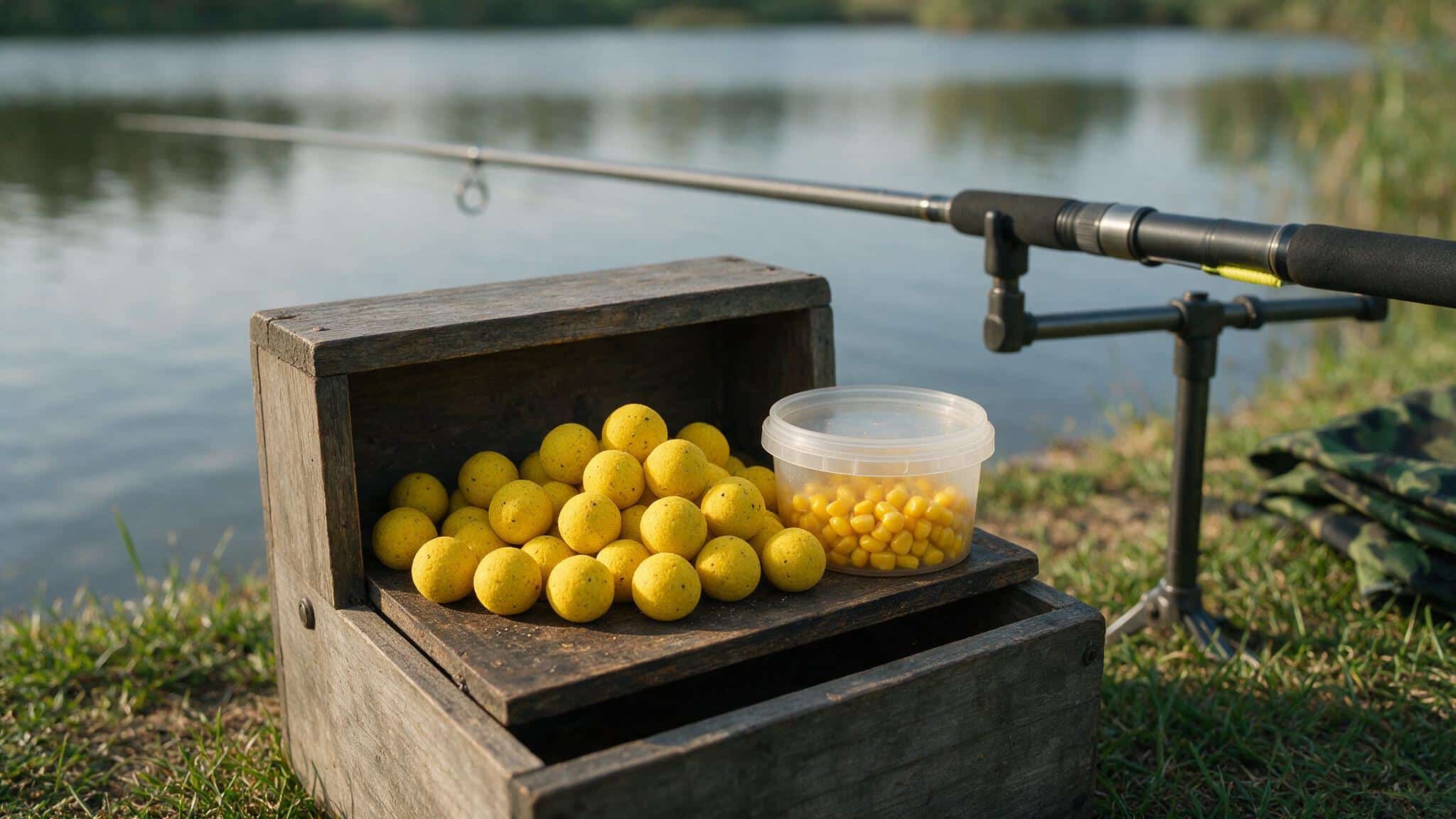
Boilies, round balls of compressed fishmeal, semolina, and binder, boiled to form a tough skin, were built specifically for carp, and they remain the most consistent producer I have used. The hard outer skin means smaller fish and crustaceans cannot strip the bait off the hook before a carp finds it, which matters more than people think on pressured water.
Fishmeal based boilies work through most of the season. Birdfood and fruit flavored boilies tend to shine in warmer water when carp are burning more energy and want a sweeter, quicker hit of calories. I keep both in the tackle bag rather than committing to one camp, because the fish will tell you which they prefer on a given day faster than any forum thread will.
sweetcorn is the cheapest lesson in carp behavior
Canned sweetcorn is the bait I recommend to anyone just getting into this, mostly because it teaches you something boilies cannot: carp will move surprising distances for a bright, sweet, easy meal. A handful of corn scattered around a hook bait does the same job a bag of expensive ground bait does, at a fraction of the cost.
The downside is that corn draws in every panfish and small catfish in the area, so on crowded waters you will spend half your session re-baiting. I still keep a can in the truck for scouting new water, since if carp are present, corn usually gets a reaction within the first hour.
bread is underrated and almost free
Plain white bread, either flaked onto a hook or mashed into a paste, catches carp that have seen every boilie flavor on the market. Carp in urban ponds and park lakes get fed bread by kids and dog walkers constantly, so a piece of bread flake drifting naturally past their nose does not trigger the same caution a foreign-looking pellet might.
Punch a piece of bread onto a small hook, let it sit just under the surface, and watch for the telltale sip carp use to inhale floating food. It is not a glamorous method, but for shallow, clear, heavily pressured water, bread out-fishes tackle shop bait more often than most anglers will admit.
particle baits reward patience
Hemp seed, tiger nuts, and maize are what serious carp anglers use to hold fish in an area over days, not hours. The idea is simple: you pre-bait a swim with particles for a few days before you ever put a hook in the water, and the carp start treating that patch of bottom as a reliable food source. By the time you actually fish it, you are not searching for carp, you are fishing where they already expect a meal.
Tiger nuts need boiling for a long stretch before use, both for safety and because raw ones will not soften properly. I will not pretend this is a lazy Saturday method. It is a commitment, and it works best on waters you can return to repeatedly, like a farm pond you have permission to fish all season.
dough baits for the DIY angler
A simple dough of flour, cornmeal, and water, sometimes with a spoon of vanilla or garlic powder mixed in, remains a kitchen-table bait that plenty of experienced carp anglers still use. It is soft, cheap, moldable around a hook, and carp clearly do not associate it with danger the way they might a shop bought pellet on well fished water.
I add garlic powder more often than not. Whether carp actually prefer the smell or the extra scent trail just helps them find the bait faster in murky water, I honestly cannot say for certain, but I have caught enough fish on garlic dough to keep doing it.
matching bait to water conditions
Stained, low-visibility water calls for stronger smelling bait since carp are relying on scent more than sight to find food. Clear water lets you scale down to smaller, more natural offerings like single grains of corn or small pieces of bread, since carp get a longer look at anything suspicious before committing.
Cold water in early spring and late fall slows carp metabolism down, so smaller, lower-fat baits like corn or bread flake outproduce heavy fishmeal boilies most days. Once summer water temperatures climb, I switch to bigger, richer boilies because the fish are actively feeding and burning calories fast enough to justify the larger meal.
a word on ground baiting
Whatever hook bait you choose, scattering loose feed around it changes your results more than swapping brands ever will. A tight patch of free offerings holds carp in casting range and gets them competing for food, which makes them careless about the hook bait sitting in the middle of the pile. Skipping this step and just lobbing a single bait out is the most common mistake I see from anglers new to carp.
If you want the full breakdown on rods, line, rigs, and how all of this fits together on the water, I put together a complete guide to carp fishing that goes into the tackle side in more depth.
Carp fishing rewards anglers who experiment rather than those who buy the most expensive boilie on the shelf. Start with corn or bread because they are cheap and forgiving, move into boilies and particles once you understand how the fish in your specific water behave, and keep a rotation of at least two bait types in your bag so a slow morning does not turn into a wasted one.