To fillet a catfish, skin the whole fish first, then cut along the spine from tail to head and lift each fillet off the ribs. Handle the pectoral spines with care, and trim away the dark red lateral line.
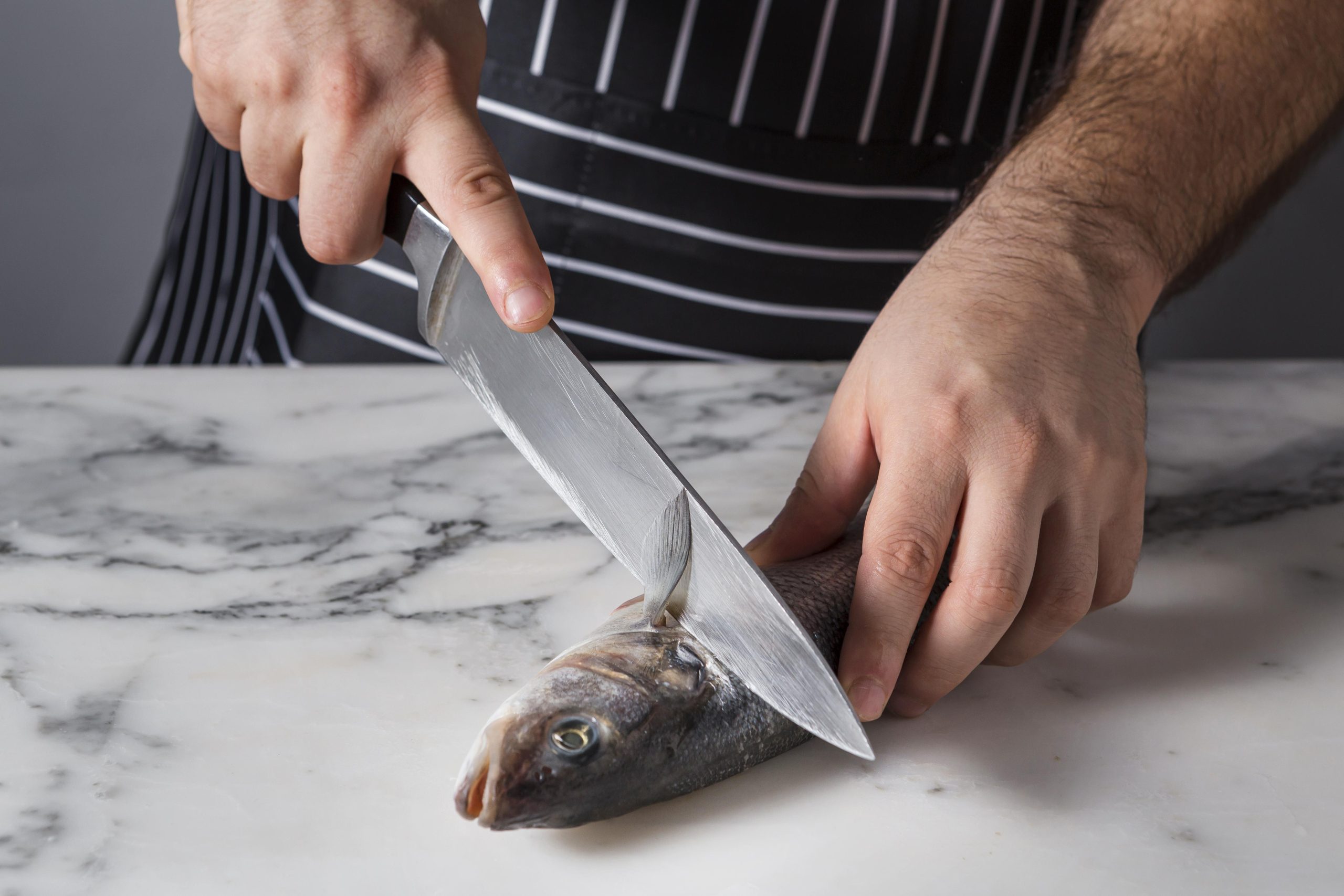
how to fillet a catfish, the short version
Catfish break the usual filleting routine in two ways. They have no scales, but they carry a tough, slimy skin that is far easier to pull off the whole fish than to slice away from each fillet later. They also have hard spines on the pectoral fins that can lock upright. Everything else follows the normal pattern: a sharp, flexible knife, a stable board, and long cuts that ride the backbone.
The steps below cover a whole fish that is already dead and chilled. Follow your state’s rules for killing and keeping fish before you get this far, and check the current regulations for the water you fished.
gear and setup before the first cut
You need less than the videos suggest. A fillet knife with a thin, flexible blade, a sturdy cutting board, a pair of pliers, and a bucket for scraps cover the job. Utah’s Division of Wildlife Resources suggests a 6 to 8 inch fillet knife for catfish, which fits most home setups. A cut-resistant glove on the hand that holds the fish is cheap insurance, because wet catfish slip and the spines are unforgiving.
Work on a surface you can hose off. Catfish slime is stubborn, and a dry paper towel or a rag for your holding hand makes the fish much easier to control. Keep the fish on ice until the moment you start, since firm, cold flesh cuts cleaner than warm flesh.
deal with the spines and skin the fish first
Start with the parts that can hurt you. The pectoral spines can lock into place, so use pliers or heavy shears to remove the fins and barbels so the fish lies flat and nothing pokes you mid-cut. Once they are gone, the rest of the job is ordinary knife work.
Next, score the skin with a shallow cut on each side of the head and another along the back to the tail. Grip the skin at the head with the pliers and peel it back toward the tail in one pull, working your knife tip under any stubborn spots. Skinning the whole fish this way is the approach the Utah agency recommends, because peeling once beats fighting a slippery skin off two separate fillets.
cutting the fillets off the spine
With the fish skinned and lying on its side, cut down behind the head until the blade meets the backbone, then turn the knife flat. Slide it toward the tail with the blade parallel to the board, staying against the spine so you leave meat on the fillet and not on the carcass. Long, smooth strokes work better than sawing.
When you reach the ribs, do not force the knife through them. Lift the fillet with your free hand, and use the blade to follow the curve of the rib cage. It can take several passes before the fillet comes free, and that is normal. Flip the fish and repeat on the other side.
trim the dark meat and rinse
Lay each fillet on the board and look for the dark red strip that runs along the center, the lateral line. Cut it out along with any fat and connective tissue along the edges. Anglers trim these parts because they carry the strongest flavor, and the same agency notes that contaminants tend to collect in non-meat tissue, so removing it is worth the extra minute.
Take off the thin membrane on what used to be the skin side by slicing parallel to the board. Rinse the fillets in cold water, pat them dry, and get them straight back on ice. Storing them cold matters most in summer heat, when fish quality falls fast.
electric knife or manual knife
Both work, and the choice comes down to volume. An electric fillet knife saws through tough skin and rib bones quickly, which helps when you have a bucket of fish to process. A manual knife gives you more control and feel, and it is easier to keep sharp, clean, and stored. If you clean a handful of catfish a season, a good manual knife and a sharpening steel are plenty. If you regularly bring home a big catch, an electric knife saves real time, though you still need to skin the fish and mind the spines the same way.
common mistakes with catfish fillets
Most bad fillets come from a few repeat errors. A dull knife tears meat instead of slicing it. Skipping the pliers turns the spines into a hazard for every following step. Leaving the lateral line in gives fillets an off, muddy taste that people blame on the fish itself. And cutting straight through the ribs wastes the belly meat, so lift the fillet over the rib cage instead of hacking through it.
Small catfish are no different in method, just less forgiving with a big knife. If the fish is only a few inches across at the shoulder, use a shorter blade and expect a thinner fillet.
when to skip filleting altogether
Not every catfish needs fillets. Very small fish are often skinned and cooked whole or in steaks, and some anglers prefer steaks from large fish for cooking on the bone. Filleting makes sense when you want boneless meat for frying or baking, and it is the cleanest way to portion a big catch for the freezer.
The same knife skills carry over to other species, with different skin and bone rules. Our walleye fishing guide and crappie fishing guide cover the fish you are most likely to be cleaning after a day on the water, and the trout fishing guide is the place to start for stream-caught fish.
Practice on a couple of fish and the routine settles into a rhythm: spines, skin, spine cut, ribs, trim, ice. Once it clicks, a mess of catfish takes a fraction of the time it took on the first fish.