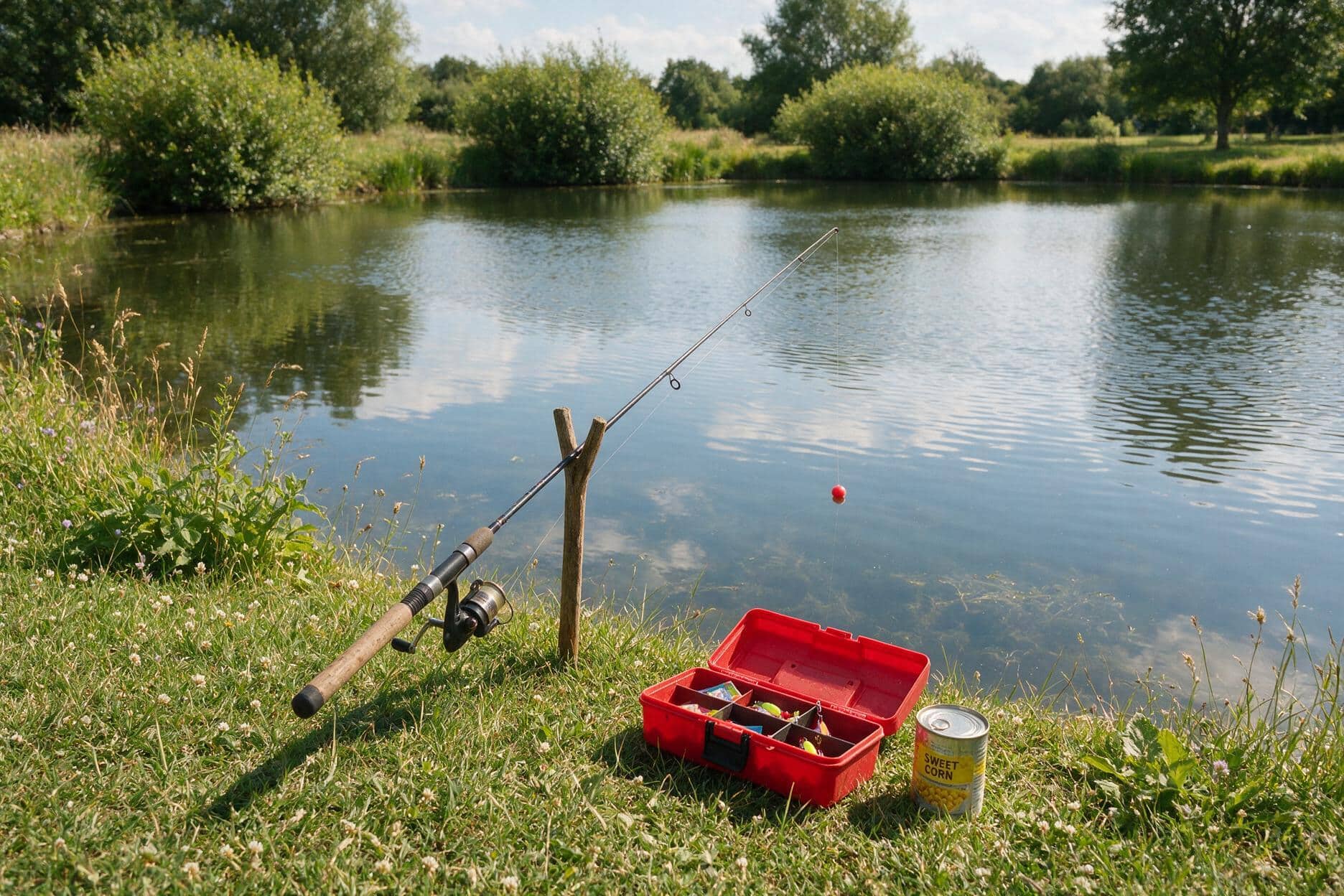
Getting into carp fishing does not require the mountain of specialized gear that European carp fishing culture can make it look like it does. Starting with a rod already sitting in the garage, a bag of frozen corn, and a Saturday morning at a local pond is enough to catch fish. Everything past that point is refinement, not a requirement.
## start with gear you probably already own
A medium to medium-heavy spinning rod in the 7 to 9 foot range handles most beginner carp situations fine. You do not need a dedicated 12 foot carp rod and a bite alarm setup for your first few trips. What matters more is line strength and a reliable drag, since even a modest carp will test both harder than most fish that size.
Spool up with 10 to 15 pound monofilament. Carp are not leader shy in most of the murky, well-fed water beginners tend to start in, so there is no need to fuss over fluorocarbon or ultra-light line right away. Save that kind of fine-tuning for later, once you have a season of carp fishing behind you and want to chase bigger or more pressured fish.
## pick the right water
Look for a pond, small lake, or slow river with visible carp activity, since finding fish matters more than any rig or bait choice you will make. Golf course ponds, retention ponds, park lakes, and slow backwaters of rivers near town all tend to hold carp, often in surprising numbers given how little pressure they get compared to bass or trout water nearby.
Walk the bank before you fish. Carp give themselves away by tailing in shallow water or muddying the surface as they root through a soft bottom, and sometimes by rolling and slapping the surface in a way that is hard to miss once you know what to look for. A pond that looks quiet from the parking lot can turn out to be full of carp once you spend ten minutes actually watching the water instead of casting immediately.
## bait that works without complication
Canned sweet corn is the single best beginner carp bait that exists, full stop. It is cheap, it holds on a hook well, carp find it almost everywhere it gets used, and it requires no preparation beyond opening the can. Thread three or four kernels onto a size 6 or 8 hook and you have a bait that has caught more beginner carp than any other single option.
Bread works nearly as well, particularly in park ponds where carp have learned to associate bread with food from people feeding ducks. A small ball of bread mashed around a hook, or a piece of crust fished on the surface, both produce, especially early and late in the day.
Do not overthink bait selection starting out. A lot of beginners get pulled into boilies, flavor additives, and specialty pastes before they have caught a single fish on corn, and that is backwards. Master the basics first, then experiment once you understand how carp in your specific water respond to a simple presentation.
## a simple rig that just works
Tie a small swivel about 18 inches above your hook. Thread a sliding sinker, enough weight to hold bottom without dragging in current, onto your main line above the swivel. Tie your hook below the swivel with the 18 inch section of line. Bait the hook with corn or bread and cast to an area where you have seen carp activity. If you need a refresher on the knots that hold a rig like this together, our guide to fishing knots covers the basics.
This is essentially a simplified running rig, and it will catch carp reliably without any of the hair rig or specialty terminal tackle that more advanced carp anglers rely on. Once you have landed a few fish this way and want to improve your hookup ratio, learning a hair rig is the natural next step, and our complete guide to carp fishing walks through exactly how that rig works and why it out-fishes a directly baited hook.
## how to actually fish the rig
Cast to your spot and let the rig settle to the bottom. Reel in slack until your line is close to straight, then set the rod down on a forked stick or rod holder and wait. Carp fishing rewards patience far more than active retrieves or constant recasting. A rig sitting undisturbed in a good spot will out-fish one that gets moved every five minutes.
Watch your rod tip, not a bobber. A carp picking up bait on the bottom usually produces a distinct tap, tap, pull on the rod tip rather than a dramatic bobber plunge. Keep some slack pinched between your fingers and the reel, or use a loose drag, so a carp can move off with the bait without feeling resistance too soon and dropping it.
When you get a real take, do not set the hook the way you would for bass. Point the rod at the fish, tighten up, and let the fish load the rod against a reasonable drag setting rather than snapping the rod back hard. Carp mouths are soft in spots, and a hard hookset can pull the hook free just as easily as it can drive it home.
## landing your first carp
Once hooked, a carp will make a hard, sustained run, sometimes more than one. Let the drag do its job, keep the rod tip up, and do not try to horse the fish in before it has tired itself out. Trying to rush a big carp to the bank usually ends with a pulled hook or a broken line rather than a landed fish.
A net with a reasonably wide hoop makes landing easier than trying to hand-land a carp, which are heavy, slippery, and awkward to grip. Wet your hands before handling the fish and keep it low over the water or a mat rather than the bare ground. Get it back in as soon as you are done admiring it.
## what to expect on your first few trips
Do not expect every trip to produce fish immediately. Carp fishing has a rhythm to it that rewards showing up repeatedly to the same productive water rather than expecting instant results on a new spot. Some of the best carp sessions happen after two or three quiet trips to the same pond, once you have learned exactly where fish move through and at what time of day.
Start simple, fish corn on a basic rig in water you have actually seen carp in, and be patient once your bait is down. That combination alone will put a lot of anglers onto their first carp faster than any amount of specialized gear would.