Carp fishing gear ranges from a repurposed bass rod to thousands of dollars of European-style bite alarms and rod pods, and the gap between those two extremes is bigger than in almost any other type of freshwater fishing. Most of what serious carp anglers eventually buy is not required to catch fish, it just makes catching more fish, and bigger fish, more consistent over time.
## rods and reels
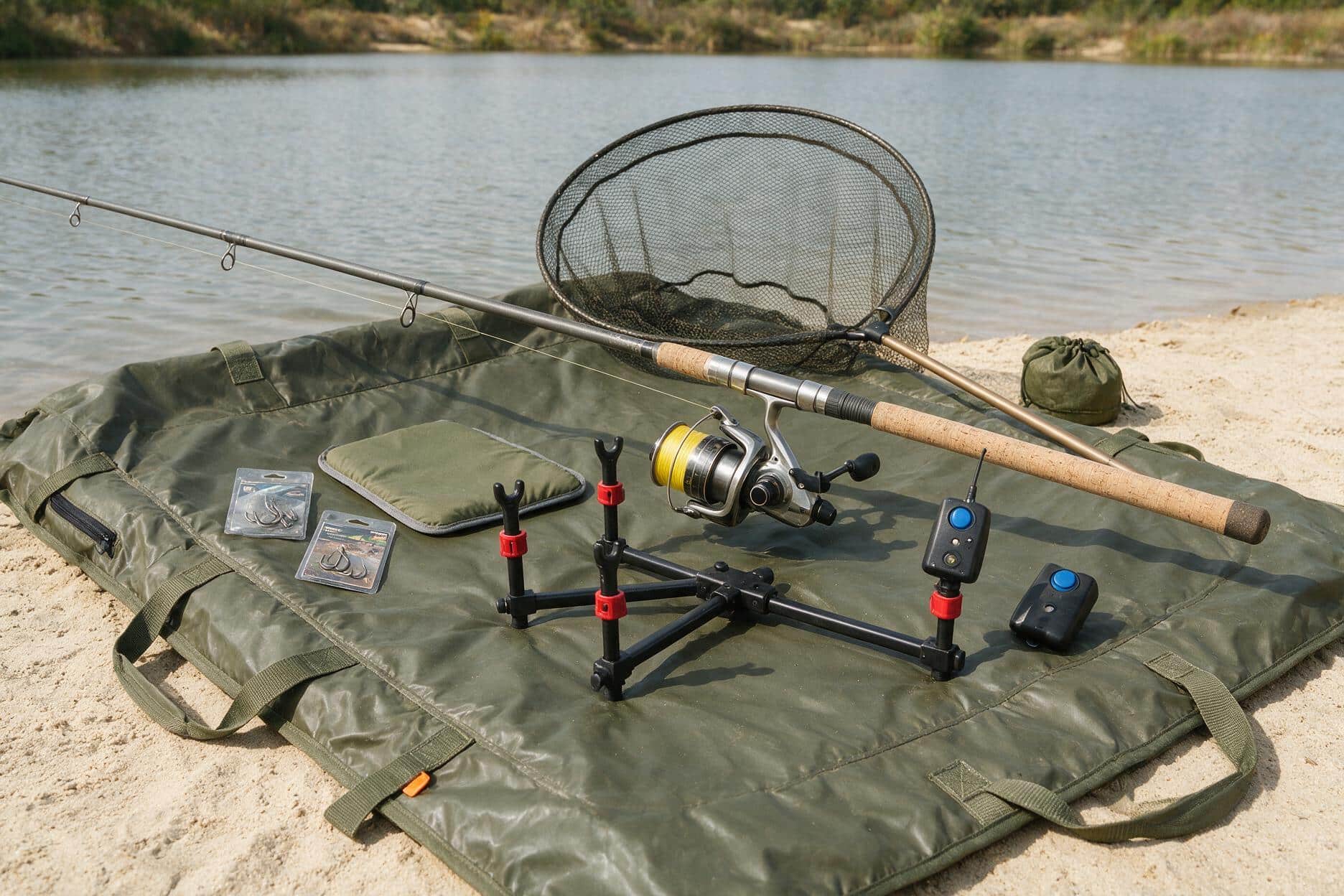
A medium-heavy rod between 10 and 12 feet is the standard for dedicated carp fishing, and the extra length over a typical spinning rod earns its keep in two ways. Longer rods cast heavier rigs farther, which matters when carp are holding well off the bank, and they give more cushion during a hard run, which reduces the number of hooks pulled or lines snapped compared to a shorter, stiffer blank.
Look for a rod rated for 2.5 to 3.5 pounds of test curve if you are shopping specifically carp-branded gear, which translates roughly to a medium-heavy to heavy freshwater action. A rod that flexes too easily will struggle to set a hook at range, while one that is too stiff can tear a hook free from a soft-mouthed fish during the fight.
A reel with a large spool capacity and a smooth, reliable front drag matters more here than gear ratio. Carp make long runs rather than the quick, erratic bursts a bass makes, and a drag that grabs or slips unevenly during a sustained run is the single most common reason anglers lose big fish they had already half landed.
## line and terminal tackle
Monofilament in the 10 to 15 pound range remains the standard main line for most carp fishing, since it has enough stretch to absorb a hard take without pulling a hook, and enough abrasion resistance for typical pond and lake bottoms. Braided main line, paired with a fluorocarbon leader, suits anglers fishing at longer range or in heavier cover where abrasion resistance and bite detection matter more than stretch.
A hair rig is just a hook and a loop of line for the hair, usually finished off with a small bait stop. None of it costs much individually, and pre-tied packs are a reasonable shortcut for anyone not ready to tie their own yet.
Method feeders and swim feeders, the hollow cages packed with groundbait mentioned constantly in carp fishing circles, are inexpensive and worth having in a few different weights for different current and casting distance situations.
## bite detection
A basic rod holder or forked stick works for a beginner watching a rod tip closely, but bite alarms change the game once you start fishing multiple rods or fishing overnight sessions. An electronic alarm clips onto the rod and sounds when line moves through it, letting you relax or step away from the rods without missing a take.
A rod pod holds two or three rods at a consistent, adjustable height and angle, keeping alarms aligned and rods secure on uneven bank ground. This combination, rod pod plus alarms, is the single biggest quality of life upgrade available to anyone who fishes carp sessions longer than an hour or two.
## landing and handling equipment
A landing net built for carp has a deep, wide hoop, usually 32 to 42 inches across, sized for fish that can push past 20 pounds and thrash hard right at the net. A trout or bass sized net simply is not built for this job and will cost you fish at the worst possible moment.
An unhooking mat, a padded surface you lay the fish on for hook removal and photos, protects the fish and your knees equally well. Pair it with forceps or a disgorger for deep hooks, and you have the handling side of the sport covered, which a lot of beginners skip until a fish gets hurt or a hook proves difficult to remove.
## bank and comfort gear
A folding chair or bed chair, built for long carp sessions, sounds like overkill until you have spent four hours on an overturned bucket. European-style carp anglers built an entire industry around bank comfort because carp fishing genuinely rewards long sessions, and being comfortable enough to stay put for hours is a real tactical advantage, not just a luxury.
An umbrella or bivvy shelter matters more than it seems like it should the first time an unexpected rain shower catches you three hours into a session you do not want to leave early. Cheap options exist and do the job fine for anyone not fishing overnight sessions regularly.
## building a kit without overspending
Start with a rod, a reel, a spool of 12 pound monofilament, a pack of hooks and swivels, some split shot and sinkers, and a landing net. That covers a genuine first season of carp fishing for well under what a single high-end bite alarm setup costs.
Add bite alarms and a rod pod once you know you are going to keep fishing for carp regularly, and treat dedicated comfort gear as a later purchase rather than a starting one. For the techniques and rigs that make the most of whatever gear you choose, our complete guide to carp fishing covers the rest of what you need to know.
A lot of gear that looks essential on a tackle shop shelf turns out to be a comfort upgrade rather than something that changes whether you catch fish. Figuring out that difference is easiest with your wallet closed for the first season.