Most beginners either overspend on gear that outclasses their skills or underspend on a toy that breaks the first time something decent bites. Neither mistake is really about money. Both come from not knowing which two or three specs actually matter when you’re starting from zero.
## start with a combo, not separate pieces
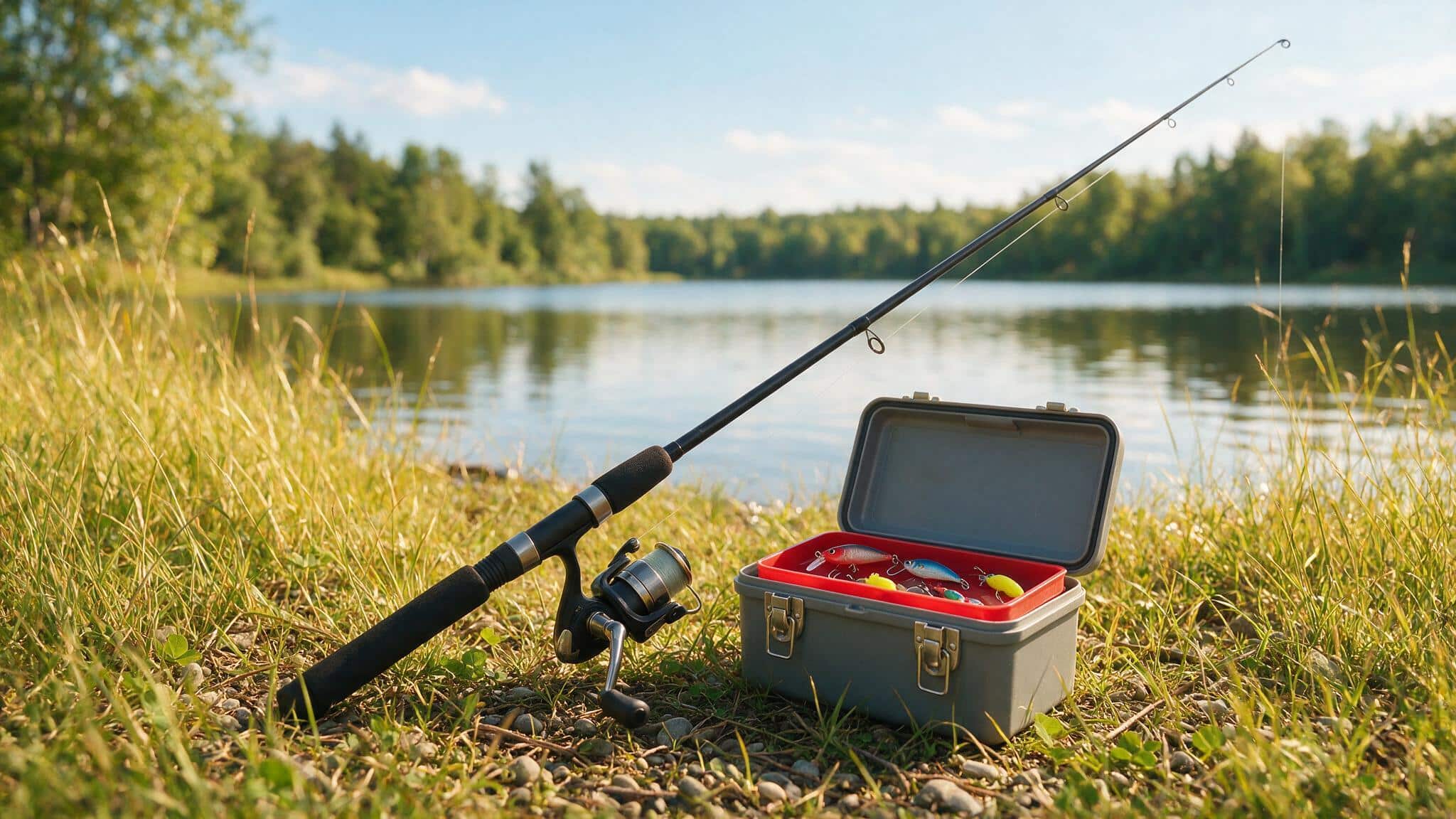
A rod-and-reel combo, sold as a matched set, is the right call for a first setup. Manufacturers already balance the reel weight and gear ratio to the rod’s power and action in a combo, which takes one variable off your plate while you’re learning to cast, feel bites, and set hooks. Buying rod and reel separately makes sense once you know enough to have opinions about gear ratio and rod action. Starting there before you’ve fished a season is just guessing.
## spinning, not baitcasting, full stop
Start on a spinning reel. A baitcasting reel rewards precise thumb control you haven’t built yet, and the wrong timing on a cast produces a backlash, a tangled bird’s nest of line that can take ten minutes to untangle on the water and will happen constantly while you’re learning. A spinning reel has a fixed spool, so there’s no equivalent failure mode. You can hand a spinning combo to someone who has never cast before and they’ll be fishing competently within an hour. Handing them a baitcaster on day one is how people quit within a week.
## length and power: aim for the middle, not the extremes
A 6’6″ to 7′ rod in medium power with fast action covers the widest range of situations a beginner is likely to run into: panfish, bass, catfish, the occasional walleye. It’s long enough to cast reasonably far, short enough to handle from a bank or a small boat without feeling unwieldy, and versatile enough that you won’t outgrow it in a single season while you figure out what you actually like to fish for. Avoid anything marketed as ultralight or heavy power for a first rod. Both are specialist tools for situations you don’t know you’re in yet.
## durability over sensitivity, at least for year one
A more expensive graphite rod transmits more feel: subtle bites, structure on the bottom, the difference between a snag and a fish. None of that matters much if you don’t yet know what a bite feels like to begin with, and a sensitive, expensive blank is also easier to snap with a ham-fisted hookset or a rod slammed in a car door. A fiberglass or composite rod flexes more, forgives an overly aggressive hookset, and survives the kind of accidental abuse that’s inevitable in a first season. Trade a little sensitivity for durability up front. You can buy a sensitive rod later once you’ve stopped breaking things by accident.
## budget guidance: what to spend and what to skip
Spend $40 to $80 on a combo from an established brand, and you’ll get a reel with a usable drag, guides that won’t groove out in a season, and a rod that survives normal beginner mistakes. Skip the $15 telescoping combos sold at gas stations and big box end caps. The guides on those are usually bare metal with no insert, they’ll fray your line within a few trips, and the reel’s drag is often a single sloppy washer that either locks up or free-spools with nothing usable in between. That price point isn’t a bargain. It’s a rod-shaped object that will actively make learning to fish harder, not easier.
## what to learn alongside the rod
The rod matters less than what you do with it for the first several months. Learn two or three fishing knots cold, tied without thinking, because a bad knot loses more fish than a mediocre rod ever will. Understand basic fishing line choice: a straightforward monofilament in 8 to 10 lb test is plenty to start and far more forgiving of casting mistakes than braid or fluorocarbon. And learn one or two simple rigs well rather than a dozen poorly. All of that matters more to how many fish you catch in year one than the difference between a $60 rod and a $150 one.
## common mistakes beginners make
Buying a heavy or extra heavy rod because it feels more durable in the store is a mistake; it also kills your ability to feel bites and fight smaller fish, which is most of what a beginner actually catches. Mismatching line, spooling 30 lb braid on a rod and reel rated for 8 to 12 lb mono, causes casting problems that get blamed on the gear instead of the setup. And buying three or four rods in the first month, chasing the idea that different situations need different tools, is premature. One well-chosen rod, fished a lot, teaches you more than four mediocre ones sitting in a garage.
## what to actually buy
A 6’6″ to 7′, medium power, fast action spinning combo, fiberglass or composite blank, from an established brand, in the $40 to $80 range. That single setup carries a beginner through an entire first season of panfish, bass, and catfish without being the limiting factor. Upgrade once you know specifically what you’re upgrading toward, not before.