Catfish gear gets treated as an afterthought by a lot of tackle shops, a few heavy rods shoved in the corner past the bass and panfish displays. That is a mistake, because catfish, especially anything past channel cat size, will find every weakness in a rod and reel combo that was not actually built for sustained runs and dead weight. I learned this the slow way, watching a bargain combo’s drag glaze over and lock up mid-fight on a river blue that was clearly not going to be landed with that gear no matter how well I fought it.
power and action: heavy, not fast
Catfish rods need heavy power almost across the board, with the exception being light setups aimed purely at small channel cats in ponds. What surprises people coming from bass fishing is that catfish rods usually run a slower, more moderate action rather than the fast tip action that dominates bass gear. A catfish’s mouth is tough and leathery, not delicate, and a moderate action rod loads through more of the blank during the hookset, which drives a hook home through that tough mouth without the sudden shock that can tear a hook free or, worse, snap light line.
A rod that is all tip and no backbone will wear you out on a long fight and give you poor leverage lifting a heavy fish off bottom. You want a rod that bends deep and steadily, not one that whips.
rod length depends on where you are fishing from
Bank anglers do better with longer rods, seven to eight feet, sometimes longer for surf-style catfish setups on big rivers. That extra length casts heavier rigs farther out past the near-shore water that gets pressured constantly, and it gives you a longer lever to control a fish during the fight. Boat anglers can go shorter, six and a half to seven feet, since you are not fighting for casting distance and a shorter rod is easier to manage in a cockpit.
spinning or baitcasting: both work, for different reasons
Big spinning reels in the 4000 to 6000 size range are the most common choice for bank fishing, mostly because they handle heavier lines without the backlash risk that comes with casting big baits and heavy sinkers on a baitcaster. A spinning reel with a solid drag and a full metal body holds up better to the sand, grit, and mud that come with bank fishing muddy rivers.
Conventional and heavy baitcasting reels earn their place with boat anglers targeting big blues and flatheads, where casting distance matters less and raw cranking power and drag capacity under sustained pressure matter more. A quality baitcaster built for saltwater or heavy freshwater duty holds up fine here, but it is not the first reel type I point a new catfish angler toward, since dropping heavy cut bait rigs on a baitcaster brings backlash risk right back into the picture.
line capacity and drag matter more than anything else on the reel
A channel cat in a farm pond is not going to test your reel’s line capacity. A forty pound blue cat on a river is going to peel off line in long, heavy runs that will find the bottom of an undersized spool fast. Buy a reel with real line capacity for the pound test you are running, not just enough to look full on the shelf, and check the drag rating specifically. A reel rated for the fish species you actually target, checked against real drag output rather than marketing numbers, saves you from the exact lockup failure I described earlier.
Smooth, consistent drag matters more here than in almost any other freshwater fishing, because a big catfish does not tire out in a quick burst the way a bass does. You are looking at a longer grinding fight, and a drag that heats up, sticks, or surges is going to cost you fish.
guides, reel seats, and corrosion resistance
Catfish gear spends a lot of time in mud, sand, and often brackish water near river mouths. Stainless steel guide inserts and a corrosion resistant reel seat are worth paying for, since a rod that seizes up or a reel whose seats corrode after a season of neglect near saltwater influence is a rod you will be replacing sooner than you should have to.
setting up for bank fishing specifically
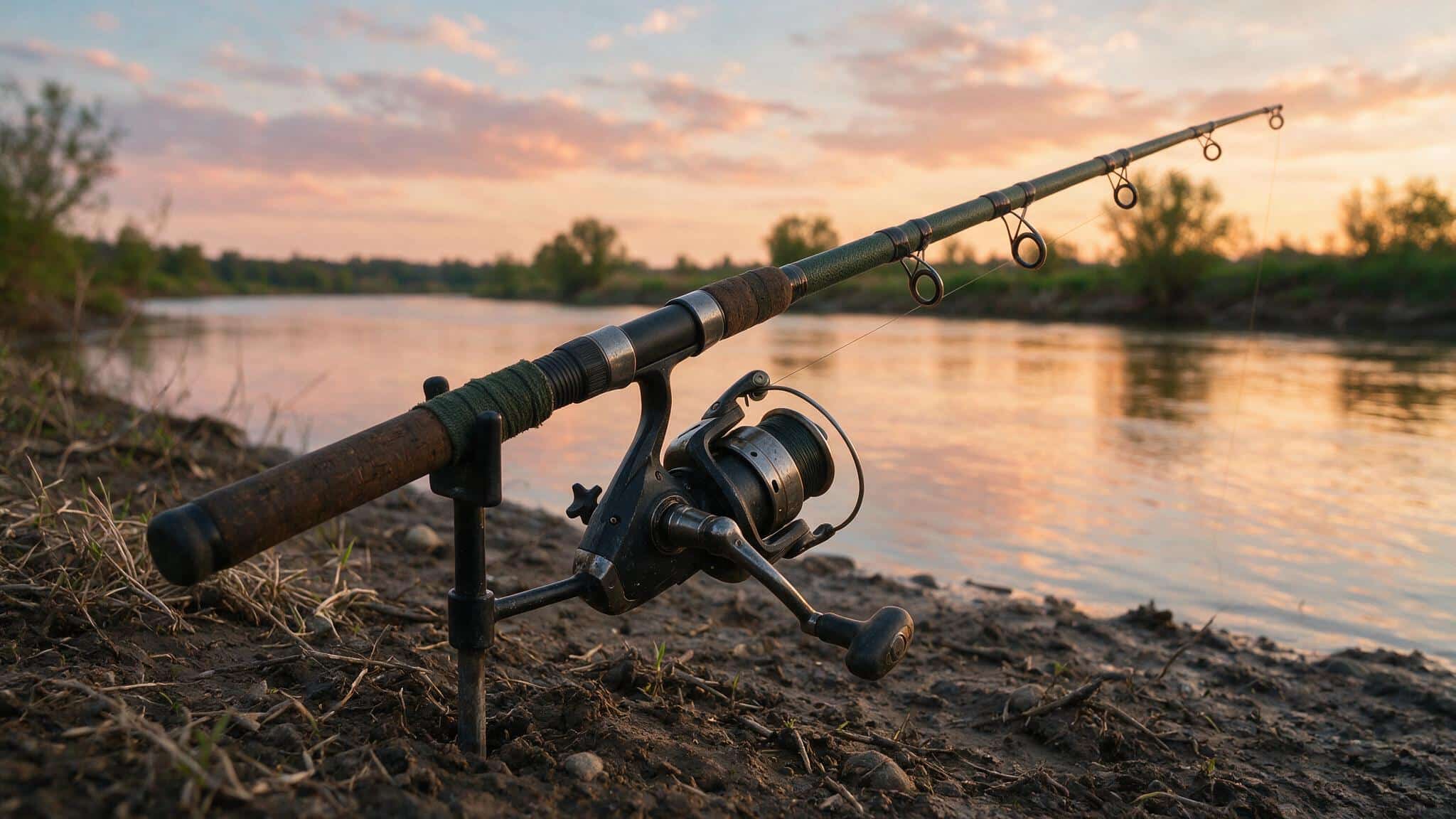
If you fish from the bank, invest in a rod holder or rod pod rather than propping rods on forked sticks. Catfish bites can be a subtle tap or a full rod-bending slam depending on the rig and bait, and a stable holder means you actually see and feel the difference instead of losing a rod to the water on a hard strike. Pair that stable setup with a solid catfish rig, since the best rod and reel in the world will not save a poorly tied rig when a big fish commits.
what I actually recommend
For most catfish anglers working ponds, lakes, and moderate rivers targeting channel cats and modest blues, a heavy power, seven foot spinning combo with a 4000 to 5000 size reel and thirty to fifty pound braided line covers the large majority of situations without overspending. Save the true heavy tackle, longer rods and bigger reels with serious drag capacity, for when you are specifically targeting trophy blues or flatheads on big water, since that gear is overkill and less enjoyable to fish for anything smaller.
If you want the broader picture on how rod and reel combos get matched in general before narrowing down to catfish specifically, we cover that in our guide to rod and reel combos.
Catfish gear rewards anglers who buy for the fight, not the cast. A moderate action heavy rod, a reel with real drag capacity and line capacity to match, and a properly tied rig will land more big cats than any amount of extra rod length or reel speed. Skip the bargain bin on this one species more than any other, because the fish will find the weak link in your gear eventually.