Backlash is the reason a lot of anglers try a baitcaster once, fight a bird’s nest for ten minutes, and go straight back to a spinning reel for good. It doesn’t have to end that way. Backlash is mechanical, not a character flaw, and once you understand why it happens, most of it is preventable.
why backlash actually happens
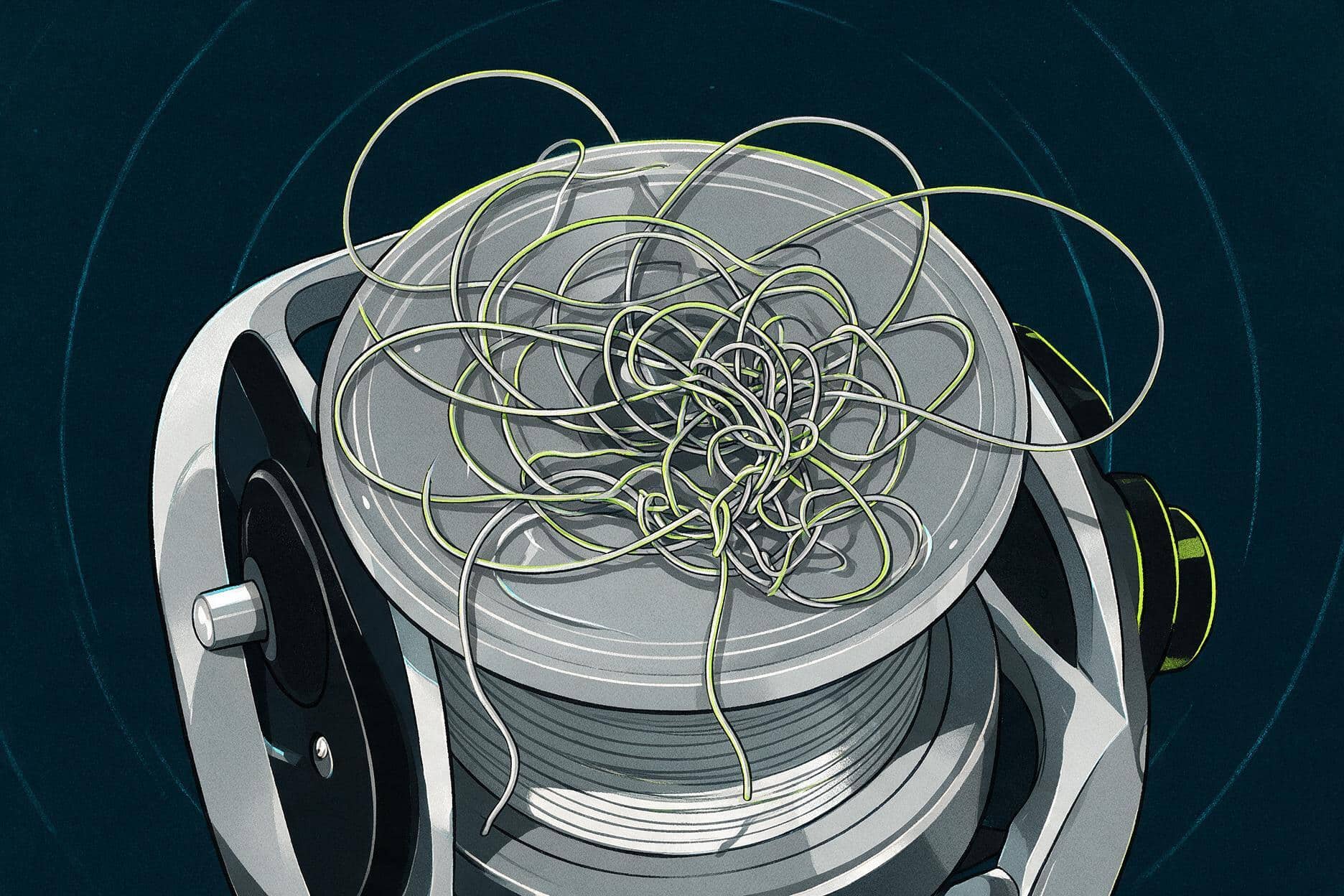
A baitcasting spool spins on its own axis every cast, driven by the weight of the lure pulling line off it. The problem is momentum. The spool keeps spinning at whatever speed it built up even after the lure starts slowing down in the air, especially in the last few feet before it lands. Line keeps paying out from a spool that’s now spinning faster than the lure needs, and that extra line has nowhere to go but into a tangled pile. That pile is your backlash, and it’s really just a timing mismatch between spool speed and lure speed, not bad luck.
the two brakes doing the actual work
Every baitcaster has two systems fighting that timing mismatch, and both need to be set, not just one. The spool tension knob, usually a small dial right next to the handle, controls a mechanical brake on the spool itself. Set it for each lure you tie on: hold the rod out, press the release, and let the lure drop on its own. It should fall slowly and stop the moment it hits the ground or water. If the spool keeps spinning after the lure stops falling, tighten the knob. Change lure weight, reset the knob. Skipping this step every time you swap lures is the single biggest reason backlash keeps happening to people who otherwise know what they’re doing.
The second system is the centrifugal or magnetic brake, usually a dial on the side plate or an internal set of adjustable weights. This one manages spool speed throughout the whole cast, not just the moment of release. Turn it up while you’re learning. It costs you some casting distance, but it buys a lot of forgiveness for imperfect thumb control. Back it off gradually as your casts get more consistent.
fixing a backlash once it happens
Don’t reel into it. Cranking the handle when the spool is already tangled just cinches the mess tighter and turns a two-minute fix into a wasted lure and a chunk of line you’ll end up cutting out. Open the side plate or spool cover, find the loose end of the nest, and pick it apart from the outside in with a fingernail or a small pick, easing slack rather than pulling against it. It’s slow and mildly annoying every single time, and it’s also the only method that actually works without making things worse.
the mistake that causes backlash on repeat
Using the same spool tension setting no matter what’s tied on. A heavy swimbait and a light finesse jig need completely different tension settings, and running the jig setting on the swimbait, or the reverse, is asking for an overrun on nearly every cast. The other repeat offender is thumb control, or the lack of consistent thumb pressure through the entire cast rather than just jamming a thumb down at the very end. Feathering the spool lightly the whole way through the cast, not just braking hard right before it lands, is what actually prevents the pileup in the first place.
Wind matters too. Casting into a headwind slows the lure down faster than the spool expects, which is exactly the mismatch that causes backlash. Dial the brake up on windy days rather than fighting the same settings you use in calm conditions.
practicing without losing your patience
Set the brake and spool tension higher than you think you need, and practice underhand pitches across open grass or a parking lot before moving to full overhead casts. Backing the brake off a notch every session or two, as thumb control improves, is a much faster path to confident casting than cranking everything wide open on day one and fighting backlash on every cast. Our step-by-step casting guide walks through that whole practice progression in more detail. Learning on mono instead of braid helps too, since thinner braid piles up faster and tighter than mono when the timing goes wrong, which makes early mistakes more frustrating to untangle than they need to be. Once the fundamentals are there, moving over to the right line for the job gets a lot easier.
Baitcasters aren’t harder to use than spinning reels once the brakes are dialed in, they’re just less forgiving of skipping that step. For the rest of what keeps a reel running the way it should, the reel maintenance checklist and the common repairs worth knowing cover the other side of keeping gear reliable.
Backlash is the reason a lot of anglers try a baitcaster once, fight a bird’s nest for ten minutes, and go straight back to a spinning reel for good. It doesn’t have to end that way. Backlash is mechanical, not a character flaw, and once you understand why it happens, most of it is preventable.
Set the spool tension knob for your lure
Hold the rod out, press the release, and let the lure drop on its own. It should fall slowly and stop the moment it hits the ground or water. If the spool keeps spinning after the lure stops falling, tighten the knob. Reset it every time you change lure weight.
Set the centrifugal or magnetic brake
Turn the brake up while you’re learning. It costs some casting distance, but it buys a lot of forgiveness for imperfect thumb control. Back it off gradually as your casts get more consistent, and dial it up again on windy days since a headwind slows the lure faster than the spool expects.
Clear an existing backlash without making it worse
Don’t reel into it. Cranking the handle when the spool is already tangled just cinches the mess tighter. Open the side plate or spool cover, find the loose end of the nest, and pick it apart from the outside in with a fingernail or a small pick, easing slack rather than pulling against it.
What actually causes baitcaster backlash?
It’s a timing mismatch. The spool keeps spinning from its own momentum even after the lure starts slowing down in the air, especially in the last few feet before it lands. Line keeps paying out from a spool that’s now spinning faster than the lure needs, and that extra line has nowhere to go but into a tangled pile.
Should I reel into a backlash to clear it?
No. Cranking the handle when the spool is already tangled just cinches the mess tighter, turning a two-minute fix into a wasted lure and a chunk of line you’ll end up cutting out. Open the side plate instead and pick the nest apart from the outside in.
Does wind affect baitcaster backlash?
Yes. Casting into a headwind slows the lure down faster than the spool expects, which is exactly the mismatch that causes backlash. Dial the brake up on windy days rather than fighting the same settings you use in calm conditions.
Is it easier to learn baitcasting with mono or braid?
Mono. Thinner braid piles up faster and tighter than mono when the timing goes wrong, which makes early backlashes more frustrating to untangle than they need to be. Many anglers learn on mono before switching over once their thumb control is more consistent.