Catfish rigs get treated like one generic setup when they’re really a small family of rigs, each suited to different water and different catfish behavior. Using the wrong one for the situation is a common reason anglers blank on fish that are actually there and feeding.
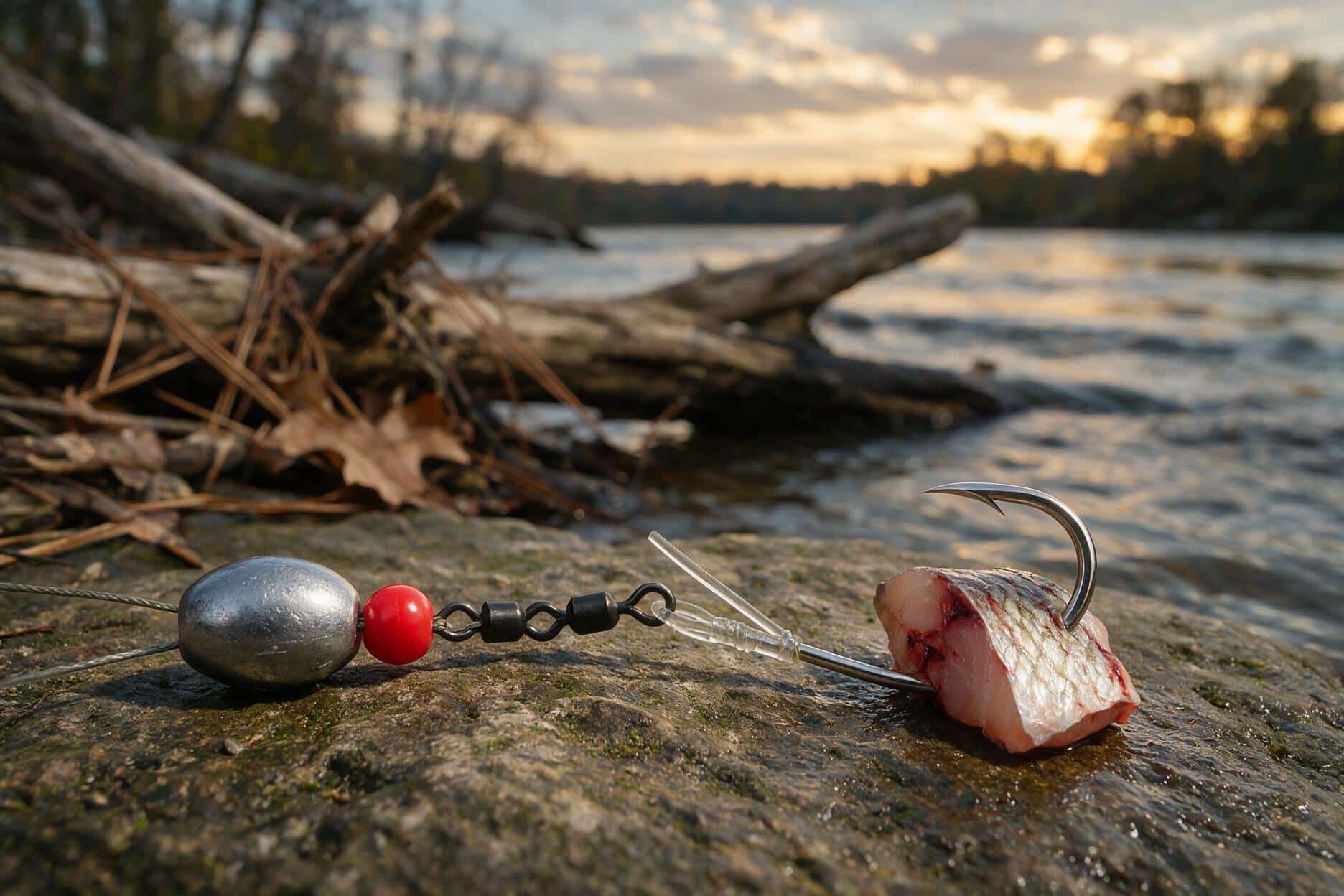
the slip sinker rig: the default for a reason
The slip sinker rig, sometimes called a Carolina-style catfish rig, is the standard starting point. A sliding egg or no-roll sinker rides on the main line above a swivel, a leader of 12 to 24 inches runs from the swivel to a circle hook. The sliding weight lets a catfish pick up the bait and move off without immediately feeling resistance, the same principle behind a Carolina rig for bass, adapted to heavier tackle and bigger bait.
This rig covers still or slow-moving water well, reservoirs, lake flats, slow river pools, anywhere current isn’t strong enough to constantly drag the rig out of position.
the three-way rig: built for current
In rivers with real current, a three-way rig holds bottom better than a sliding sinker does. Tie a three-way swivel to your main line, run a short dropper line of 6 to 12 inches to a bell or bank sinker, and a longer leader of 18 to 24 inches to the hook. The separate dropper means a snagged weight doesn’t cost you the whole rig, just the sinker.
This setup keeps the bait pinned in current without the weight sliding downstream and dragging everything with it, which is exactly the failure mode a slip sinker rig runs into once current picks up.
the santee rig: for suspending bait off bottom
When catfish are feeding up off the bottom rather than on it, common at night or over structure, a santee rig suspends the bait using a float threaded onto the leader between a bottom weight and the hook. The float holds the bait up in the water column instead of letting it sit on bottom where catfish aren’t looking.
This is the least common of the three but worth carrying terminal tackle for specifically, swapping to it when marking fish well off bottom on electronics is the difference between working the water column and ignoring it.
line and leader strength
Catfish rigs run heavier than most other setups on this site, 20 to 40 pound monofilament main line for average channel and blue cats, stepping up to 50 pound plus and abrasion-resistant fishing line for big flatheads or rough, snaggy bottom. Leaders typically match or run slightly lighter than the main line so a snag costs you the leader and hook, not the whole rig.
Circle hooks in the 5/0 to 8/0 range cover most catfish bait sizes, sized up for big cut bait or live bait meant to draw trophy fish rather than numbers.
tying it on
A Palomar knot handles circle hooks well and holds up to the heavier lines catfish rigs typically run. For the leader-to-mainline connection on a slip sinker or three-way rig, a surgeon’s knot ties mismatched diameters fast without the wrap-count fuss of a blood knot, useful since catfish leaders often run noticeably lighter than a heavy main line.
bait and rig pairing
Cut bait and stink bait work best fished nearly stationary on a slip sinker or three-way rig, since catfish locate them mostly by scent and don’t need much movement to find them. Live bait, especially for flatheads, pairs better with a santee rig or a lighter slip sinker setup that lets the bait move naturally and draw a reaction bite rather than a scent-based one.
mistakes that cost catfish
Using one rig for every situation is the biggest one, a slip sinker rig in heavy current just gets dragged out of the strike zone, a three-way rig in still water is more terminal tackle than the situation calls for. Match the rig to the water, not to habit.
The other common mistake is undersized hooks paired with big cut bait, a hook too small for the bait gets masked and misses solid hooksets. Size the hook to the bait first, the fish second.
catfish rig FAQ
What’s the best all-around catfish rig? The slip sinker rig covers the widest range of conditions and is the right default when you’re not sure which to tie on.
Do you need circle hooks for catfish? Not strictly, but they hook fish in the corner of the mouth reliably on a rod left in a holder, which most catfish rigs are fished from, reducing gut-hooked fish compared to J-hooks.
How heavy should a catfish leader be? 20 to 40 pound test covers most channel and blue cat situations, scale up toward 60 to 80 pound test for big flathead water or rough bottom.
Can you use a Carolina rig for catfish? Essentially yes, the slip sinker catfish rig is a heavier-tackle version of the same concept, sliding weight above a swivel and leader.