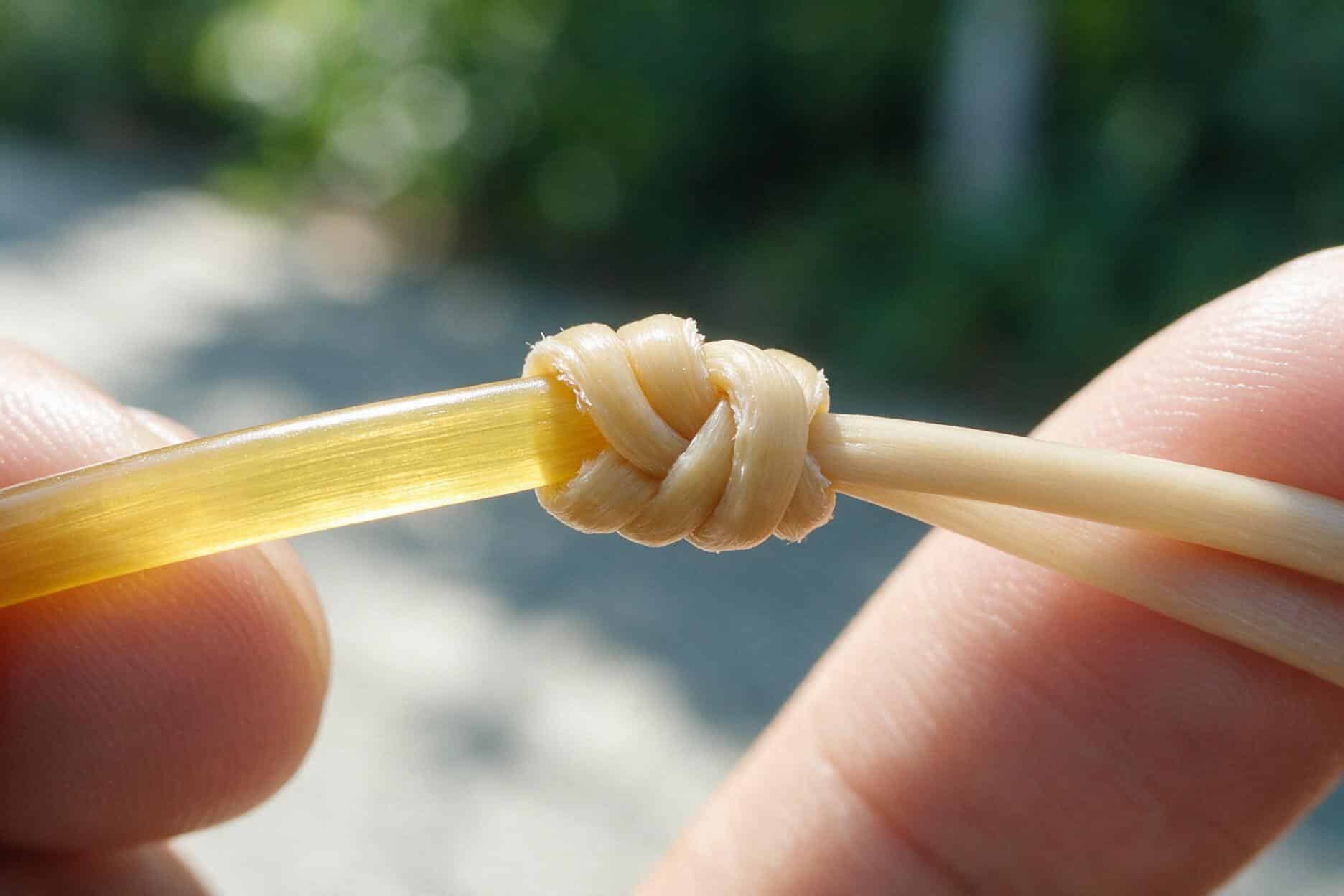
The surgeon’s knot solves one specific problem better than anything else in the average angler’s fishing knots rotation: joining two lines of noticeably different diameter, fast, without the wrap-counting math a blood knot demands. It’s the knot most anglers reach for the first time they need to add a leader and don’t want to think too hard about it.
why this knot beats the alternatives for mismatched line
A blood knot ties two lines together with matching wraps on each side, which works well when both lines are close in diameter and falls apart in practice once one line is noticeably thicker than the other, the thin line wraps too many times before the thick line catches up, or the reverse. The surgeon’s knot sidesteps that problem entirely because both lines get tied through the same set of overhand loops regardless of how different their diameters are.
That makes it the standard choice for tying a fluorocarbon leader onto braided main line, a pairing where the diameters can differ by a factor of three or four. Try a blood knot on that combination and you’ll fight the wrap ratio the whole time.
tying it step by step
Overlap the two lines by six to eight inches, running parallel to each other. Treat the overlapping section as a single doubled strand for the rest of the knot.
Form a loop with the doubled strand and pass the entire doubled section through the loop, exactly like starting an overhand knot, except you’re pulling two lines through together instead of one.
Pass the doubled strand through the loop a second time, this gives you the double overhand structure that holds meaningfully better than a single pass, which is closer to a plain overhand knot and slips more easily under load.
Wet the lines, then pull all four ends, both tag ends and both standing lines, evenly to cinch the knot down into a compact ball. Trim both tag ends close, leaving a small margin.
why the double pass matters
A single overhand pass technically joins two lines, but it holds a lower percentage of line strength and tends to work loose under repeated casting and retrieving. The second pass through the loop is what turns a weak connection into one that holds up to the pressure of a hookset and a fighting fish. Skipping it to save a few seconds is a trade that costs more than it saves.
Some anglers add a third pass for extra security on heavier lines or leaders meant to handle abrasion against structure, at the cost of a slightly bulkier knot that can catch on rod guides more than a standard double surgeon’s.
when you actually need this knot
Any time your leader material differs from your main line, which is most modern setups running braid main line with a mono or fluorocarbon leader, you need a line-to-line connection, and the surgeon’s knot is the fastest reliable option. It also comes up any time you’re extending a leader that’s gotten short from repeated re-tying, or building a shock leader for casting distance on surf or pier setups.
It has no role in tying a hook or lure directly to line, that’s a job for a Palomar or an improved clinch knot instead. Keep the two knot families separate in your head: eye knots for hardware, line knots for joining line to line.
how it compares to a blood knot
A blood knot, tied correctly on two similar-diameter lines, holds a marginally higher percentage of breaking strength and creates a slimmer profile that passes through rod guides more smoothly. That makes it worth learning for anglers who frequently join similar lines, fly fishing leaders being the clearest example.
The surgeon’s knot trades a little of that strength and slimness for speed and reliability across mismatched diameters, which is the more common real-world situation for most freshwater anglers connecting fishing line to a leader. Learn the surgeon’s knot first, add the blood knot later if your fishing consistently involves matched-diameter connections.
where anglers get it wrong
Uneven tension when pulling the four ends tight is the most common mistake, if you pull the tag ends harder than the standing lines or vice versa, the knot cinches lopsided and one side ends up weaker than the other. Pull all four together, evenly, and let the knot settle into a symmetrical ball.
The other common error is skipping the wet step, same failure mode as every friction knot on this site, dry line generates heat under the friction of cinching down and that heat weakens the strand exactly where the load concentrates.
surgeon’s knot FAQ
Is the surgeon’s knot strong enough for heavy leaders? Yes, tied correctly with a double or triple pass, it holds up well for leader-to-mainline connections even on stouter saltwater-style setups, not just light freshwater leaders.
Can you tie a surgeon’s knot with braid? Yes, it’s a common way to join braid to a fluorocarbon or monofilament leader, one of the more reliable options for that specific pairing alongside the uni knot.
Does the surgeon’s knot work for joining line to line of the same diameter? Yes, though a blood knot holds slightly better and creates a slimmer connection for that specific case.
How many wraps does a surgeon’s knot need? None in the sense of a clinch or uni knot, it’s built on overhand loop passes instead of wraps, two passes for a standard surgeon’s, three for extra holding power on heavier lines.
Join two lines of different diameter fast using a double surgeon’s knot, no wrap-counting required, ideal for tying a fluorocarbon or mono leader to braided main line.
Overlap the two lines
Overlap the two lines by six to eight inches, running parallel to each other, and treat the overlapping section as a single doubled strand for the rest of the knot.
Pass the doubled strand through the loop
Form a loop with the doubled strand and pass the entire doubled section through it, exactly like starting an overhand knot, except pulling two lines through together instead of one.
Pass it through a second time
Pass the doubled strand through the loop a second time to form the double overhand structure, which holds meaningfully better than a single pass and resists slipping under load.
Wet, cinch, and trim
Wet the lines, then pull all four ends, both tag ends and both standing lines, evenly to cinch the knot into a compact ball. Trim both tag ends close, leaving a small margin.
Is the surgeon’s knot strong enough for heavy leaders?
Yes, tied correctly with a double or triple pass, it holds up well for leader-to-mainline connections even on stouter saltwater-style setups, not just light freshwater leaders.
Can you tie a surgeon’s knot with braid?
Yes, it’s a common way to join braid to a fluorocarbon or monofilament leader, one of the more reliable options for that pairing alongside the uni knot.
Does the surgeon’s knot work for joining line to line of the same diameter?
Yes, though a blood knot holds slightly better and creates a slimmer connection for that specific case.
How many wraps does a surgeon’s knot need?
None in the sense of a clinch or uni knot, it’s built on overhand loop passes instead of wraps, two passes for a standard surgeon’s, three for extra holding power on heavier lines.