A blood knot joins two lines of similar diameter, and it’s the one I reach for anytime I’m building a leader from spools instead of buying one pre-tied. It isn’t the fastest knot to tie with cold fingers on a boat ramp at six in the morning, and it isn’t forgiving of shortcuts. Tied correctly, though, a blood knot keeps close to full line strength at the connection, and that matters more to me than saving thirty seconds.
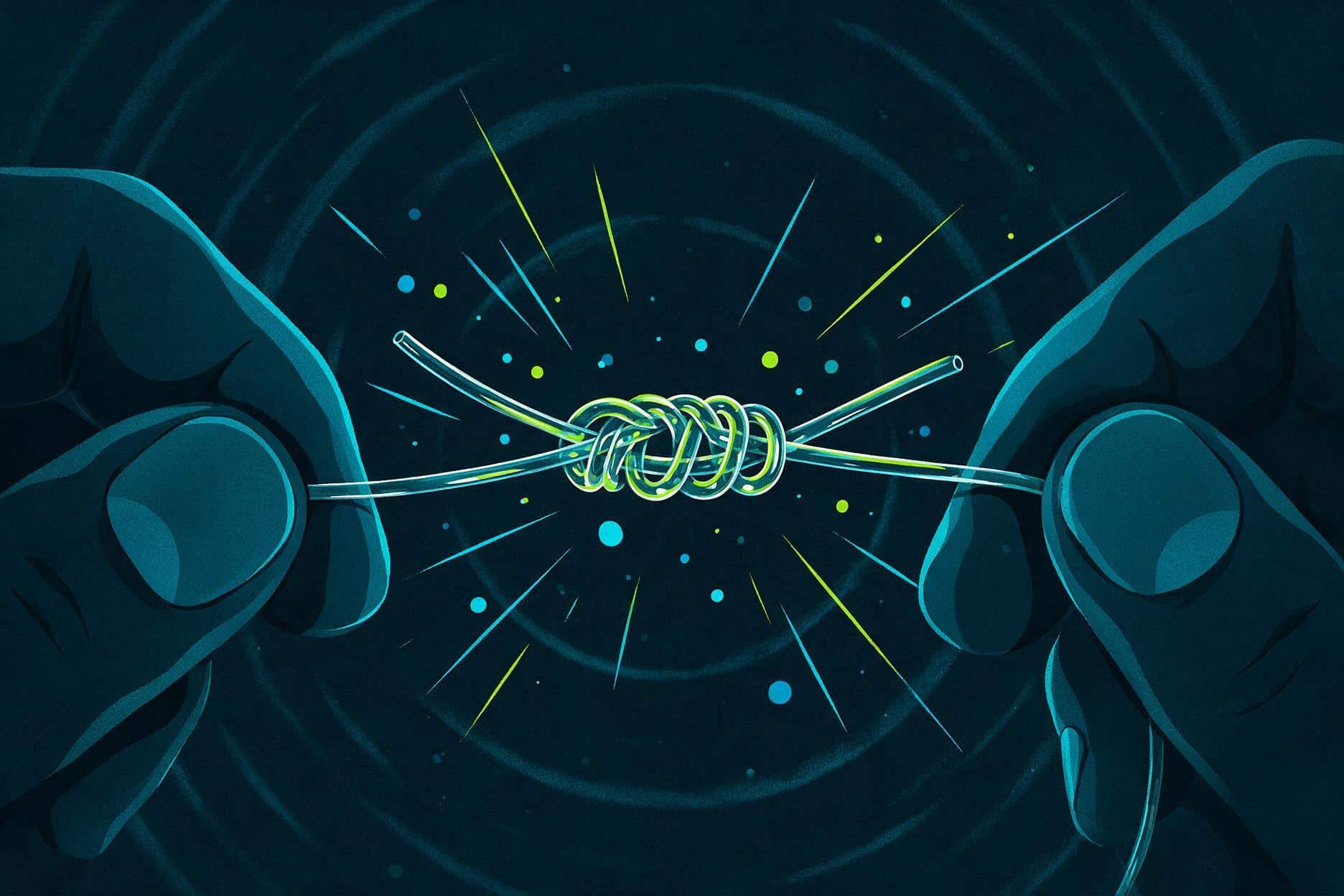
what a blood knot is actually for
The blood knot exists to join two pieces of monofilament or fluorocarbon that are close in diameter, roughly within one or two line-test sizes of each other. Stretch that gap too far and the thinner line cuts into the thicker one under load instead of cinching evenly against it. That’s the knot’s real limitation, and it’s why fly anglers use it constantly to build tapered leaders section by section, tying progressively thinner sections together from the butt down to the tippet. It’s also why I use it to splice two partial spools of the same mono into one usable length instead of throwing out line that still has plenty of life left.
Fluorocarbon behaves a little differently here. It’s stiffer and slicker, so the wraps don’t bite into each other quite as readily. I add one extra wrap per side when I’m joining fluoro to fluoro, and I test the knot harder before trusting it. Mixing mono and fluoro in the same blood knot works, but the two materials cinch at different rates, so go slow when you pull it tight.
If you’re joining braid to a fluorocarbon or mono leader, skip this knot entirely. The diameters and the materials behave too differently for a blood knot to hold, and you’ll want something built for that mismatch instead. Read up on fishing line types first if you’re not sure which knot fits which pairing.
how to tie a blood knot, step by step
- Overlap the two line ends by about eight inches, running in opposite directions.
- Pinch the crossing point between your thumb and finger. Wrap one tag end around the standing line of the other piece five to seven times, working away from the crossing point.
- Bring that tag end back and thread it through the small gap at the center, right next to where the lines first crossed.
- Repeat the wrap with the second tag end, going the opposite direction, the same number of turns as the first side. Thread it back through that same center gap, but from the other side, so the two tag ends cross each other in the gap.
- Wet the whole knot with saliva or water. Pull the two standing lines apart slowly and evenly. The wraps on both sides should collapse toward the center at roughly the same rate.
- Trim the tag ends close, leaving about a millimeter of stub so the knot doesn’t slip under a hard hookset.
the mistake that costs anglers the most strength
Uneven wraps. Six turns on one side and four on the other looks fine until it’s under load, and then the fewer-wrap side slips first, usually right when a fish is running. Count your wraps out loud if you have to. I still do it, twenty years in, because guessing costs more than the two extra seconds counting takes.
The second mistake is skipping the water. Mono and fluorocarbon both generate friction heat as the coils cinch down, and dry friction weakens the line right at the knot. A wet knot slides into place instead of burning into place. It’s a two-second step that gets skipped constantly because people are in a hurry to get a bait back in the water.
The third mistake is trusting the knot without testing it. Before any leader goes on my rod, I give it one hard, sudden pull with both hands, the kind of jolt a good fish gives on the first run. If a knot is going to fail, I want it to fail on the dock, not forty yards out with a fish attached.
blood knot versus the alternatives
The uni knot, tied as a double uni for line-to-line connections, does roughly the same job and it’s easier to manage with numb hands or in low light, since you’re not counting matched wraps on two separate sides of a single knot. The tradeoff is bulk. A double uni leaves a slightly larger connection that catches more on rod guides during a cast, which matters if you’re running long leaders through tight guides on a spinning rod. For joining two lines of very different diameter, like braid to a mono or fluoro leader, an Albright knot is the better tool, since it’s built around that mismatch instead of fighting it.
I still default to the blood knot for same-diameter splices because it lies flatter through the guides and I’ve never had one fail on me when it was tied wet and tested first. That’s really the whole case for it. Not the fastest knot to learn, not the easiest one to tie in the dark, just the one I trust once it’s done right.
Building tapered leaders from bulk spools instead of buying them pre-tied saves real money over a season, and the blood knot is the connection that makes it worth doing. Tie a dozen of them and it stops feeling fiddly and starts feeling like the obvious way to rig. For the rest of the knots worth knowing, the complete fishing knots guide covers where this one fits alongside the others.
How to tie a blood knot to join two lines of similar diameter, keeping close to full line strength at the connection for building leaders from spools.
Overlap the two lines
Overlap the two line ends by about 8 inches, running in opposite directions.
Wrap the first side
Pinch the crossing point, then wrap one tag end around the other line’s standing line 5 to 7 times, working away from the crossing point, and thread it back through the center gap.
Wrap the second side
Repeat the wrap with the second tag end, going the opposite direction, the same number of turns as the first side, then thread it back through the same center gap from the other side so the two tag ends cross.
Wet, cinch, and trim
Wet the whole knot, then pull the two standing lines apart slowly and evenly so the wraps on both sides collapse toward the center at the same rate, then trim the tag ends close, leaving about a millimeter of stub.
What line diameters can a blood knot join?
Lines that are close in diameter, roughly within one or two line-test sizes of each other. Stretch the gap much wider than that and the thinner line cuts into the thicker one under load instead of cinching evenly against it, so a blood knot isn’t the right choice for a big step up in diameter.
Can a blood knot join braid to a mono or fluorocarbon leader?
No, skip the blood knot entirely for that pairing. The diameters and materials behave too differently for the wraps to cinch evenly. An Albright knot is built around that kind of mismatch and holds up better for joining braid to a mono or fluoro leader.
Blood knot vs. double uni knot for joining lines, which is better?
Both do roughly the same job on similar-diameter lines. A double uni knot is easier to manage with numb hands or in low light since there’s no need to count matched wraps on two separate sides of a single knot, but it leaves a bulkier connection that catches more on rod guides. A blood knot lies flatter through the guides, which is why it stays the default for building tapered leaders.
What’s the biggest mistake that weakens a blood knot?
Uneven wraps. Six turns on one side and four on the other looks fine until it’s under load, and then the fewer-wrap side slips first, usually right when a fish is running. Counting the wraps out loud on both sides is worth the extra two seconds it costs.