Finesse fishing lures exist for one reason: sometimes bass have seen every big, loud, fast-moving bait in the lake and they just are not interested. Downsize the profile, slow everything down, and use line light enough to disappear in clear water, and the same fish that ignored a spinnerbait all morning will inhale a four-inch worm on a bare hook. That’s the entire logic behind finesse fishing lures, and once you understand why they work, you stop treating them as a last resort and start reaching for them on purpose.
I learned this the slow way, mostly by getting outfished on my own local pond by guys throwing gear that looked like it belonged on a trout stream, not a bass lake. Watching someone catch fish on a bait a third the size of what I had tied on was humbling enough that I finally sat down and figured out what finesse fishing lures actually do differently.
what counts as a finesse fishing lure
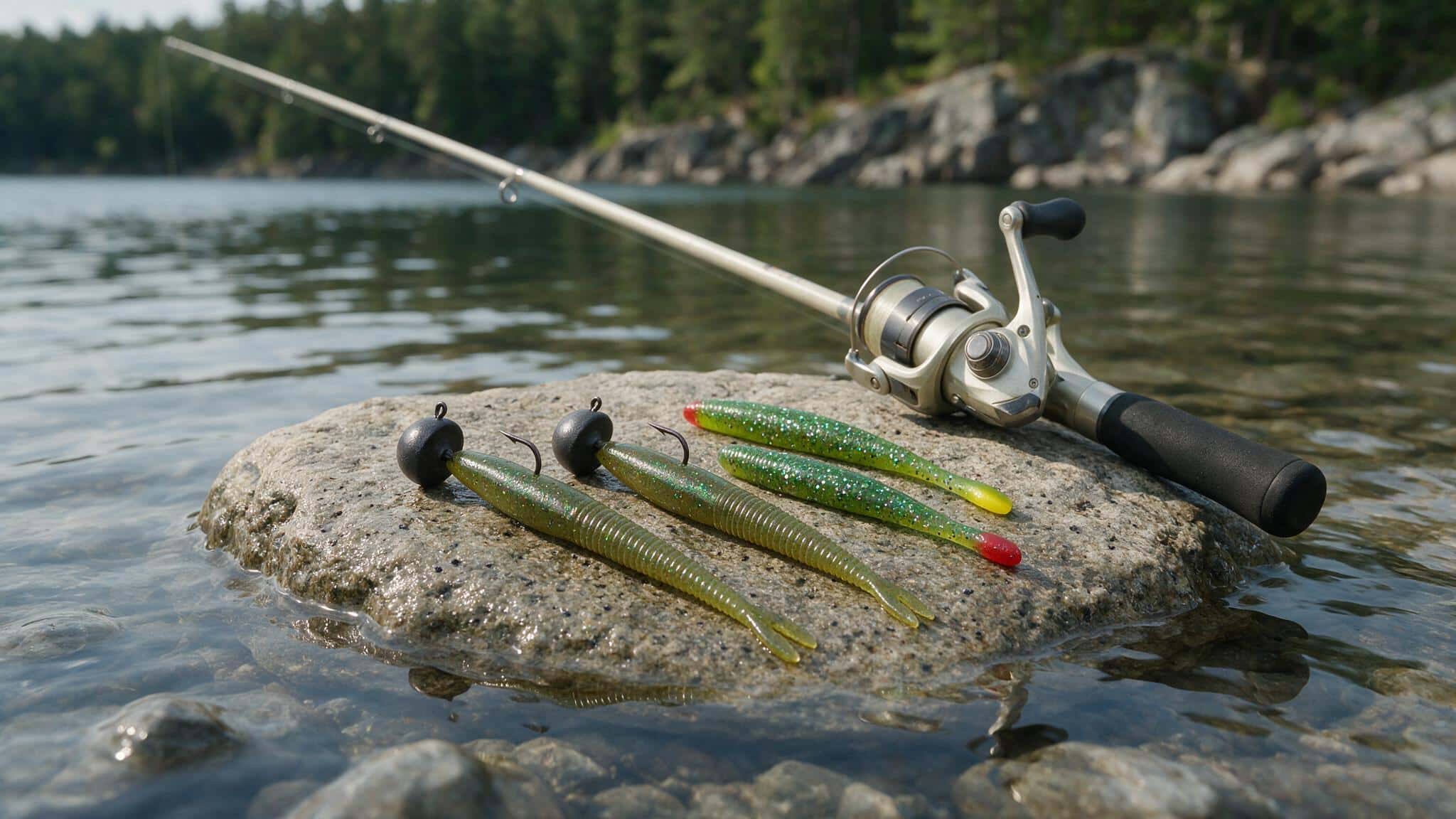
Size and subtlety are the two things that define finesse fishing lures. A four to six inch straight tail worm, a small tube, a tiny paddle tail swimbait, or a compact creature bait all qualify, as long as they’re fished on light line with a small hook and minimal weight. The goal is a natural fall and a profile that looks like an easy, low-risk meal rather than something that triggers a reaction strike.
This is different from downsizing a crankbait or a spinnerbait. Those are still moving baits built to trigger reflexive bites. Finesse fishing lures work the opposite way, appealing to a bass’s willingness to eat something that looks harmless and requires no real effort or risk to catch.
the core finesse rigs worth knowing
A shaky head is a light jig head with an exposed or lightly weedless hook, rigged with a straight tail worm nose-hooked so it stands up off the bottom on its own. It is close to unkillable as a confidence bait, since the worm just sits there quivering even when you’re not moving the rod at all.
A drop shot puts the weight below the bait instead of above it, so the lure hangs at a fixed height off bottom while you shake the rod tip. It is the rig I reach for over suspended fish or when bass are sitting just off bottom in clear water, ignoring anything that looks like work.
A ned rig pairs a small mushroom-shaped jig head with a short, fat stick-style bait, and it falls with a slow, subtle wobble that fish seem to trust more than almost anything else in cold or heavily pressured water. It’s become one of the most talked-about finesse fishing lures over the last several years, and the reputation is deserved.
Small tubes rigged on a light jig head round out the list, especially around rock and clearer water where a compressed, buggy profile outperforms anything bulkier. For specific worm, tube, and creature bait picks, our best soft plastics for bass guide breaks down what to actually buy.
gear built for finesse fishing lures
A medium-light or light spinning rod with a fast tip is the standard tool here, not a casting rod. Spinning gear casts light rigs further and more accurately than a baitcaster, and the soft tip helps you feel subtle bites that a stiffer casting rod tip can mask entirely.
Line matters more with finesse fishing lures than with almost any other bass technique. Straight fluorocarbon in 6 to 10 pound test is the default, since it sinks, has low visibility in clear water, and has almost no stretch to help you feel light pickups. Some anglers run light braid with a fluorocarbon leader for extra sensitivity and no stretch at all, though it takes some getting used to on spinning gear before you stop losing fish to the added sensitivity turning into snapped hooksets.
how to fish finesse lures without overworking them
The single biggest mistake I see, and one I made constantly early on, is moving the bait too much. Finesse fishing rewards patience past the point where it starts to feel unproductive. Cast, let the bait fall on a controlled line, and then do far less than feels natural. A shaky head might just sit still for five or ten seconds. A drop shot gets small twitches of the rod tip, not full hooksets or hard snaps.
Watching your line matters as much as feeling the bite. Most strikes on finesse fishing lures show up as the line twitching, jumping sideways, or simply going slack, not as a hard thump. Anglers who wait to feel a bite the way they would on a chatterbait or a crankbait miss a large share of their opportunities, since the whole point of a light, subtle bait is that fish eat it without much commitment or force.
when to reach for finesse over power
Clear water is the most obvious trigger. Bass get a long look at anything moving through clear water, and a finesse presentation gives them less to second-guess. Fishing pressure is the second big one. Lakes that see a lot of traffic condition fish to avoid anything that looks like a typical lure, and that is exactly where finesse fishing lures separate anglers who catch fish from anglers who go home skunked.
Cold fronts and post-frontal conditions are the third trigger. When a front pushes through and the bite shuts down, slowing all the way down to a finesse presentation often salvages a day that would otherwise be a blank. I keep a rod rigged with a shaky head ready at all times specifically for these stretches, since switching over after an hour of getting nothing on faster gear rarely works as well as starting slow and adjusting up if the fish prove more aggressive than expected.
None of this replaces reaction baits entirely. A chatterbait still covers water faster and finds active fish better than any finesse presentation ever will, and a lot of days start with something moving before settling into a slower approach once you’ve located fish. But when the bite gets tough, and it will, finesse fishing lures are usually the difference between a slow day and a blank one. Keep a light spinning rod rigged and ready, trust the subtle bites, and let patience do what speed and noise can’t.