Trout reward anglers who fish light and pay attention to water temperature more than almost any other freshwater species most people target. Ignore either one and you can fish good-looking water all day and never get a bite. Get both right and trout are some of the most consistent fish in freshwater to catch.
which trout you’re actually after
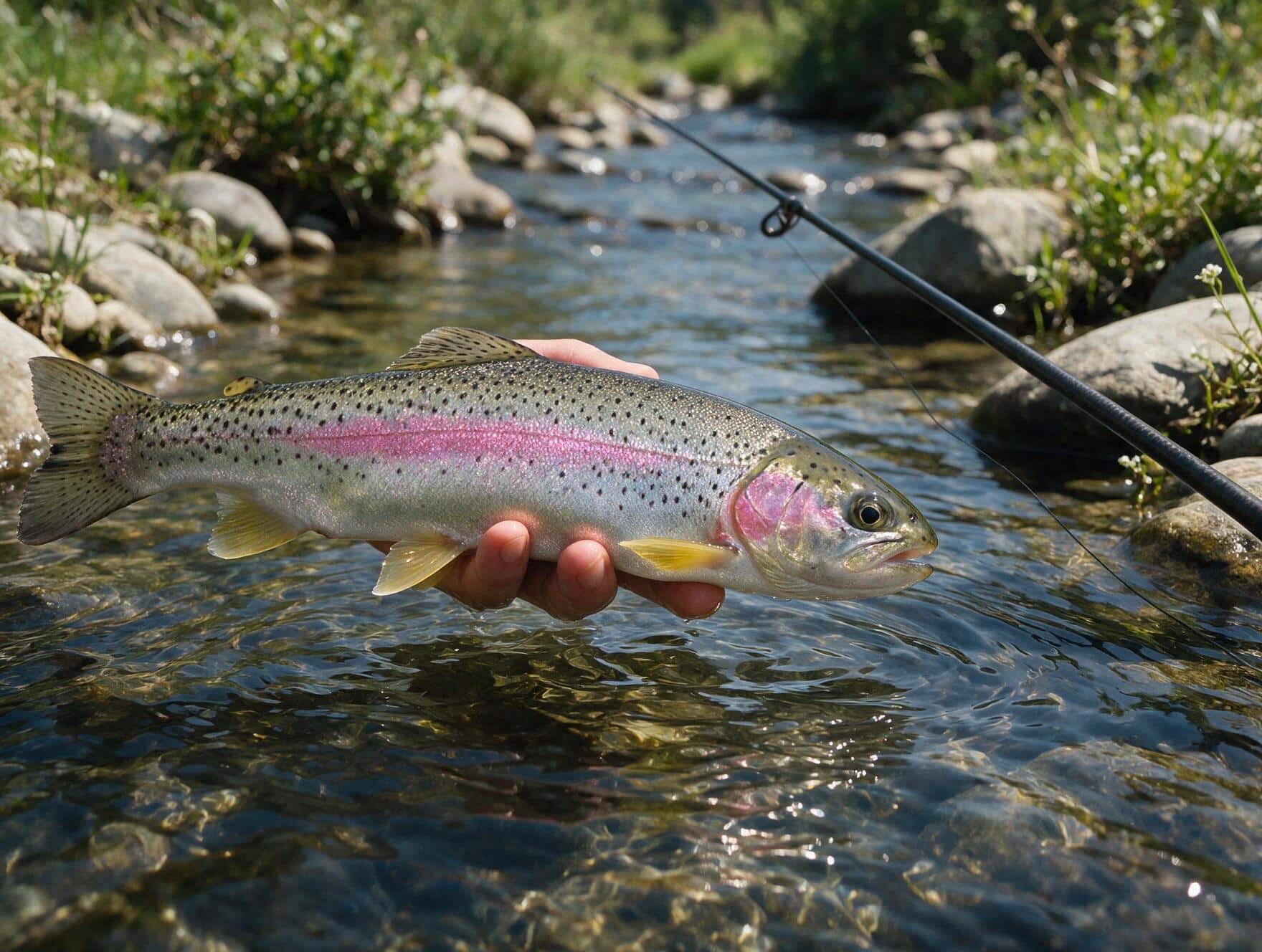
Rainbow trout are the fish most people mean when they say "trout." They tolerate a wider range of conditions than other trout, which is exactly why state agencies stock them by the millions into lakes, ponds, and rivers that would never naturally hold a trout population. Steelhead are the same species that ran to the ocean and came back changed; our steelhead trout fishing guide covers that separate set of tactics in full. Brown trout run wilder and warier, especially once they’ve survived a season or two in the same stretch of river; they get a reputation for being harder to fool for good reason. Brook trout are native to cold, clean streams in the eastern half of the country and tend to be smaller but strikingly colored. Lake trout live deep in large, cold lakes and are a different game entirely, usually requiring downriggers or heavy jigging gear rather than anything covered in this guide. Knowing which one you’re actually targeting changes almost every decision below.
water temperature is the whole game
Trout are a cold-water fish, most active somewhere between 50 and 65 degrees. Push much past the high 60s and they get sluggish, stressed, and start seeking out deeper water, shaded banks, or spots where a spring or feeder creek cools the main flow. In summer, that means fishing early morning or evening, not the middle of a hot afternoon, and it means paying attention to obvious cold-water inputs on a stream rather than assuming trout are spread evenly through it. In spring and fall, the opposite problem barely exists, and trout will feed through most of the day.
gear: go lighter than you think
An ultralight to light spinning rod paired with 2 to 6 lb line, mono or fluorocarbon, covers the overwhelming majority of trout fishing. Trout have excellent eyesight in clear water and heavier line gets refused more often than anglers realize, especially on pressured public water. If you already own a beginner spinning setup, it will work fine scaled down with lighter line; you don’t need to buy a dedicated trout rod to start.
three techniques that catch the most trout
Small inline spinners and spoons cover water fast and work well in both streams and stocked lakes. Our guide to the best trout lures covers specific picks in both styles. Retrieve slow enough that you can feel the blade turning through the rod tip, since a spinner retrieved too fast just skips across the surface without giving off the flash and vibration that triggers a strike. Bait fishing with garden worms or dough bait fished under a small float or on a light sliding sinker rig is close to unbeatable on recently stocked water, where fish haven’t yet learned to be selective. Fly fishing is its own discipline with its own gear and its own learning curve, and this guide doesn’t try to cover it in depth. If you’re starting out, spin and bait tackle will put more fish in your hands faster.
reading trout water in a stream
Trout hold in predictable spots: the slower water at the tail of a riffle, the seam where fast water meets slow, undercut banks, and the head and tail of deeper pools. They feed in or next to the current, where food gets delivered to them, but they rest in slower water where they don’t burn energy fighting the flow. A cast that drifts a bait or lure along that seam, instead of straight through the fastest current, covers water the way a trout actually uses it.
stocked vs wild trout behave differently
A truck-stocked trout dumped into a lake or river a few days ago will often hit almost anything, including bright, gaudy lures that would spook a wild fish instantly. A wild or holdover trout that’s survived a season of fishing pressure gets selective fast: natural colors, longer casts, lighter line, and a quieter approach on the bank all start to matter. Fishing the same way for both is how anglers do fine on opening week and then wonder why nothing works a month later on the same stretch of water.
common mistakes
Wearing bright clothing or stomping along the bank of clear, shallow water spooks fish before a cast ever goes in. Line testing heavier than the water calls for gets refused more than it gets blamed for. Retrieving spinners and spoons too fast, especially in cold water when trout are already sluggish, pulls the lure away before a fish can commit. And fishing the heat of a summer afternoon on water that’s climbed into the high 60s or warmer is mostly wasted effort compared to the same spot at dawn.
check regulations before you go
Trout regulations vary more by state, and even by specific water body, than almost any other freshwater fishing rule. Stocked put-and-take waters, wild trout special-regulation streams, seasonal closures, and bait restrictions in fly-only sections are all common, and they differ enough from one river to the next that general advice isn’t reliable here. Check your state wildlife agency’s current regulations for the specific water before you go, not just the general statewide trout rules.
what actually matters
Match your gear and line to the water clarity and the pressure the fish have seen, pay closer attention to water temperature than almost any other single factor, and pick a technique that fits the water type in front of you rather than defaulting to the same approach everywhere. Trout are forgiving fish to learn on once you respect those basics, and unforgiving the moment you ignore them.