Every tackle box eventually fills up with lures that looked great in the store and produced nothing on the water. Trout fishing rewards a smaller, sharper selection more than a big one. Carrying fifteen lures you trust beats carrying a hundred you are guessing with, and after years of trimming down what I carry, here is what actually stays in the box.
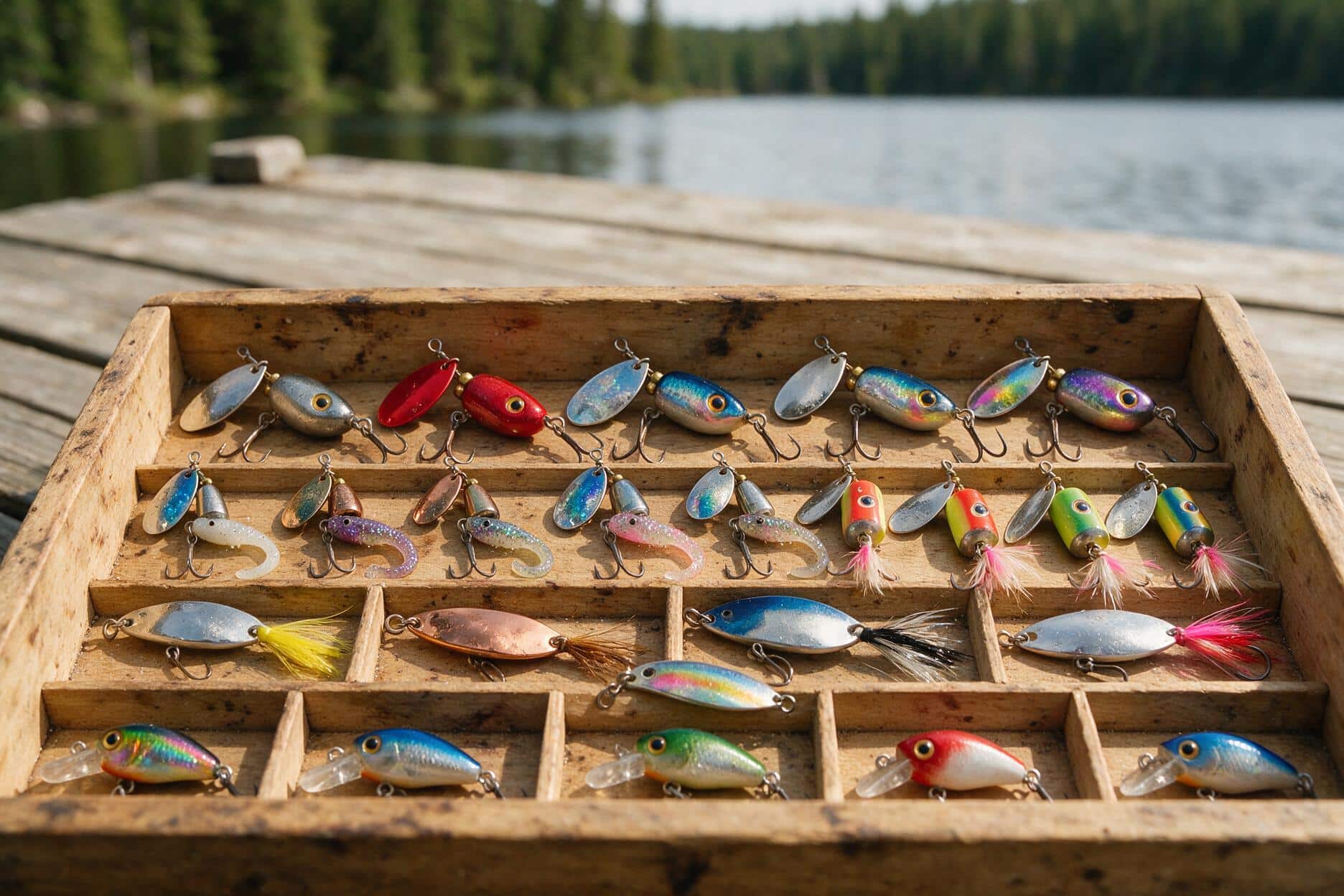
## inline spinners
A spinner is still the easiest lure to teach a beginner to fish well, because the mechanics forgive a lot of mistakes. Cast it out, reel it back at a steady pace, done. The blade spins and throws flash and vibration that trout notice from a distance, which matters in stained water or early season runoff when visibility is short.
Size 0 and 1 spinners handle small stream trout and stocked fish in ponds. Size 2 and 3 step up for bigger water and bigger fish. Gold blades work better in stained or low light conditions, silver blades work better in clear water and bright sun. That is not a hard rule, it is a starting point, and swapping blade color is often the fastest fix when a spinner that should be working is not.
The one mistake I see constantly is reeling a spinner too fast. The blade needs enough resistance to spin properly, but cranking it through the water like you are trying to set a speed record spooks fish more than it triggers them. Slow down until you can feel the blade thump through the rod tip, then slow down a little more.
## spoons
Spoons cast farther than almost anything else in a trout box, which makes them the right choice for covering big water fast, especially lakes and reservoirs where fish could be anywhere. The wobbling, erratic action mimics a wounded baitfish, and trout that would ignore a subtle presentation will often hit a spoon out of pure reaction.
A thin, light spoon works better for finesse presentations in clear streams. A heavier, thicker spoon casts farther and sinks faster, useful for working deep water or trolling behind a boat. Color choice follows the same stained-versus-clear logic as spinners, though brighter patterns like firetiger or chartreuse are worth tying on whenever the water has any color to it at all.
## soft plastics
Small soft plastic grubs and paddle tails rigged on a light jig head are underrated for trout, probably because they look more like a bass lure than a trout lure sitting in the package. Fish them slow, with a gentle lift and fall retrieve, and they read as an injured or struggling baitfish in a way that a straight retrieve lure cannot match.
A 1/16 or 1/32 ounce jig head paired with a two-inch grub covers most situations. Fish it under a bobber in still water for a slow, tantalizing fall, or drift it through current on a slightly heavier head. Trout that have seen every spinner in the lake all season sometimes cannot resist a soft plastic simply because it looks different from everything else being thrown at them.
## crankbaits and jerkbaits
Small crankbaits in the 2 to 3 inch range work well for larger trout, especially browns and lake-run fish that have shifted toward eating other fish rather than insects and small prey. A slow, twitchy retrieve with pauses tends to outproduce a straight crank, since the pause is when most strikes happen. Trout often hit a bait that has just stopped moving rather than one still in motion.
Jerkbaits that suspend, rather than float or sink, let you work a lure in place over a holding fish without pulling it away too fast. This matters most in clear lakes and slow pools where trout have time to inspect a bait before committing.
## matching lures to conditions
Water clarity drives lure choice more than any other single factor. Clear water calls for smaller, natural colored lures and a more subtle retrieve, since a spooky trout in clear water gets a good long look at anything passing by. Stained or murky water calls for bigger profiles, brighter colors, and more vibration, since the fish needs to find the lure with something other than sharp eyesight.
Season matters almost as much. Early spring in cold water means trout are sluggish and unwilling to chase, so a slow presentation close to the bottom outproduces anything fast. Summer trout in a river often key on faster water and will chase a moving lure with more enthusiasm. Fall fish, especially browns getting ready to spawn, turn aggressive and territorial, and a lure that provokes rather than imitates can trigger some of the best strikes of the year.
If you are working a river system that holds steelhead alongside resident trout, the same lure logic mostly carries over, though our steelhead trout fishing guide covers the specific adjustments those bigger, ocean-run fish demand.
## rigging tips that make a real difference
A small barrel swivel a foot or two above a spinner prevents line twist, which otherwise turns into a tangled mess after a few dozen casts, especially with light line. Skipping this step is a common beginner shortcut that costs more time re-rigging than it ever saves.
Sharpen or replace hooks more often than feels necessary. A dull treble hook on a spoon that has bounced off a hundred rocks will miss strikes that a fresh hook converts easily. Checking hook points with a fingernail drag test before every trip that matters, and replacing anything that does not catch, is a five-minute habit that pays for itself constantly.
Match your line to the lure rather than the other way around. Light 4 to 6 pound line lets small spinners and spoons work with their intended action, while heavier line can dampen the wobble a lure was designed to produce. For a broader look at balancing line choice with the rest of your setup, our complete trout fishing guide covers rod and reel pairing in more depth.
## building a starter lure box
Skip the temptation to buy one of everything. A dozen well-chosen lures across two or three categories, in two or three colors each, covers the overwhelming majority of trout water you will ever fish. Add to the box only after a specific lure has let you down in a specific situation, not because a new pattern looked good on a shelf.
The best trout anglers I have fished alongside carry less than you would expect and know exactly why each lure is in the box. That kind of confidence in a small selection beats a tackle box so full it takes ten minutes to decide what to tie on.