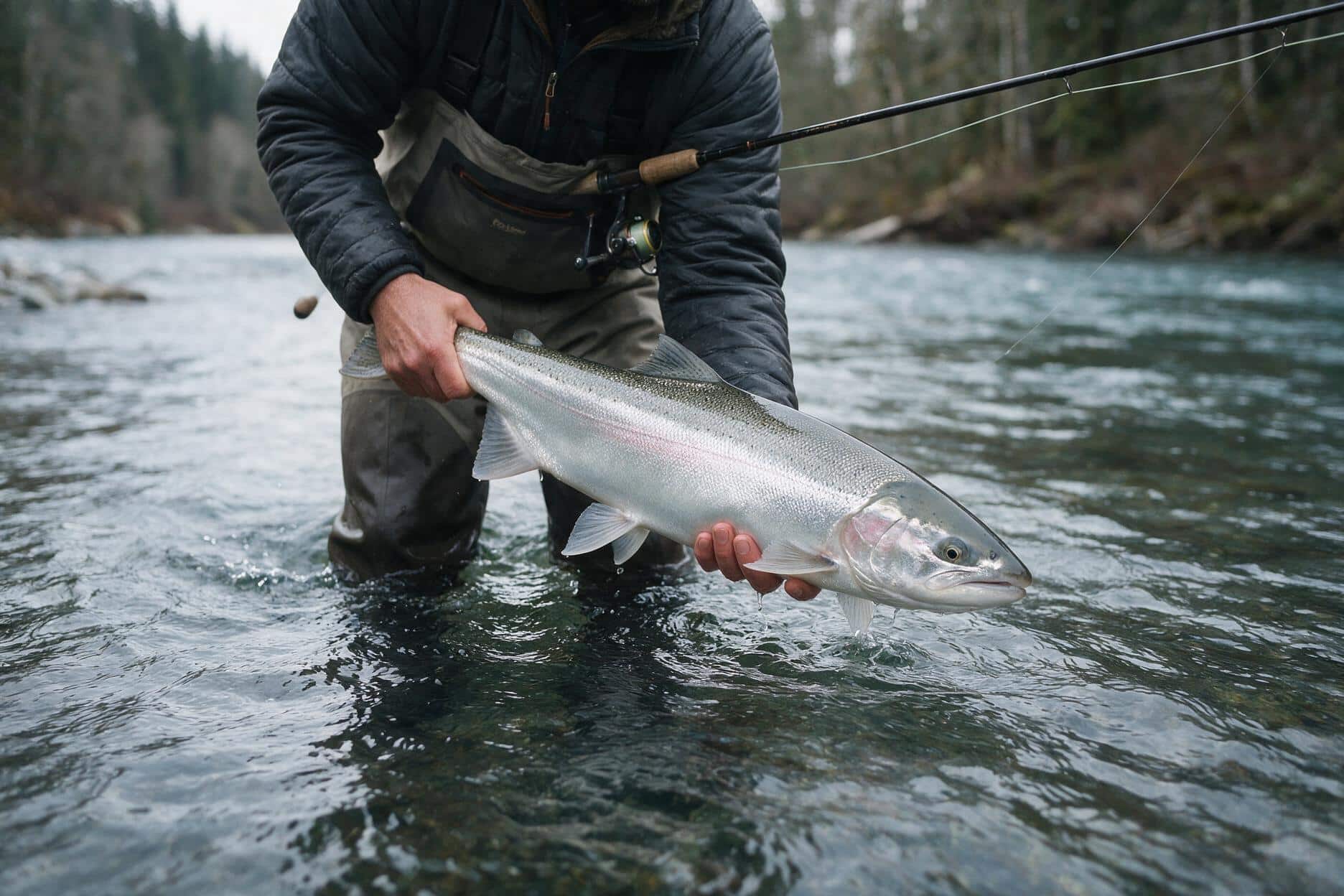
Steelhead are rainbow trout that decided the ocean was worth the trip. Same species, wildly different life, and that difference changes everything about how you need to fish for them. I spent my first two seasons chasing steelhead treating them like the stocked rainbows I grew up catching in farm ponds, and I got skunked more times than I want to admit. Once I understood what makes a steelhead a steelhead, the catch rate went up.
## what makes steelhead different from other trout
A steelhead starts life in a river, migrates to salt water as a juvenile, spends one to three years feeding in the ocean, then returns to fresh water to spawn. That ocean phase packs on size and muscle you rarely see in a resident rainbow. A river rainbow that stays home its whole life tops out around a couple pounds in most streams. A steelhead comes back from the ocean at 8, 10, sometimes 20 pounds, built like it has somewhere urgent to be.
Here is the part that trips up a lot of anglers coming from bass or panfish backgrounds. Steelhead in the river are not actively feeding the way a hungry fish feeds. They are running on stored fat reserves and territorial instinct. A strike from a steelhead is closer to an annoyance response than genuine hunger. That changes how you present bait and lures, and it changes how you think about persistence. You are not waiting for a hungry fish to find your bait attractive. You are trying to provoke a reaction from a fish that is mostly just trying to get upstream.
Runs split into two rough categories, winter run and summer run, and the timing matters for where you fish and what you throw. Winter run fish enter rivers from November through March in most West Coast systems, arrive close to spawning condition, and tend to move through faster. Summer run fish enter rivers as early as May and hold in pools for months before spawning, which gives them time to become more selective and, frankly, more frustrating to fool.
## reading steelhead water
Steelhead do not scatter randomly through a river. They use specific types of holding water, and learning to spot it is most of the battle.
Tailouts, the slower water at the bottom of a pool right before it speeds up into the next riffle, hold fish constantly, especially in low light. Deep runs with a moderate, steady current and a broken surface give steelhead cover from predators while still letting them rest out of the main flow. Seams where fast water meets slow water are worth every cast you can give them, because steelhead sit in the slow side and dart into the fast side to intercept food or lures without spending much energy.
Depth matters more than most beginners expect. In cold water, steelhead hug the bottom and barely move for a bait that is not right in their face. In warmer water or higher flows, they suspend higher in the column and will move a few feet to hit something. Watch water temperature more than you watch the calendar. A 38-degree river in January fishes completely differently than a 52-degree river in the same month after a warm spell.
## techniques that actually put fish on the bank
Drift fishing with beads or yarn under a slip float is the bread and butter approach for river steelhead, and for good reason. You get a natural, drag-free drift through a run at a controlled depth, which matters enormously since a lure moving faster or slower than the current looks wrong to a fish that has seen a thousand real drifting food items in its life. Set the float depth so your bait ticks bottom occasionally. If you are not getting hung up once in a while, you are probably fishing too shallow.
Spinners and spoons work well in off-color water or when fish are aggressive, since the flash and vibration call fish in from farther away than a drifted bait can. A size 3 or 4 inline spinner is a solid choice in high, stained water after rain. Switch to something more subtle once the river drops and clears.
Fly fishing for steelhead splits into two camps. Nymphing under an indicator is essentially the fly rod version of float fishing, and it is the more consistent producer for most anglers, especially beginners. Swinging flies on a spey rod is the method that steelhead fishing is famous for, and it is one of the more meditative ways to fish there is, but it produces fewer fish per hour than nymphing. I swing flies because I enjoy the process, not because it is the most efficient way to hook a fish. Be honest with yourself about which goal matters more on a given day.
Bait fishing with cured salmon eggs or sand shrimp under a float remains effective almost everywhere steelhead swim, and where it is legal, it is often the single best producer for someone new to the game. Check local regulations before you rig up, since bait restrictions vary a lot by state and even by specific river.
## gear for steelhead
A 9 to 10 foot rod rated for 8 to 15 pound line is the standard for float and drift fishing, long enough to control your drift and mend line at distance, with enough backbone to handle a fish that will make several hard runs. Pair it with a reel that holds at least 150 yards of line and has a smooth drag, because a fresh steelhead does not slow down for gear that grabs and releases unevenly.
Leader material should be fluorocarbon in clear water, since steelhead in low, clear conditions get leader shy fast. Running 8 to 10 pound leader most of the year and dropping to 6 pound in gin-clear late-season water means losing a few fish to break-offs in exchange for more bites, and that trade is usually worth it.
If you already fish for trout with a standard spinning setup, a lot of that gear carries over, just scaled up. Our guide to trout fishing covers the broader trout fundamentals that still apply here, since a steelhead is, underneath the ocean muscle, still a trout.
## timing your trip
Check river flow data before you drive anywhere. A river blown out from rain is close to unfishable for a few days, and a river too low and clear makes fish spooky and reluctant. The sweet spot is usually a river on the drop after a rain event, still carrying a little color, two or three days after the peak flow.
Early morning and late evening produce more often in clear, low water. On high or off-color water, fish can bite all day since visibility is already reduced and the fish feel more comfortable moving in daylight.
## a realistic first trip
Do not expect fast action. Steelhead fishing has a lower hookup rate per hour than almost any other freshwater fishing most anglers have tried, and a good day might mean two or three fish hooked after six hours on the water. Anyone who tells you differently is either exaggerating or fishing water so loaded with fish that the normal rules do not apply.
Pick one piece of water, learn it well, and fish it repeatedly across a season rather than driving to a new spot every weekend. Fishing the same half mile of river a dozen times one winter taught me more about steelhead behavior than fishing a dozen different rivers once each ever did. Patterns emerge once you know a stretch of water well enough to notice when something is different.
Bring polarized sunglasses, dress in layers since river mornings run cold even in mild weather, and pack more patience than you think you need. Then go find a seam and put in the time.