The uni knot is the knot that shows up on nearly every reel spool in America, one of the most reliable entries in any fishing knots arsenal, and it earns that spot honestly. It’s one connection that does two completely different jobs well: tying line to a hook or lure, and tying two lines together. Learn it once and you’ve covered most of what you’ll ever need to tie on the water.
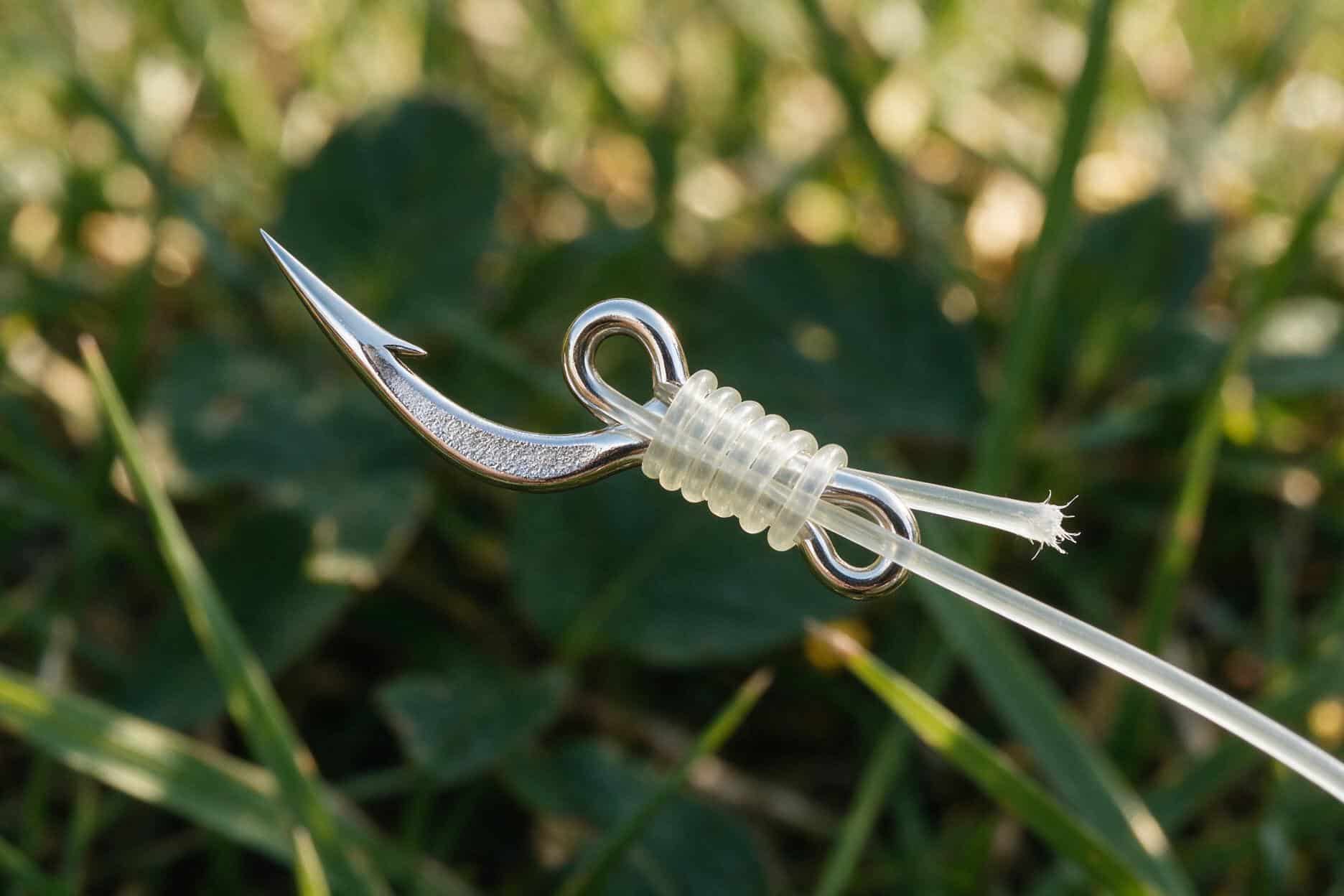
why anglers reach for this knot first
Most knots are specialists. The Palomar only ties to an eye, the surgeon’s knot only joins two lines. The uni knot does both because the wrapping technique doesn’t care what’s on the other end, it’s the same set of coils whether you’re cinching down on a hook eye or overlapping two lines side by side.
That versatility matters most when you’re on the water and don’t want to relearn a new knot for every situation. Spool a reel with the uni knot, tie your leader connection with the same knot, tie your lure on with the same knot again, one motion your hands remember cold.
tying it to a hook or lure
Run the tag end through the eye, then back alongside the standing line, leaving a loop hanging past the eye. Wrap the tag end around both lines inside that loop, five to six times for lighter line, three to four for heavy line over 20 pound test.
Hold the coils loosely and pull the tag end to snug the wraps down into a compact knot near the loop, without yet pulling it all the way to the hook eye. Wet the knot, then pull the standing line to slide the whole knot down to the eye and cinch it tight. Trim the tag end close.
tying it to join two lines
For joining line to line, like adding a leader, overlap the two lines by six to eight inches. Tie a uni knot with one line’s tag end around both strands, then tie a second uni knot with the other line’s tag end around both strands. Pull both standing lines apart to slide the two knots together until they lock against each other.
This version is what most anglers use to attach a shock leader or top off a spool with fresh fishing line, it handles very different line diameters better than a blood knot does, which struggles once the two lines aren’t close to the same thickness.
the sliding uni knot, and why some anglers avoid it
Tied to a hook or lure with fewer wraps and pulled less than fully tight, the uni knot becomes a sliding knot, known as the non-slip loop or uni loop. It leaves a fixed loop at the eye instead of cinching down flush, which lets lures like jerkbaits and topwaters swing more freely and often improves their action.
The tradeoff is strength. A loop knot sacrifices some breaking strength compared to a knot cinched tight against the eye, worth it for a lure that needs the extra motion, not worth it on a hookset where every bit of holding power matters.
how many wraps, and why it changes
Wrap count on the uni knot scales with line diameter, not personal preference. Light line under 10 pound test needs six or seven wraps because the smoother, thinner material needs more friction to hold. Heavy line and braid need fewer, three to four wraps, because thick material already grips itself and extra wraps just create a bulky knot that seats poorly.
Getting this backwards, piling on wraps for heavy line or skimping on light line, is one of the more common reasons anglers report a uni knot slipping when a competently tied one wouldn’t.
mistakes that cause a slipped uni knot
Skipping the wet-before-you-pull step is the most common one, same failure mode as almost every friction knot: dry line cinching down generates heat that weakens the strand right where it needs to hold.
Pulling the tag end fully tight before sliding the coils down to the eye is the other common mistake. If you cinch the wraps hard before sliding them home, the knot seats unevenly and part of it ends up loose. Snug it first, wet it, then slide it down and finish the pull in one smooth motion.
strength and where it falls short
A properly tied uni knot holds around 90 to 95 percent of line strength on mono and fluorocarbon, right in line with the improved clinch knot and a step below a well-tied Palomar on braid. Where the uni knot wins over both is versatility, not raw strength, it’s the knot you can tie on any connection without switching techniques mid-trip.
It performs reasonably on braid, better than the improved clinch, though still not quite as reliable as a Palomar for braid-to-hook connections where the eye allows it.
uni knot FAQ
Is the uni knot stronger than the Palomar? Not usually. The Palomar typically tests slightly stronger on braid, the uni knot’s advantage is that one technique covers hook connections and line-to-line joins, the Palomar only does the first.
Can you use the uni knot with braid to fluorocarbon leader? Yes, it’s one of the standard ways to join braid to a fluorocarbon leader, tied as two interlocking uni knots rather than a single connection.
What’s the difference between a uni knot and a snell knot? A snell wraps around the hook shank itself and works only with hooks that have a turned-up or turned-down eye, the uni knot wraps around the line and works on any eye style.
Does the uni knot work on spinning and baitcasting reels equally well? Yes, the knot itself doesn’t care about reel type, it performs the same either way. What changes is the diameter of line you’re typically running, which is where the wrap count adjustment matters most.
The uni knot is the knot that shows up on nearly every reel spool in America, one of the most reliable entries in any fishing knots arsenal, and it earns that spot honestly. It’s one connection that does two completely different jobs well: tying line to a hook or lure, and tying two lines together. Learn it once and you’ve covered most of what you’ll ever need to tie on the water.
Thread the tag end through the eye
Run the tag end through the eye, then back alongside the standing line, leaving a loop hanging past the eye.
Wrap the tag end around both lines
Wrap the tag end around both lines inside that loop, five to six times for lighter line, three to four for heavy line over 20 pound test.
Snug the wraps into a compact knot
Hold the coils loosely and pull the tag end to snug the wraps down into a compact knot near the loop, without yet pulling it all the way to the hook eye.
Wet the knot and slide it to the eye
Wet the knot, then pull the standing line to slide the whole knot down to the eye and cinch it tight.
Trim the tag end
Trim the tag end close.
Is the uni knot stronger than the Palomar?
Not usually. The Palomar typically tests slightly stronger on braid, the uni knot’s advantage is that one technique covers hook connections and line-to-line joins, the Palomar only does the first.
Can you use the uni knot with braid to fluorocarbon leader?
Yes, it’s one of the standard ways to join braid to a fluorocarbon leader, tied as two interlocking uni knots rather than a single connection.
What’s the difference between a uni knot and a snell knot?
A snell wraps around the hook shank itself and works only with hooks that have a turned-up or turned-down eye, the uni knot wraps around the line and works on any eye style.
Does the uni knot work on spinning and baitcasting reels equally well?
Yes, the knot itself doesn’t care about reel type, it performs the same either way. What changes is the diameter of line you’re typically running, which is where the wrap count adjustment matters most.