A reel that gets rinsed after every trip and stripped down for a real cleaning once or twice a year will outlast one that only gets attention when it starts grinding. Reels fail from the inside out, salt and grit working into the gears and bearings long before anything looks wrong on the outside, so most of the damage happens quietly between the point where maintenance would have caught it and the point where the reel finally locks up on the water.
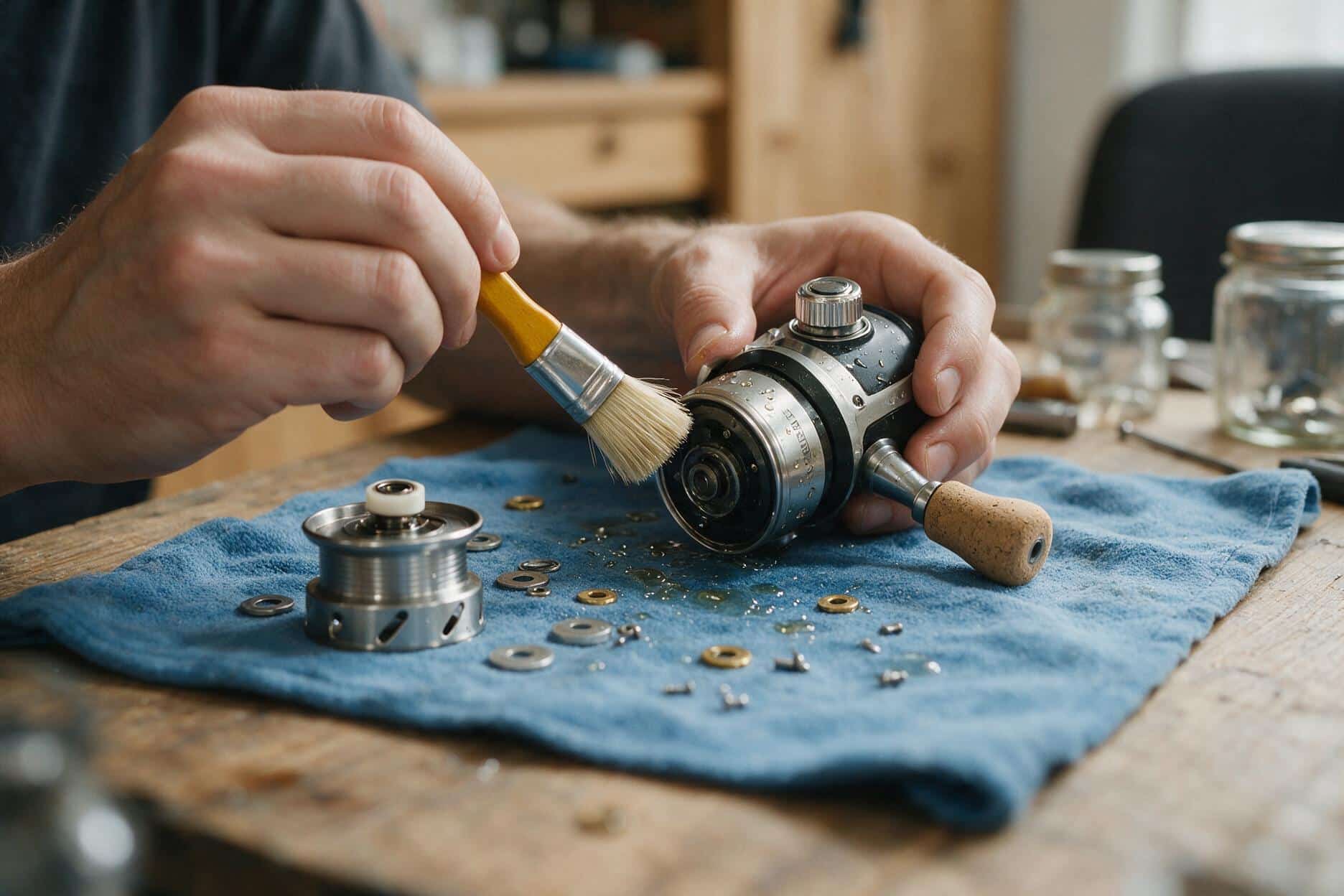
The drag is usually what goes first, not the gears. It sees more repeated stress than almost any other part, and it is the part most anglers never touch until it is already slipping or grabbing.
how often, realistically
After every trip in saltwater or brackish water: a quick freshwater rinse, no exceptions. Salt left to dry on a reel corrodes bearings and seizes moving parts faster than almost anything else that happens to tackle. Freshwater use is more forgiving; a wipe-down after a muddy or sandy day covers most of it.
Once or twice a year, or every 20 to 30 trips for a reel in heavy rotation, it is worth a proper teardown: removing the side plate, cleaning the gears, and re-greasing. Reels that see occasional weekend use can usually stretch that to once a year. Reels fished hard, several days a week through a season, hold up better on the shorter end of that range.
after-trip cleaning, step by step
- Rinse the reel under a light freshwater stream, spool still attached, without directing water at full pressure into the reel body, which can force salt and grit deeper in rather than out.
- Wipe the body, handle, and line roller down with a soft cloth while still slightly damp, catching grime before it dries onto the finish.
- Back off the drag before storage, all the way to its loosest setting. Leaving a drag compressed under spring tension for weeks between trips is one of the more common ways drag washers lose consistency over time.
- Let the reel air dry fully before it goes back in a rod locker or bag. Sealing a damp reel into a case is a good way to trap moisture against the metal instead of letting it evaporate. The same logic applies to the rods themselves, and our guide to storing rods the right way covers keeping them in good shape between trips.
the deeper clean
A full teardown means removing the side plate to access the gears and bearings, not disassembling the whole reel down to every screw, which is usually more than a home cleaning needs and easy to reassemble wrong. Our full reel cleaning walkthrough goes step by step through that same process.
Old grease and grit get wiped from the main gear and pinion with a cloth or soft brush, not scrubbed with anything abrasive. Bearings get a drop of reel oil, not grease, since grease is too thick to penetrate a sealed bearing properly and just sits on the outside doing nothing. Gears get a thin film of reel grease, enough to coat the teeth without building up in a way that adds drag to the retrieve. On a baitcaster, dirty spool bearings can also throw off cast control, and our guide to fixing baitcaster backlash covers that side of the problem.
This is also the point to check the line roller and bail spring on a spinning reel for grit buildup. A gritty roller is a common, overlooked cause of line twist that gets blamed on the line itself.
the drag: separate from everything else
Drag washers should not get the same grease used on the gears. Standard reel grease can make carbon or felt drag washers grab and release unevenly instead of applying smooth, constant pressure, which shows up on the water as a drag that surges instead of running steady during a fight. Use a drag-specific grease, or the manufacturer’s recommended product, and only on the washers themselves. Our guide to choosing the right reel grease goes through drag grease versus standard gear grease in more detail.
Check the washers for glazing, a shiny, hardened surface, while they are apart. Glazed washers do not respond well to cleaning and are worth replacing outright rather than reinstalling, since a glazed drag will keep grabbing no matter how well the rest of the reel is serviced.
diy vs. a professional
Rinsing, wiping down, and backing off the drag between trips is worth doing yourself every time; it takes minutes and needs no special tools. A basic teardown for cleaning and re-greasing is also reasonable to do at home with the manufacturer’s schematic and the right grease and oil on hand.
A reel that has taken a hard drop, been fully submerged in saltwater without an immediate rinse, or developed a grinding noise from inside the gear train is worth taking to a shop instead of guessing. Replacing a bent shaft or a stripped gear needs parts and tools most anglers do not keep on hand, and a bad DIY repair on a damaged reel usually costs more to fix afterward than the original shop visit would have. Our breakdown of common reel repairs and rod repair basics covers which fixes are worth attempting yourself and which ones to leave to a shop.
common mistakes
Over-oiling is the most common one. Reel oil is meant to be applied a drop at a time; flooding a bearing or the gear train with oil attracts more dust and grit than it prevents, and excess oil migrating onto a drag washer is one of the more common causes of a drag that will not hold steady.
The second is greasing the drag stack with standard gear grease, covered above, which causes exactly the surging problem anglers usually associate with a "worn out" drag that is often just improperly lubricated.
The third is skipping maintenance on a backup reel that only comes out a few times a year. A reel sitting unused with old grease and a compressed drag degrades even without being fished, and it is worth the same rinse-dry-loosen-the-drag routine at the end of a season, used or not.
Line takes wear alongside the reel it sits on, and a re-spool is a natural pairing with a deeper cleaning. The guide to choosing fishing line covers how to tell when a spool needs replacing rather than just topping off.
A reel that gets rinsed after every trip and stripped down for a real cleaning once or twice a year will outlast one that only gets attention when it starts grinding. Reels fail from the inside out, salt and grit working into the gears and bearings long before anything looks wrong on the outside, so most of the damage happens quietly between the point where maintenance would have caught it and the point where the reel finally locks up on the water.
Rinse the reel
Rinse the reel under a light freshwater stream, spool still attached, without directing water at full pressure into the reel body, which can force salt and grit deeper in rather than out.
Wipe down the body and handle
Wipe the body, handle, and line roller down with a soft cloth while still slightly damp, catching grime before it dries onto the finish.
Back off the drag before storage
Back off the drag before storage, all the way to its loosest setting. Leaving a drag compressed under spring tension for weeks between trips is one of the more common ways drag washers lose consistency over time.
Let the reel air dry fully before storage
Let the reel air dry fully before it goes back in a rod locker or bag. Sealing a damp reel into a case is a good way to trap moisture against the metal instead of letting it evaporate.
How often should a fishing reel get a full teardown and cleaning?
Once or twice a year covers occasional use, but reels in heavy rotation are better served every 20 to 30 trips. Reels fished several days a week hold up better on the shorter end of that range.
Should I use the same grease on drag washers as on the gears?
No. Standard reel grease can make felt or carbon drag washers grab and release unevenly. Use a drag-specific grease, or whatever the manufacturer recommends, only on the washers.
What does a glazed drag washer mean?
A shiny, hardened surface that won’t respond well to cleaning. Glazed washers are worth replacing outright since they keep grabbing unevenly regardless of servicing.
Is over-oiling a reel a real risk?
Yes, it’s one of the most common maintenance mistakes. Oil should go on a drop at a time, since flooding a bearing or gear train attracts more dust and grit than it prevents and can migrate onto the drag washers.