Cleaning is the maintenance step most anglers skip, mostly because a reel can look completely clean on the outside while grime and salt build up in places you never see until something starts grinding. It’s also the cheapest, fastest habit that extends a reel’s life more than almost anything else on this site.
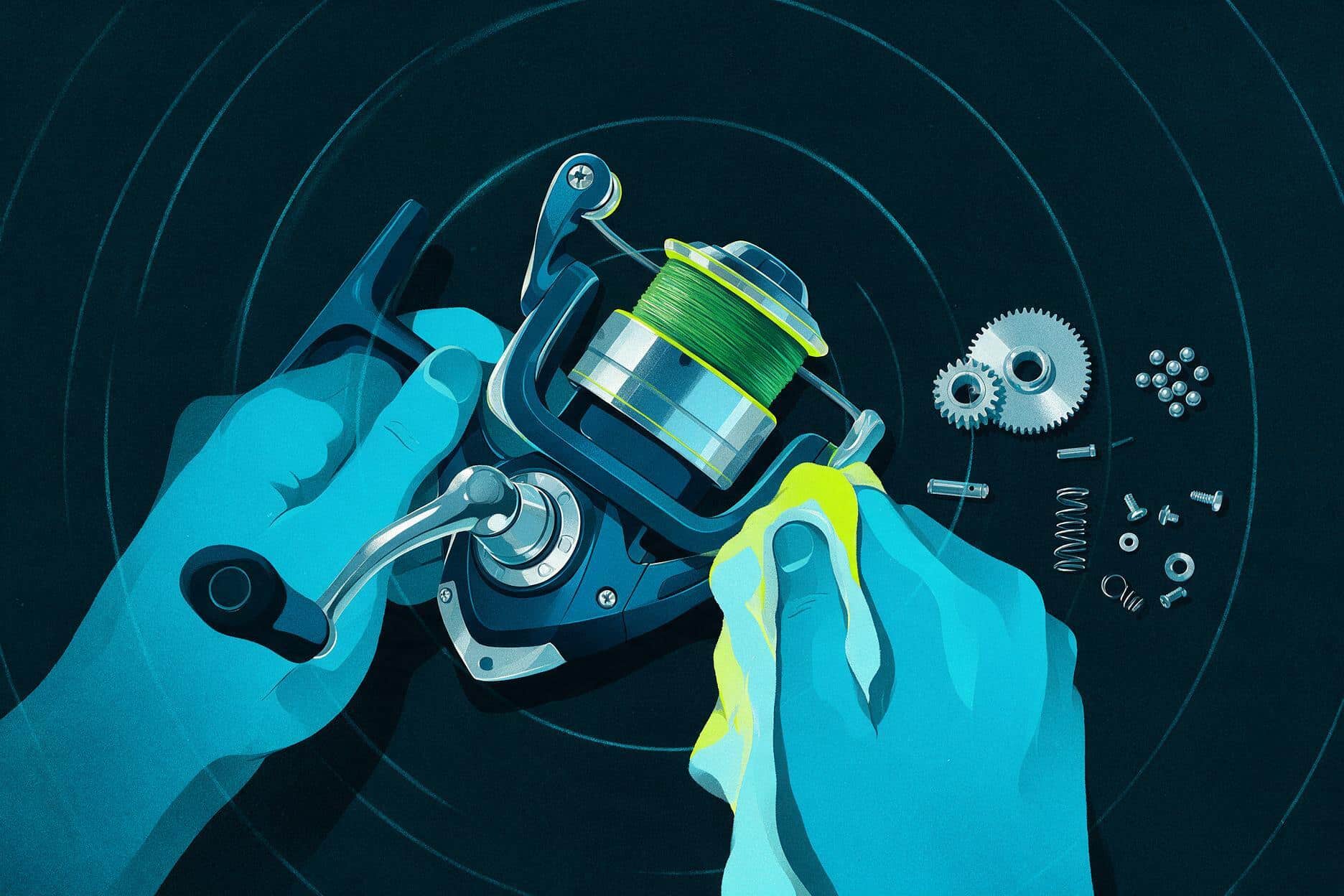
the quick clean, every trip
Wipe the whole reel down with a damp cloth after every trip, fresh water only. If you fished saltwater, rinse it under a low-pressure stream, a kitchen faucet on low or a spray bottle, never a hose on full blast. Work the handle a few times while the reel is still slightly damp to help flush water back out of the moving parts, then dry the whole thing thoroughly with a cloth before it goes back in the rod locker. This takes about ninety seconds and it’s the single habit that separates reels that last a decade from reels that don’t make it three seasons.
the deeper clean, every few months
Pull the spool and take a real look at what’s underneath. The line roller is the part I see neglected most, since salt and grime cake into that small groove without being obvious from a glance, and a dirty, grinding line roller is what starts putting twist and abrasion into your line before you ever notice the roller itself is the problem. Wipe the roller clean, check that it still spins freely, and clean out any exposed gear surfaces you can reach without a full teardown. If you’re already this far into the reel, it’s a good time to check the drag washers too, and what to regrease them with once they’re clean.
what not to do
Don’t point a hose at a reel on full pressure. It feels like it should help, blasting salt and sand out of every crevice, and it does the opposite. Reel seals are designed to keep water from getting in under normal conditions, not to survive being sprayed directly with pressurized water, and a hard blast forces water past seals that would have kept it out otherwise. You end up pushing moisture and grit deeper into the reel than a light rinse ever would.
Don’t use dish soap or household degreasers inside the reel either. They strip out the factory lubrication along with the dirt, and some leave a residue behind that actually attracts more grime than it removes. Stick to fresh water for rinsing and a reel-specific cleaner if you want something stronger than water alone.
Don’t submerge a reel to clean it unless you know specifically that it’s rated for that and you understand what you’re doing once it’s apart. Most reels aren’t built to be dunked, and a "quick soak" is a good way to force water into a drag stack that was perfectly dry five minutes earlier.
the mistake that actually kills reels
Storing one wet. Not a hard day of saltwater fishing, storing it wet afterward. A reel that gets rinsed, dried, and put away after a tough saltwater trip is in better shape than one that got used for twenty minutes in fresh water and then sat wet in a rod locker or car trunk overnight. Standing moisture works into seams and bearing races over hours, not minutes, and that slow soak causes more corrosion than the fishing itself ever does. Dry it before you put it away. Every time, no exceptions.
None of this takes long once it’s a habit. Ninety seconds after every trip and a real look every few months beats any single deep clean done once a year after something already went wrong. For the rest of the schedule that keeps a reel running, the reel maintenance checklist covers it end to end, and common reel repairs is there for when cleaning alone isn’t enough anymore.
Clean a fishing reel step by step, from a quick post-trip rinse to a deeper periodic clean, while avoiding the mistakes that cause corrosion and wear.
Rinse and wipe down after every trip
Wipe the whole reel down with a damp cloth using fresh water only. If you fished saltwater, rinse under a low-pressure stream, never a hose on full blast.
Flush and dry
Work the handle a few times while the reel is still slightly damp to flush water out of the moving parts, then dry the whole reel thoroughly with a cloth before it goes back in the rod locker.
Deep-clean every few months
Pull the spool, wipe down the line roller where salt and grime cake up unnoticed, confirm it spins freely, and clean any exposed gear surfaces and drag washers you can reach.
Avoid harsh cleaning methods
Skip full-pressure hoses, dish soap, and household degreasers, and don’t submerge the reel unless it’s specifically rated for it; these strip lubrication or force water past seals.
Never store it wet
Dry the reel completely before putting it away every time; standing moisture left in seams and bearing races over hours causes more corrosion than the fishing itself ever does.
Can I use a hose to clean my fishing reel?
No, full-pressure water forces past seals designed for normal conditions, pushing moisture and grit deeper into the reel instead of flushing it out. Use a low-pressure stream or a damp cloth instead.
Is dish soap safe for cleaning a fishing reel?
No, dish soap and household degreasers strip out the factory lubrication along with the dirt, and some leave a residue behind that actually attracts more grime than it removes.
How often should I deep clean a fishing reel?
Every few months, pulling the spool to check the line roller, gear surfaces, and drag washers, in addition to a quick rinse and wipe-down after every trip.
Should I store a reel wet after a saltwater trip?
No, always dry it first. Standing moisture in the seams and bearing races over hours causes more corrosion than saltwater exposure itself, so a rinsed and dried reel outlasts one left wet in a rod locker.