I remember the first afternoon I put a baitcasting reel on a rod and tried to cast it like the spinning reel I had used my whole life. What I got back was a bird’s nest of line so tangled I eventually just cut it off the spool with pocket knife scissors and started over. If that sounds familiar, you are not bad at this. You just skipped the part where you learn what is actually happening inside the reel during a cast.
A baitcaster works on a completely different principle than a spinning reel. The spool itself spins to release line, which means the spool has its own momentum that keeps spinning even after the lure has slowed down or hit the water. That gap between lure speed and spool speed is where a backlash comes from, and it is a mechanical problem with a mechanical fix, not a matter of natural talent. I put together a separate piece on baitcaster backlash that covers the physics in more detail, but here is the short version and, more importantly, how to stop it from happening in the first place.
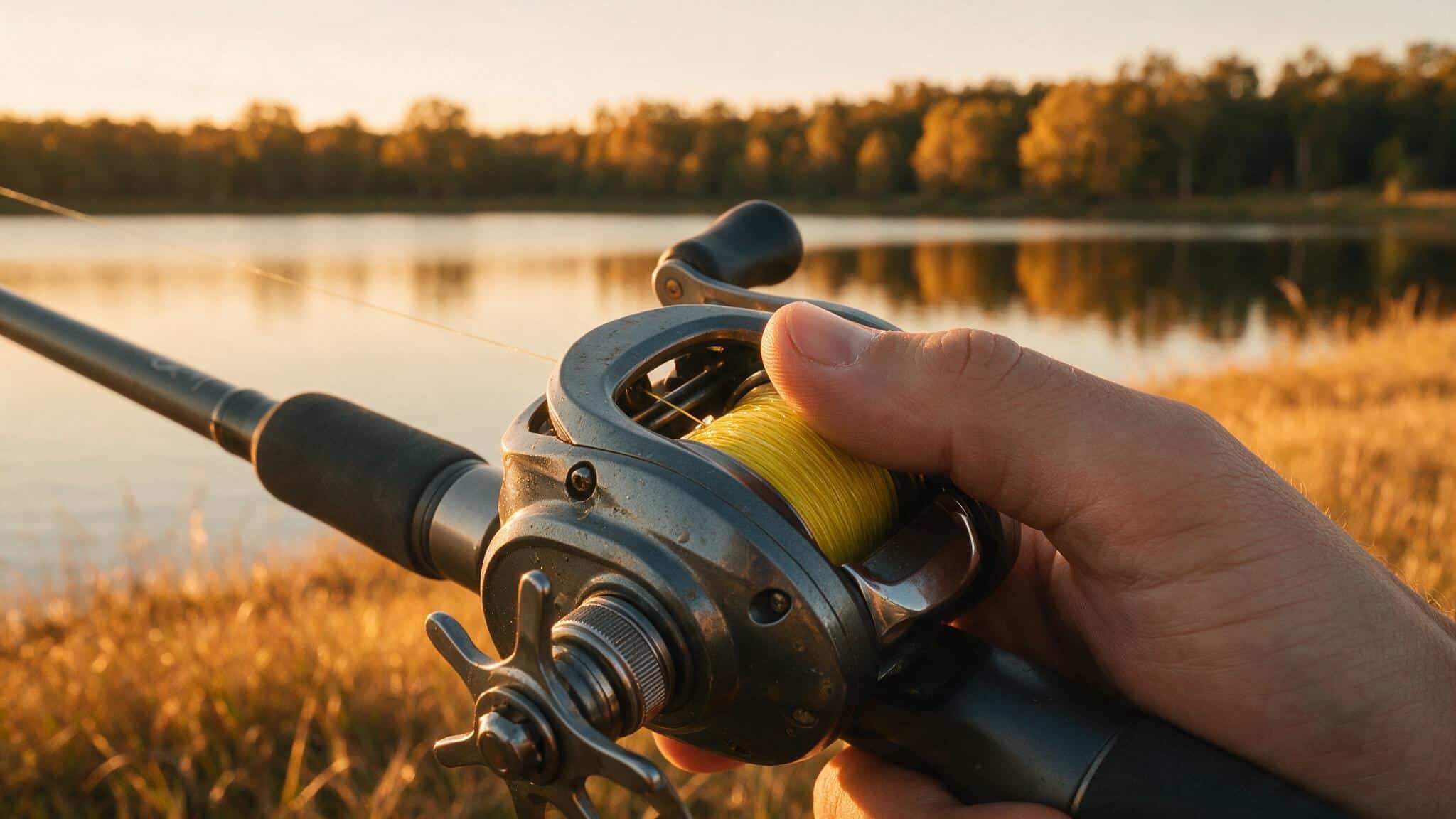
set your brakes before you cast a single time
Every baitcasting reel has some form of brake, either centrifugal weights, a magnetic dial, or both on higher end models. These brakes slow the spool down during the cast so it does not outrun the lure. If you skip this step and just start flinging lures, you are gambling.
Start with your brakes set high, close to maximum. Yes, this costs you distance. It is temporary. A reel with brakes cranked all the way up basically cannot backlash on you, which means your first sessions become about learning the thumb and the stroke instead of untangling line every third cast. Once you can cast cleanly ten times in a row, back the brakes off one notch and repeat. Work down gradually over several sessions rather than dropping straight to a wide open setting because it feels slow.
dial in the spool tension knob first, every single time
The tension knob (usually a small star wheel on the side plate near the handle) is not a set-it-and-forget-it control. It needs to change with every lure weight you tie on. The test is simple: tie on your lure, hold the rod out level, press the release button, and let the lure drop. It should fall slowly and land with barely a bump, not free fall and not sit frozen in place.
Skipping this test is probably the single most common reason new baitcaster users backlash constantly. A three quarter ounce spinnerbait and a quarter ounce finesse jig need different tension settings, and using yesterday’s setting for today’s lure is asking for trouble.
keep your thumb on the spool through the entire cast
This is the part most people get wrong even after they understand brakes and tension. Your thumb is not just there to start the cast and then relax. Light, constant pressure on the spool throughout the whole arc of the cast, easing off slightly at the top of the trajectory and then gently increasing pressure again as the lure approaches the water, is what actually prevents backlash on a well tuned reel.
I think of it less as a single motion and more like riding a brake pedal down a hill. You are not slamming it on and off. You are feathering constant, small adjustments, and the moment the lure hits the water, your thumb should already be pressed down to stop the spool completely.
use a smooth, compact casting stroke
New baitcaster users tend to swing harder than they need to, as if muscling the rod will make up for a lack of thumb control. It does the opposite. A hard, jerky stroke accelerates the lure fast and then decelerates it fast too, and that sudden change in speed is exactly what causes the spool to overrun. A smoother, shorter stroke with a firm stop at the top gives you a cleaner, more predictable release.
Picture a pendulum rather than a whip. The rod loads on the backswing, releases forward, and stops crisply. You do not need a full baseball swing to get a lure sixty feet. Distance on a baitcaster comes from timing and rod loading, not brute force.
practice with the right conditions first
Do not learn baitcasting for the first time in wind, in low light, or with a tiny finesse bait. Pick a calm evening, an open patch of lawn or a wide stretch of water, and tie on something in the half ounce to three quarter ounce range. Heavier lures are easier to control because they carry momentum in a way that matches spool speed more naturally, and calm air removes one more variable while you are still building thumb feel.
Once you can consistently cast a heavier bait without a backlash, work down toward lighter lures and start practicing in the conditions you will actually fish, including wind and low light. Trying to master everything at once is how people quit on baitcasters after one frustrating weekend.
when backlash still happens
It will, even to people who have run baitcasters for years. Do not yank on a tangled spool. Pulling hard just cinches the loops tighter and turns a two minute fix into a fifteen minute one. Open the spool cover, gently pick at the loose loops with a fingernail or a pick tool, and work from the outside of the tangle inward. Patience here saves you line and saves your temper.
Getting comfortable with a baitcaster changes what you can do on the water, from pitching jigs into tight cover to throwing big swimbaits that a spinning reel struggles to handle. If you are still deciding what reel to buy in the first place, our complete buying guide to baitcasting reels breaks down the features that actually matter for a beginner versus what is marketing noise.
Backlash is not a rite of passage you have to suffer through for months. Set your brakes high, check your tension knob every time you change lures, keep constant thumb pressure through the whole cast, and practice with a forgiving setup before you chase distance. Do those four things in order and most of the backlash disappears within a few sessions, not a few seasons.
Set your brakes high, dial in the tension knob for your lure, keep steady thumb pressure through the cast, use a smooth compact stroke, and practice with calm conditions and a heavier lure first.
Set your brakes high before your first cast
Start with your centrifugal or magnetic brakes close to maximum so the reel basically cannot backlash while you learn the thumb and stroke. Once you can cast cleanly ten times in a row, back the brakes off one notch and repeat, working down gradually over several sessions.
Dial in the spool tension knob for your lure
Tie on your lure, hold the rod out level, press the release button, and let the lure drop. It should fall slowly and land with barely a bump, not free fall and not sit frozen in place. Retest this every time you change to a different lure weight.
Keep light, constant thumb pressure on the spool
Maintain steady pressure on the spool through the entire arc of the cast, easing off slightly at the top of the trajectory and increasing again as the lure nears the water. Your thumb should already be pressed down to stop the spool the instant the lure lands.
Use a smooth, compact casting stroke
Swing like a pendulum rather than a whip: load the rod on the backswing, release forward, and stop crisply. A hard, jerky stroke accelerates then decelerates the lure too fast, which is what causes the spool to overrun.
Practice first with calm conditions and a heavier lure
Pick a calm evening and tie on a lure in the half ounce to three quarter ounce range, which is easier to control because it matches spool speed more naturally. Once you can cast it consistently without backlash, work down to lighter lures and windier, lower light conditions.
What actually causes backlash on a baitcasting reel?
The spool itself spins to release line, so it keeps spinning from its own momentum even after the lure slows down or hits the water. That gap between lure speed and spool speed is what creates the tangle, and it’s a mechanical problem with a mechanical fix rather than a lack of skill.
How do I test if my tension knob is set correctly?
Tie on the lure you’re about to fish, hold the rod out level, press the release button, and let the lure drop toward the ground. It should fall slowly and land with barely a bump. If it free falls, the tension is too loose; if it barely drops at all, it’s too tight.
Should beginners practice with light or heavy lures?
Heavier lures, in the half ounce to three quarter ounce range, are easier to control because they carry enough momentum to match spool speed more naturally. Start there on a calm day, then work down to lighter finesse baits once your thumb control is consistent.
What should I do if I get a backlash anyway?
Don’t pull on the tangled line, since pulling hard just cinches the loops tighter. Open the spool cover, gently pick at the loose loops with a fingernail or pick tool, and work from the outside of the tangle inward.