Swimbait fishing lures cover a huge range, from a three-inch paddle tail on a jighead that looks like a dying shad to an eight-inch hard-bodied glide bait built to imitate a stocker trout. What ties them together is a horizontal, swimming profile and a retrieve meant to look like an actual fish moving through the water, not fleeing from anything, which is exactly why they fool bass that have grown suspicious of everything flashier in the box. Here’s how to sort through swimbait fishing lures and actually put them to work.
what counts as a swimbait
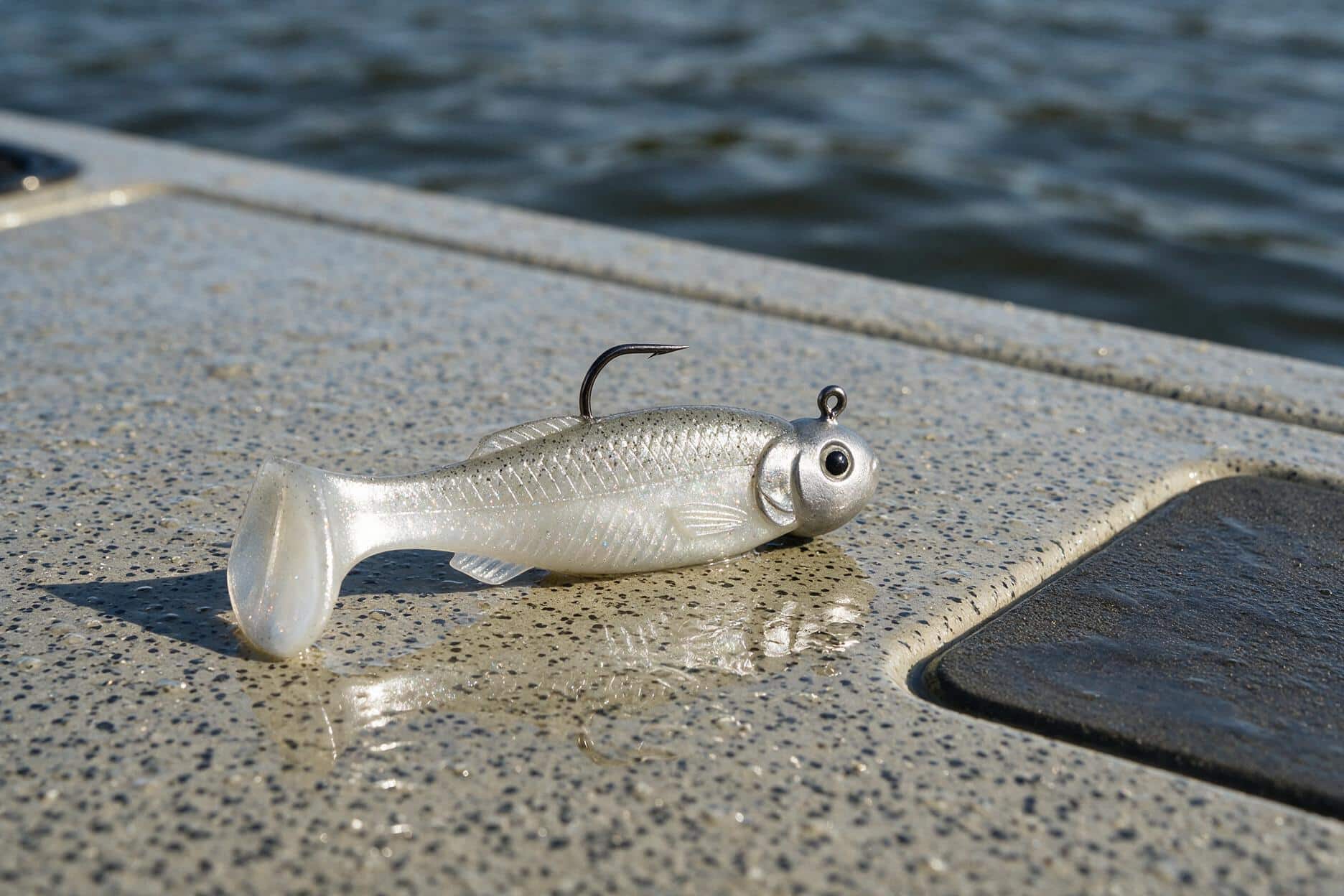
The category covers more ground than most anglers realize. Soft plastic paddle tails, threaded onto a jighead or a weighted swimbait hook, are the most common and the most versatile entry point. Hard-bodied swimbaits, jointed or single-piece, wobble and swim with rigid internal action and often come rigged with trebles like a crankbait. Glide baits are a specific style of hard swimbait, usually unweighted or nearly neutral, that slides side to side on a subtle twitch-and-pause retrieve rather than swimming straight back on a steady reel. Hollow-body swimbaits, popular in the giant bait category, are soft and buoyant enough to fish weedless over grass and around cover where a rigid bait would hang up constantly.
when swimbaits actually produce
Swimbaits shine when bass are keyed on baitfish, which usually means open water, main lake points, and areas where shad or other forage schools rather than tight cover like brush or wood. Fall is the standout season, when baitfish push shallow ahead of winter and bass key on them aggressively enough to chase a swimbait a long distance before eating it. Clear water suits swimbaits particularly well too, since the whole appeal of the bait rests on a realistic look and swimming action that gets lost in water too stained for a bass to get a good look.
Post-frontal, high-pressure days that shut down a reaction bite often still produce on a swimbait fished slow and subtle, since the profile alone can trigger a following fish that would ignore a spinnerbait or crankbait moving at the same pace.
paddle tails: the workhorse of swimbait fishing lures
A three to five inch soft plastic paddle tail on a matching jighead is the most productive entry point into swimbait fishing lures for most anglers, and it is the one worth learning first. The paddle tail kicks on a straight, steady retrieve with almost no rod action required, which makes it forgiving and easy to fish well even for someone new to the bait style. Jighead weight controls running depth: a lighter head in the 1/8 to 1/4 ounce range keeps the bait higher in the water column for shallow flats and points, while 3/8 ounce and heavier gets it down to deeper structure and faster current.
glide baits and hard swimbaits
Glide baits reward a different kind of retrieve entirely: short, sharp twitches of the rod tip with pauses in between, letting the bait slide left and right rather than swimming in a straight line. This slower, more deliberate presentation targets bigger, more selective fish and tends to produce fewer bites overall but a higher percentage of quality fish when it connects. Hard-bodied swimming swimbaits with a built-in wobble fish more like a crankbait, reeled steadily at a pace that keeps the bait’s action tight without blowing out, and they excel at covering open water quickly when searching for active fish.
rigging soft swimbaits correctly
Matching jighead weight to the bait’s size is the single most important rigging decision, since a head that’s too light won’t let the paddle tail kick correctly and one that’s too heavy makes the bait fall nose-down instead of swimming level. A weighted swimbait hook, with the weight molded into the hook shank rather than a separate jighead, threads more cleanly through the bait and works well for a slightly more weedless presentation around light cover. For true weedless fishing through grass, a wide-gap hook rigged Texas-style with an internal or belly weight lets a hollow-body or paddle tail swimbait come through vegetation that would foul any exposed jighead.
gear built for swimbaits
Rod choice depends heavily on bait size. Smaller paddle tails in the three to five inch range fish well on a medium to medium-heavy spinning or casting setup, similar to what you’d already use for a chatterbait or lighter crankbait. Bigger glide baits and hard swimbaits in the six to ten inch range need a heavier, longer casting rod, often 7’6" or longer, built to cast the extra weight and control a bigger, harder-fighting fish once it’s hooked. Fluorocarbon in the 12 to 20 pound range covers most paddle tail work, while glide bait anglers often step up to 20 to 25 pound fluorocarbon or heavier braid given the size of fish these baits tend to draw.
mistakes that kill the presentation
Fishing a swimbait too fast is the most common error, the same mistake that shows up across nearly every bass lure category, but it is especially damaging here because the entire point of a swimbait is to look like a fish swimming naturally rather than fleeing in a panic. Mismatched jighead weight is the second big one: a bait that rolls over on its side or nose-dives on the retrieve looks nothing like the natural swimmer it’s supposed to imitate, and bass notice. Ignoring bait size relative to actual forage is the third, since a six-inch swimbait thrown at bass keyed on one-inch shad fry often gets refused even in otherwise perfect conditions.
Swimbaits pair well with other reaction baits when you’re searching new water. Our complete guide to crankbait fishing covers another way to cover the same open water fast, and when bass push shallow to chase baitfish on top, our guide to topwater fishing lures picks up where a subsurface swimbait leaves off. For the full picture of how swimbaits fit next to every other lure category, see our complete guide to bass fishing lures, and our complete guide to bass fishing covers the seasonal patterns that tell you when baitfish, and the bass chasing them, are shallow enough to matter.
the takeaway
Swimbait fishing lures work because they look like exactly what a bass already wants to eat, moving the way real forage actually moves. Start with a paddle tail on a properly matched jighead, fish it slow and steady in open water near baitfish, and step up to glide baits once you want fewer, bigger bites instead of steady action. Match the retrieve to the bait style rather than forcing every swimbait to swim the same way, and the category earns its spot in the rotation fast.