Topwater fishing lures produce the most addictive strike in freshwater fishing. There is nothing subtle about watching a bass blow up on a walking bait or a popper in open water, and that visual takes topwater from a technique into something closer to a hobby within the hobby. But topwater fishing lures are also more situational than most other categories, and throwing one at the wrong time of day or in the wrong water can mean a long session with nothing to show for it. This guide covers the main types of topwater lures, when conditions actually favor them, and how to fish each style so fish stay hooked instead of just showing up to look.
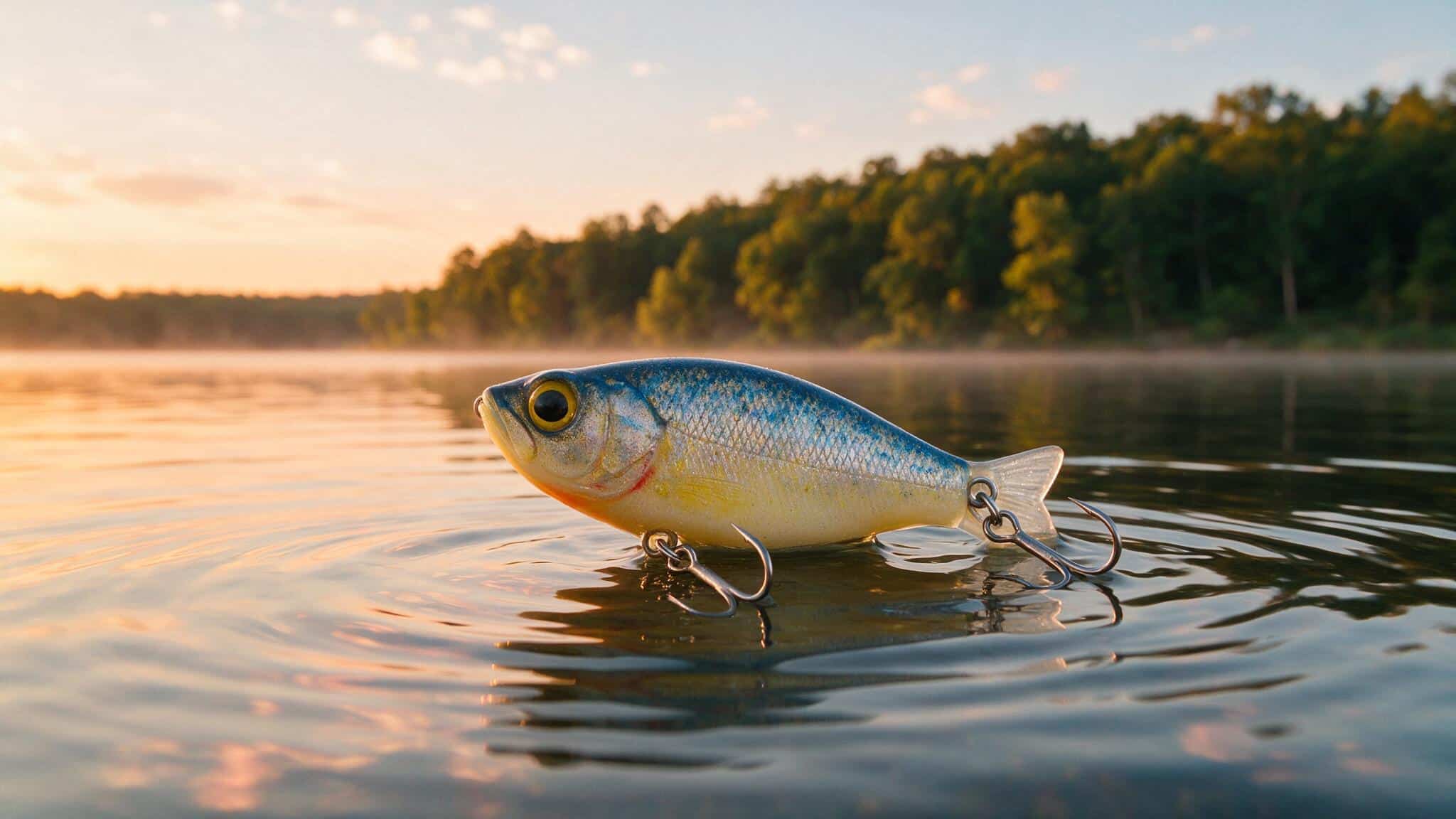
why topwater lures work, and why they sometimes do not
Topwater fishing lures trigger a different kind of strike than a crankbait or soft plastic. Fish attack from below, which means depth perception is limited and reaction speed does most of the work, part of why a bass will blow up on a lure and still miss it entirely. The other side of that is water clarity and light matter enormously. Low light, dawn, dusk, overcast skies, tends to bring fish shallow and up in the water column where they are willing to look up for a meal. In bright, high sun, especially over clear water, topwater bites can dry up almost completely because fish hold deeper and are less willing to chase something on the surface. A little wind helps too, since a light chop breaks up the surface and makes fish less cautious about committing.
the main types of topwater lures
Walking baits, the classic Zara Spook style, move side to side on a rhythmic twitch of the rod tip, an action anglers call walking the dog. They shine over open water and along breaklines where bass are actively feeding. Poppers have a concave face that spits water on a sharp rod snap, imitating a struggling baitfish or a distressed prey item, and they work well fished slow with long pauses. Buzzbaits run just under or right at the surface with a spinning blade that churns a wake, and they excel for covering water fast over grass flats. Hollow body frogs are built to run weedless across matted vegetation and lily pads where almost nothing else gets through without fouling. Prop baits and whopper-plopper style lures use a tail or nose propeller to throw water and create a commotion that pulls fish from a distance, useful in stained water where flash alone will not get noticed. Our list of best topwater picks runs through specific models in each of these styles.
reading conditions before you tie one on
Low light and calm-to-slightly-choppy water are the best starting conditions for topwater fishing lures. Early morning and the last hour before dark are consistently the strongest windows, especially in summer when the surface has cooled overnight. Cloud cover extends the good window through the middle of the day. Shallow flats, points, and grass edges near deeper water tend to hold more topwater activity than deep basins, since fish need a reason to come up and a way to retreat if they miss. If several casts through good-looking water produce nothing, it is often more efficient to switch to a subsurface bait than to keep grinding on top.
retrieve techniques that actually get bites
Walking the dog takes practice: short, sharp downward twitches of the rod tip with slack line management, not a steady reel. Poppers reward patience more than most anglers expect. A pop, a long pause, another pop, is usually more effective than a fast cadence. Buzzbaits mostly just need a steady retrieve fast enough to keep the blade on the surface without burying the lure. Frogs benefit from short twitches through open pockets in the vegetation, then a pause when the frog reaches clear water, which is often when the strike happens. One universal rule across all topwater fishing lures: do not set the hook the instant you see the blowup. Waiting a half beat until you feel the weight of the fish results in far more solid hookups than swinging on the splash.
gear that makes topwater fishing easier
Medium to medium-heavy baitcasting gear with 30 to 50 pound braid works for most topwater applications, since braid floats and has zero stretch for solid hooksets at range. For smaller poppers and finesse topwater work, medium spinning gear with 10 to 15 pound braid and a short fluorocarbon leader casts lighter baits more accurately. A rod with a slightly softer tip helps prevent pulling a treble-hooked walking bait or popper away from a fish before it fully commits.
when topwater is not the answer
Topwater fishing lures are not an all-day, every-day solution. Bright sun, cold water below roughly 55 degrees, and heavily pressured lakes where fish have already seen a hundred walking baits all work against a surface bite. In those conditions it usually makes more sense to fish something under the surface. For a broader look at bass lure categories and when each one fits, see our bass fishing lures guide, and for slower days when fish will not come up, our soft plastic baits guide covers the presentations that pick up the slack.
Topwater fishing lures reward confidence more than almost any other category. Fish it through water that looks right even after a few quiet casts, keep the hookset patient, and be ready to switch off it the moment conditions stop cooperating. The best topwater days are obvious. The rest of the time, it is just one more tool in the rotation.