Salt water destroys fishing reels that were never built for it, usually within a single season. A reel that works fine on a farm pond will seize up, corrode, or lose its drag smoothness fast once salt spray and sand get into the internals. This guide covers what "saltwater rated" actually means, how to size a reel for the fishing you actually do, and which reels are worth buying across different budgets.
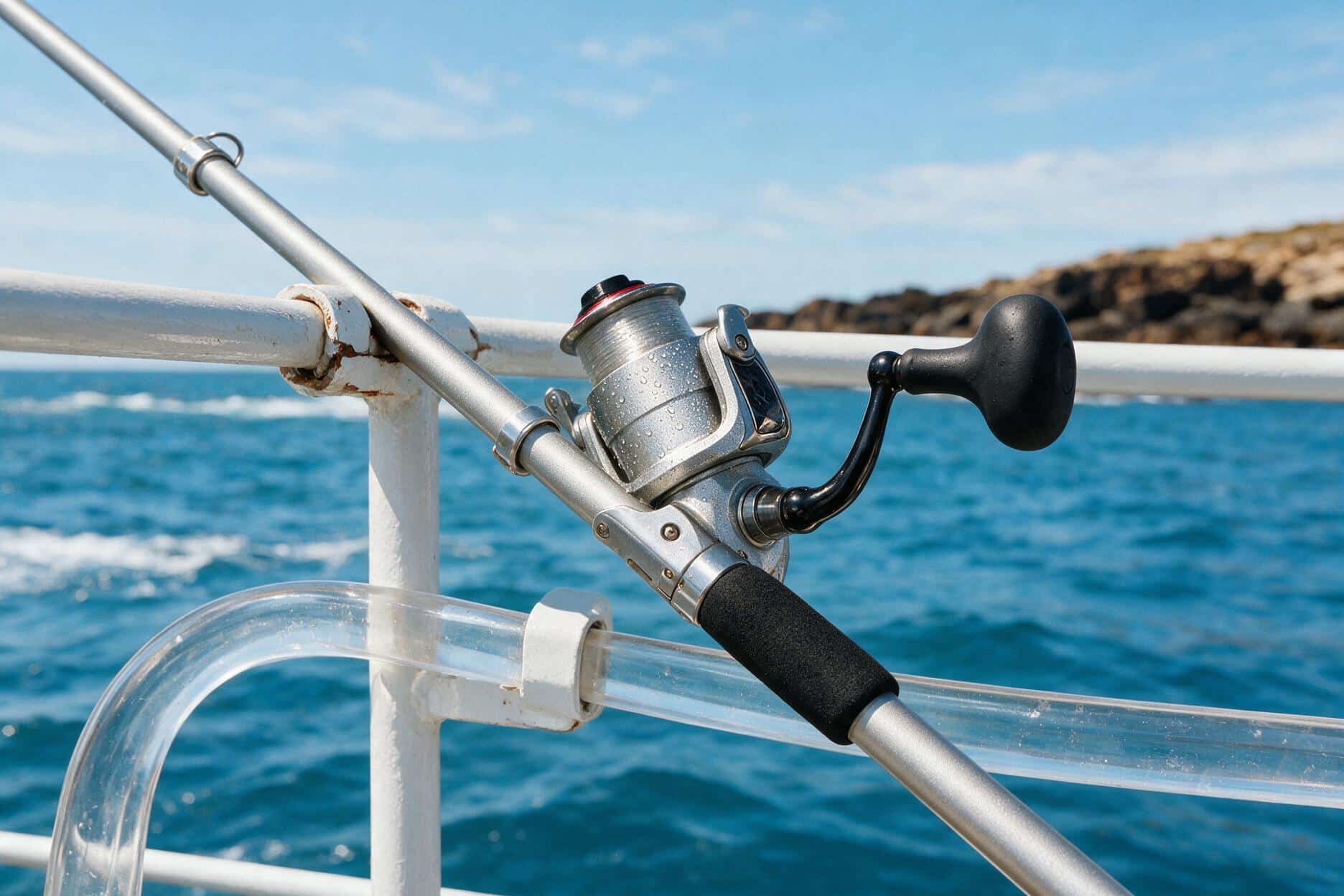
what "saltwater rated" actually means
Manufacturers throw the term "saltwater ready" around loosely, so it pays to know what to check. Real saltwater reels use corrosion-resistant bearings, often stainless or a shielded, greased design rather than open steel bearings that rust from the inside out. They use sealed or gasketed drag systems that keep water and salt out of the drag stack, which matters because a corroded drag washer gets grabby and inconsistent right when a big fish makes a run. Body and rotor materials also matter: aluminum and reinforced composites hold up far better than the basic plastics used on freshwater-only reels.
None of this makes a reel fully maintenance-free. It just raises the bar for how much abuse the reel tolerates before performance drops off.
sizing a reel for what you actually fish
Light inshore work, sight-casting to redfish or trout on light line, calls for a 2500 to 3500 size reel paired with 10 to 20 pound braid. This range prioritizes castability and finesse over raw stopping power. General inshore fishing, docks, jetties, and boat fishing for snook, striper, and similar species, moves into the 4000 to 6000 range, where drag capacity starts to matter as much as weight.
Surf fishing and nearshore work from a pier push into 6000 to 8000 size reels, since long casts and unpredictable current call for more line capacity and stronger drag. Offshore and big-game spinning, for species like tuna and amberjack, needs reels in the 8000 to 20000 range with sealed carbon fiber drag systems rated for 40 pounds of drag pressure or more. Buying undersized for the target species is the most common mistake anglers make with saltwater spinning gear, usually because they’re pricing based on freshwater habits.
why max drag rating deserves more attention than it gets
A reel’s stated max drag number gets ignored by a lot of buyers, but it is one of the more useful saltwater specs available. Fighting a strong fish near structure, a piling, a jetty, or a reef, requires enough drag pressure to turn the fish’s head before it reaches something that cuts the line. A reel rated for 20 pounds of max drag run near its limit will overheat, and drag performance degrades as the components heat up during a long fight. Buying a reel with meaningfully more max drag than you expect to use in practice, and setting the actual drag at a third or less of that maximum, keeps the system working consistently instead of pushed to its ceiling on every fish.
standout picks by budget
The Penn Battle III is the reel most anglers should start with in the budget tier. It uses a full metal body, sealed drag system borrowed from Penn’s higher tiers, and it holds up to genuine surf and inshore abuse for a fraction of the price of the reels above it. It is not smooth in the way a premium reel is smooth, but smoothness is not what saltwater fishing punishes first.
In the mid-range, Shimano’s Saragosa and Stradic SW models earn their reputation. Both use Shimano’s X-Protect sealing technology, which keeps water out of the body without adding the drag from a fully waterproof gasket. For anglers who fish salt water regularly but aren’t guiding for a living, this tier is usually the smartest place to spend money, since the jump from here to true premium reels brings diminishing returns for casual use.
At the top, Van Staal and Shimano’s Stella SW represent a different category of build quality. Van Staal in particular uses a fully sealed body that can be submerged without water intrusion, which matters for surf anglers who regularly get washed by waves. These reels cost several times what a Battle III costs, and for most anglers that price gap buys smoothness and peace of mind more than it buys fish. For anglers fishing hard, frequently, in genuinely abusive conditions, the extra durability and lower long-term failure rate justify the cost.
corrosion prevention: the step most anglers skip
Rinsing a reel with a quick spray from a hose is not the same as actually preventing corrosion. Salt crystallizes in every gap and thread on a reel body, and a fast rinse just moves the water around without dissolving the salt that’s already dried in place. A proper rinse means soaking or thoroughly running fresh water over the entire reel, working the bail and handle through their motion while rinsing, and never spraying water directly at the seams around the handle knob or drag knob where it can force its way past seals rather than out. Our reel maintenance guide covers the full routine, and it is worth following even on reels marketed as fully sealed, since no seal is truly permanent once it’s a few years old.
pairing the reel with the right rod
A saltwater spinning reel is only half the setup. Rod power needs to match the reel’s size and the target species, and line capacity needs to match how far you’re casting and how much a fish might run. Our spinning reels buying guide covers how to match reel size, rod power, and line choice into one balanced setup rather than shopping for each piece separately.
the bottom line
Match the reel size to the species and the water you actually fish, not to the biggest reel on the shelf. The Penn Battle III covers most budget-conscious inshore and surf needs without embarrassing itself. Shimano’s Saragosa and Stradic SW are the smarter buy for anglers who fish salt water often enough to want real sealing and drag consistency. Save Van Staal and Stella SW money for the point where you’re genuinely putting a reel through conditions that would kill anything less.