Walleye behave differently from almost every other popular gamefish, and anglers who fish them like bass or trout usually go home with an empty livewell. Their eyes are built for low light, which drives most of their feeding behavior and most of the strategy in this guide. Here is what actually catches walleye: how their vision shapes location and timing, the techniques worth learning, and the gear that holds up to the way walleye actually eat a bait.
why walleye behave the way they do
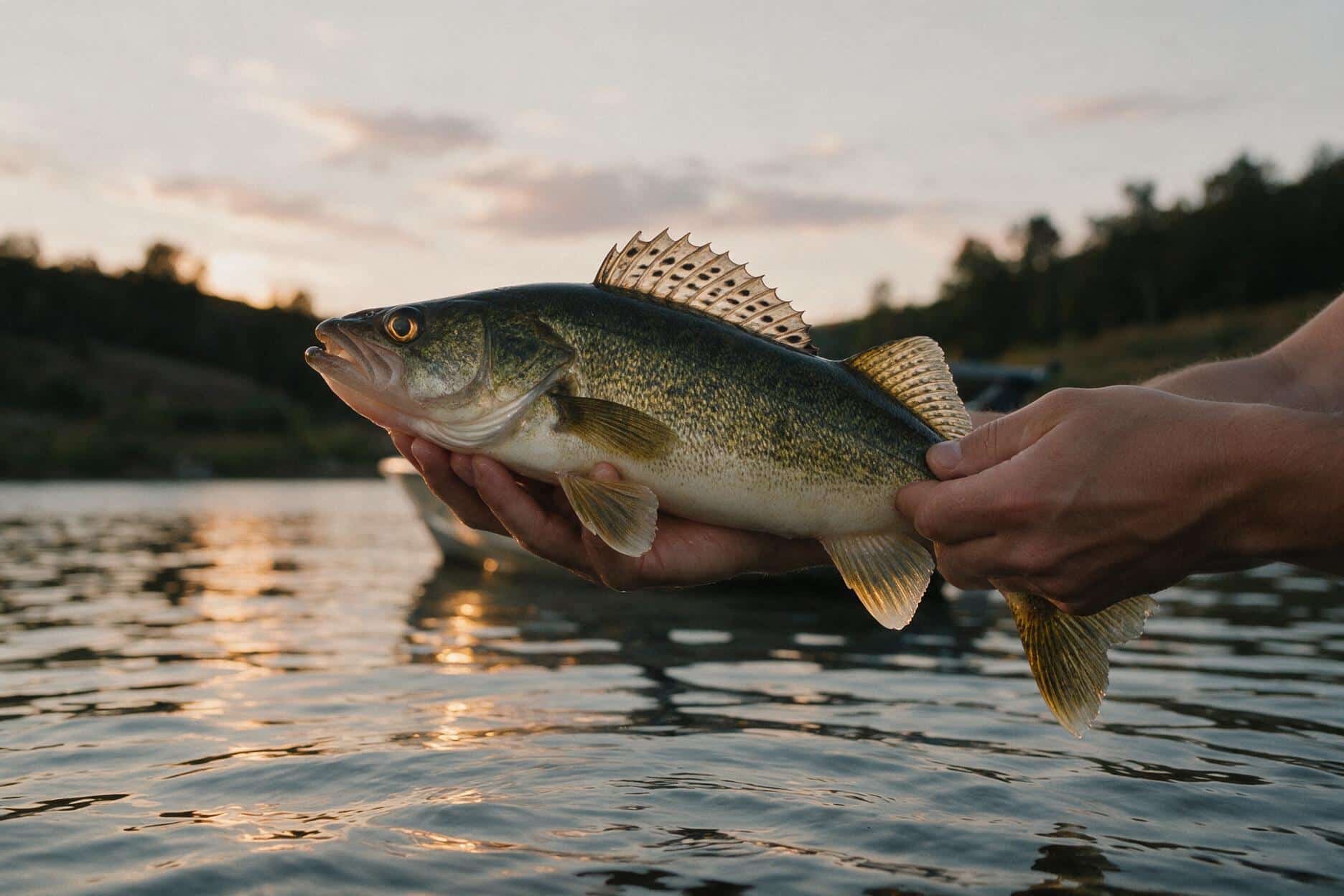
A walleye’s eye contains a reflective layer called the tapetum lucidum, the same structure that makes a cat’s eyes glow in headlights. It gathers light far more efficiently than a bass or trout’s eye, which is exactly why walleye thrive in stained water and low light and why they often struggle in bright, clear conditions that other predatory fish handle fine. This single trait explains most walleye behavior worth knowing: the dawn and dusk feeding pushes, the tendency to suspend in deeper, darker water during bright midday sun, and the strong pull toward night fishing once summer water clears and warms.
Walleye also feed differently than bass. Rather than crushing prey aggressively, they often approach a bait, mouth it, and move off before committing fully, particularly in cold water or high fishing pressure situations. That subtlety is why bite detection matters more with walleye than with almost any other freshwater species anglers commonly target.
where walleye live through the season
Walleye relate strongly to structure and light, more than to cover in the way bass do. In spring, they move onto rocky shoals, river mouths, and current areas to spawn, and the days just after ice-out or spring rains often produce the most predictable shallow bite of the year. As water warms into summer, walleye push toward deeper structure: main lake humps, points, and the edges of drop-offs, where they suspend at whatever depth matches the thermocline and available light.
Reservoir and river walleye behave a bit differently than natural lake fish, often holding tight to current breaks, wing dams, and tailrace areas below dams where baitfish concentrate. Fall brings walleye shallower again as they key on baitfish before winter, similar to the fall pattern seen in bass. Winter walleye group tightly over deep structure and respond best to a precise, minimal presentation rather than anything that covers water quickly.
jigging: the most versatile technique in the game
A simple jig and soft plastic or minnow combination catches walleye in more situations than any other method, and it is the technique most experienced walleye anglers default to when nothing else is working. Vertical jigging over structure, letting the jig fall on a controlled semi-slack line, and detecting the light tap or subtle weight change of a bite takes practice, but it translates across nearly every water type and season.
Jig weight should match depth and current, heavy enough to maintain bottom contact and feel structure changes without being so heavy the presentation looks unnatural. A common mistake is fishing a jig too heavy out of habit, which drags the bait through structure too fast to trigger a following, non-committed fish.
live bait rigging and spinner rigs
Live bait rigs, typically a slip sinker above a swivel and a leader tipped with a snelled hook, let a walleye pick up a nightcrawler or minnow and move with it before feeling resistance from the sinker. This delayed resistance is exactly why rigging out-produces more aggressive presentations on pressured or lethargic fish. Snelling the hook rather than tying a standard knot changes the hook’s angle of pull when a fish takes line, which improves hookup rates enough that most serious walleye anglers snell as a default habit rather than an occasional technique. Our fishing knots guide covers the snell knot and other rigging-specific connections in more depth.
Spinner rigs add a blade ahead of the bait for flash and vibration, which helps in stained water or when trolling covers ground faster than a stationary presentation allows. Both rig styles benefit from a slow presentation, either drifting with the wind or trolling at a crawl, since walleye rarely chase a fast-moving bait the way a bass or pike will. Our fishing rigs guide covers the components and assembly of both spinner rigs and basic live bait rigs.
trolling crankbaits
Trolling covers water efficiently and lets an angler present baits at a precise depth using diving crankbaits, especially useful for locating scattered summer fish on large reservoirs and natural lakes. Line-counter reels take much of the guesswork out of depth control, since crankbait dive depth is directly tied to how much line is out. Trolling speed matters more than most anglers assume; walleye generally prefer a slower troll than the speed that works for species like striper, often in the 1.5 to 2.5 mph range depending on water temperature.
Board planers spread lines out from the boat’s wake, which covers more water per pass and avoids spooking fish directly in the boat’s path, an advantage that grows as water gets clearer. Our walleye lure tactics guide breaks down when to lean on jigging versus trolling in more detail.
why night fishing produces
Once summer water clears and warms, walleye shift much of their active feeding to low light and full darkness. Anglers who only fish daylight hours during summer are working against the fish’s natural feeding window rather than with it. Shallow structure that looks dead at noon, points, flats, and rocky shorelines, often holds actively feeding walleye after dark, particularly in clear lakes where daytime fish push deep to escape the light. This is not a universal rule on stained or turbid water, where light penetration is already limited and daytime fishing stays productive.
gear that matches how walleye actually bite
A medium-light to medium power spinning rod with a soft, sensitive tip is the standard walleye setup, since detecting a subtle pickup matters more than raw hook-setting power. Fast action helps here too, keeping enough tip sensitivity to feel light bites while still having backbone in the rest of the blank. Six to eight pound fluorocarbon or a light braid with a fluorocarbon leader covers most situations, balancing enough strength for average-size fish against the low visibility that pressured or clear-water walleye demand. Our walleye gear and tackle guide goes deeper into rod, reel, and line choices built around the species.
common mistakes that cost anglers walleye
Fishing too fast and too aggressively is the single most common error, carried over from bass or pike habits where a reaction bite is often the goal. Ignoring light conditions is another: fishing the same depth and location at noon that produced fish at dawn usually fails, since the fish have moved to match changing light penetration. Skipping the snell knot on live bait rigs costs hookups that anglers often blame on the fish rather than the terminal tackle. And treating every walleye bite like a hard strike, rather than watching for the subtle weight and line movement that most walleye bites actually produce, leads to setting the hook too late or not at all.
the bottom line
Walleye reward anglers who work with low light rather than against it, present bait slowly enough for a cautious fish to commit, and pay attention to the subtle bite that this species is known for. Start with a simple jig and minnow over structure at dawn or dusk, snell your live bait rigs, and shift toward night fishing once summer water clears. That combination catches more walleye than any single lure or rod ever will.