Walleye fishing rewards anglers who match their gear to the fish rather than grabbing whatever rod is already rigged up from the last bass trip. Walleye feed differently than bass, they hold at different depths depending on light and water temperature, and they hit with a subtlety that heavier gear tends to miss entirely. I learned this the slow way, swapping out one piece of equipment at a time over a few seasons, after one too many soft taps that never turned into a solid hookset. If you have already read our walleye fishing guide, you know the basics of where and when to find these fish. This article is about what actually belongs in the boat.
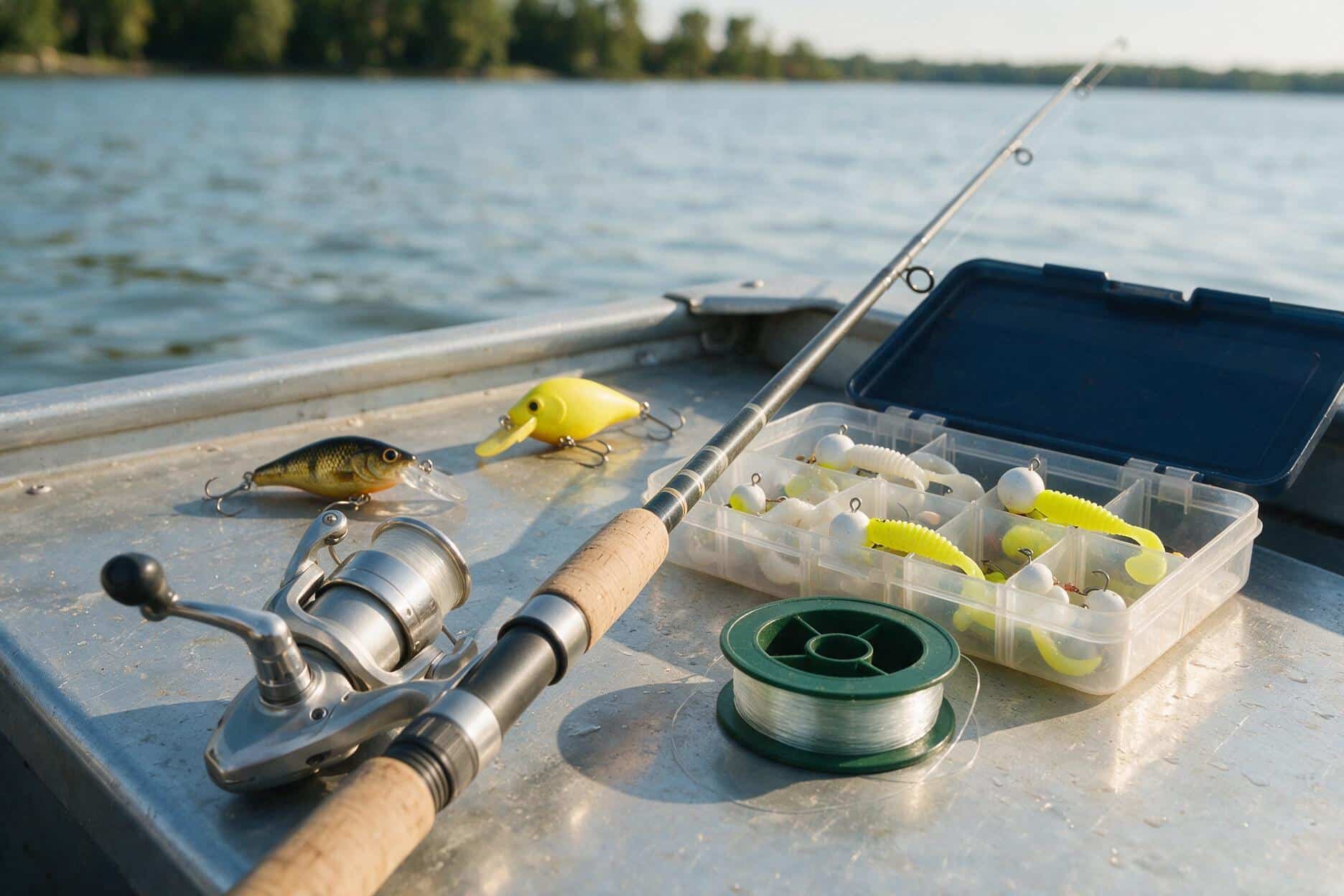
rods that match the bite
Walleye strikes are rarely violent. Most of the time you feel a tap, a slight heaviness, or a change in the resistance of your jig as it falls. A medium-light or medium power spinning rod with a fast tip lets you see and feel those bites instead of missing them against a stiff blank. Length matters too. A 6-foot 6-inch to 7-foot rod handles jig fishing and light rigging without being unwieldy in a boat, while a longer rod, closer to 7-foot 6-inches, helps when you are pulling spinner rigs or working crankbaits behind the boat and need extra length to manage line angle.
I keep two rods rigged on most trips: one shorter, softer rod strictly for jigging, and one slightly longer, moderate-fast rod for pulling crawler harnesses or casting shallow crankbaits. Trying to do both jobs with a single all-purpose rod works, but it means compromising on one presentation or the other.
reels: spinning wins almost every time
Baitcasting reels have their place for trolling with heavier crankbaits, but for the bulk of walleye fishing, a spinning reel in the 2500 to 3000 size range is the more practical choice. It casts light jigs better, it handles thin line without the backlash risk baitcasters carry, and it is easier to fish one-handed while you manage the trolling motor or watch your electronics. A smooth front drag matters more than a high gear ratio here. Walleye do not usually make blistering runs, but they do a lot of head shaking close to the boat, and a jerky drag pulls hooks free.
line: this is where most anglers get it wrong
Fluorocarbon in 6 to 8 pound test is the standard for walleye because it sinks, it resists abrasion against rocks and zebra mussels, and it stays nearly invisible in clear water. Straight monofilament still has a place when you want a bit of stretch for forgiving hooksets with treble-hook crankbaits, but for jigging and vertical presentations, fluorocarbon is worth the extra cost.
Braided main line with a fluorocarbon leader is popular for deep water jigging because braid has almost no stretch, which means you feel bites at 25 or 30 feet that you would never detect through straight mono. If you fish mostly shallow water under 15 feet, straight fluorocarbon is simpler and works fine. Our fishing line guide breaks down the tradeoffs between these materials in more detail if you want the full picture.
jigs carry more of the season than anything else
A plain round-head jig in 1/8 to 3/8 ounce, tipped with a minnow, a leech, or a soft plastic, catches more walleye over a full season than every other lure in the box combined. Weight selection depends entirely on depth and wind drift, not on some fixed preference. In calm water at 10 feet, an 1/8 ounce jig falls at the right pace. Add wind or push the depth to 20 feet and you need 1/4 or 3/8 ounce just to stay in contact with bottom.
Color matters less than most tackle shop displays suggest. Water clarity drives the decision more than the calendar does. Natural colors like white, silver, and perch patterns work in clear water. Chartreuse and orange earn their keep in stained or murky conditions. I carry both and let the lake tell me which one to tie on, rather than committing to a favorite before I even see the water. Our walleye lures by season guide goes deeper on how that selection should shift as the year goes on.
crankbaits and spinner rigs for covering water
When walleye scatter across a flat or suspend along a break line, pulling gear behind the boat covers more water than casting ever will. Spinner rigs, also called crawler harnesses, paired with a nightcrawler and a bottom bouncer, are the classic summer presentation for a reason. If you already fish our walleye spinner rig setup, you know how to build one from scratch. Trolling crankbaits in the 4 to 12 foot diving range fills the same role in early season or when fish sit shallower.
electronics: not glamorous, but non-negotiable
A basic fish finder with side imaging or down imaging changes how quickly you locate fish on unfamiliar water. Walleye relate to structure, drop-offs, humps, weed edges, and without electronics you are fishing blind, hoping fish happen to be wherever you decided to cast. I am not a guide and I do not pretend to read a graph like someone who does this for a living, but even a basic unit tells you enough about depth and bottom composition to stop guessing.
terminal tackle odds and ends
A small box of octopus hooks in size 4 to 6 for live bait rigs, a handful of size 4 snap swivels for changing spinner harnesses quickly, and some split shot in a few sizes rounds out the tackle box. None of this is exciting to buy, but running out of a size 6 hook halfway through a good bite is the kind of small mistake that ends a productive afternoon early.
a realistic starter budget
You do not need four rods and a boat full of tackle to catch walleye consistently. One medium-light spinning combo, a spool of 8 pound fluorocarbon, a dozen jigs in two or three weights, and a handful of soft plastics covers most situations a weekend angler runs into. Add a bottom bouncer and two or three spinner harnesses once you start fishing deeper water or trolling. Everything past that is refinement, not necessity, and refinement is something you figure out one trip at a time, not by buying out the tackle aisle before your first cast.