My uncle has a two-acre pond behind his property that has produced more solid largemouth for me than some lakes I have spent whole seasons on. A bass fishing pond gets overlooked by anglers chasing bigger water, and that is a mistake, because small water concentrates fish into a handful of spots you can actually learn completely instead of guessing at a fraction of a much larger lake.
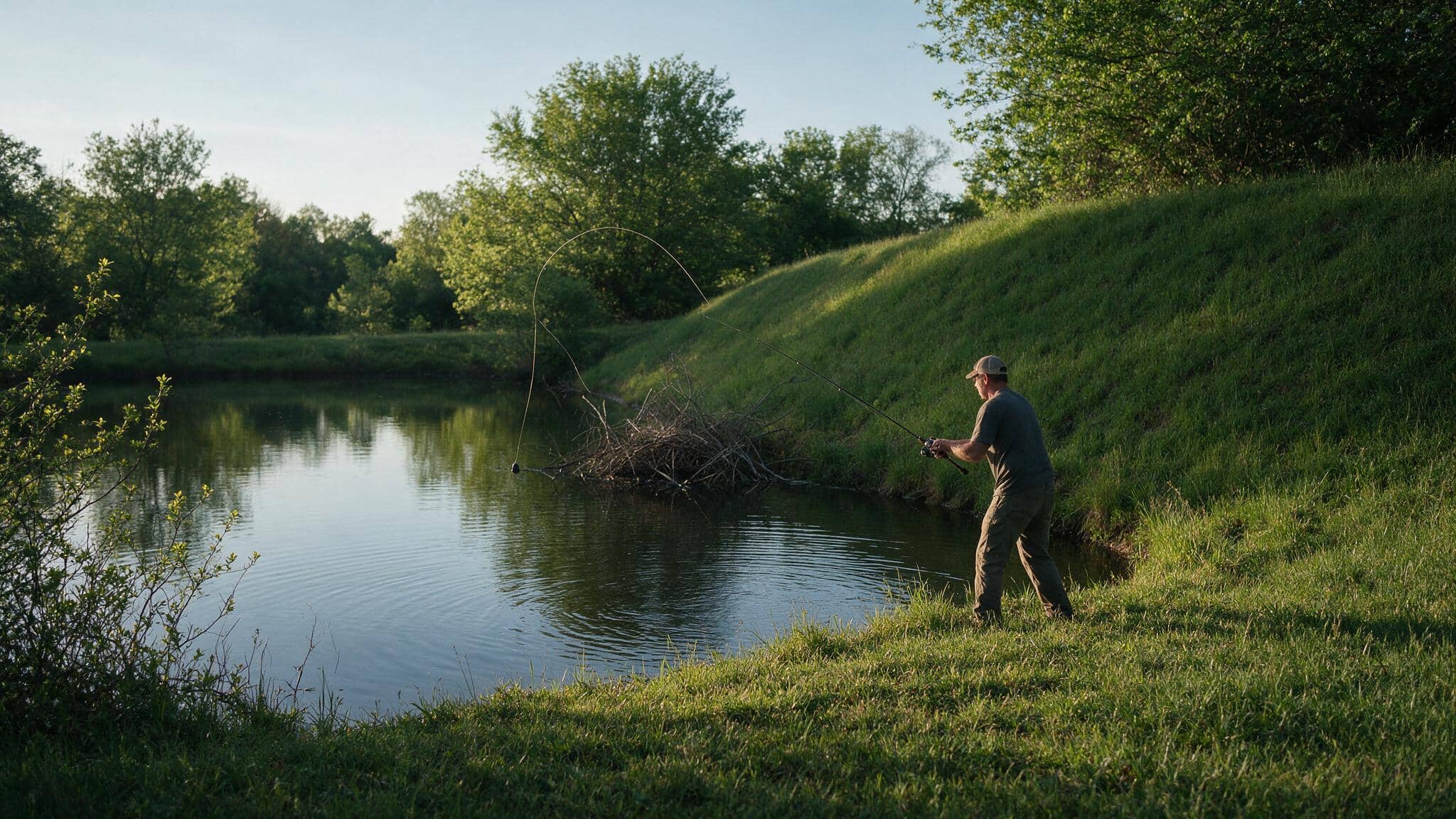
why a small pond fishes differently than a lake
The biggest difference is how little water there is to hide in. A bass fishing pond under five acres might have only two or three real holding areas, a deeper hole, a point, maybe a laydown, and the entire bass population rotates through that small handful of spots depending on temperature and time of day. On a lake you can motor to a dozen similar spots and eliminate water fast. On a pond you learn every inch of it instead, and that knowledge pays off for years since pond structure rarely changes much season to season.
sizing up a bass fishing pond before you start
Walk the whole bank before your first cast if you can. Look for the deepest visible water, usually near a dam if the pond has one, since dam faces tend to hold the depth a pond otherwise lacks. Note any standing timber, brush piles, or docks, since a small bass fishing pond with zero visible cover usually still has something under the surface even if you cannot see it from the bank. Water clarity tells you a lot too. Clear ponds push bass toward deeper water and shade during bright hours, while murky, stained ponds let bass sit shallow and aggressive most of the day because they feel less exposed. Bring polarized sunglasses on this walk, since spotting a cruising fish or a submerged stump before you cast tells you more than blind fishing will.
gear for pond bass
You do not need a boat’s worth of rods for pond fishing, and honestly a single medium spinning or baitcasting combo covers most situations on water this size. Keep a small selection of soft plastics, a spinnerbait for covering water fast along the bank, and a topwater bait for early morning and evening. Bass in a small bass fishing pond see far less fishing pressure than bass in a popular lake, which means they are often less line-shy and less picky about exact bait selection. That lets you simplify tackle instead of carrying options for every possible mood a heavily pressured lake fish might have. Ten to twelve pound line covers almost every pond situation, since you rarely fight fish through heavy current or long runs like you might on bigger water.
seasonal patterns on a bass fishing pond
Spring puts bass shallow on any pond as they move up to spawn, usually along the sunniest bank with the hardest bottom they can find, and this is when a small pond fishes closest to how a lake does. Summer pushes them toward whatever deeper water and shade exists, often that dam face or a single deep hole, and the fish can stack up tight in a small area rather than scattering. Fall sends them shallow again chasing baitfish, and winter slows everything down to the deepest, most stable water on the property. Because a pond has so little water overall, these seasonal moves happen fast and in a small radius, so what worked two weeks ago might already be wrong. Checking a pond every week or two through spring beats relying on last year’s pattern, since timing shifts by two or three weeks depending on the year.
structure and cover in small water
Every piece of visible or suspected cover on a small pond matters more than the same piece would on a big lake, simply because there is less competing structure around it. A single brush pile in an otherwise featureless pond can hold most of the population on a given day. Docks, where present, fish the same way they do anywhere else, and our dock fishing guide covers presentation around pilings in more detail. Bigger picture strategy for reading any still body of water, pond or lake, gets covered in our lake fishing guide, and a lot of that structure-reading logic scales down to pond size without much modification.
stocked ponds vs wild populations
A lot of small ponds, especially on farms and private property, get stocked deliberately with bass and forage fish rather than developing a population naturally. Stocked bass fishing pond setups often skew the size structure in one direction, either a lot of small, aggressive fish from overstocking, or a handful of genuine giants in a pond that was stocked once and left alone for a decade. Ask whoever manages the pond, if you can, whether it has been stocked and how long ago, since that single piece of information tells you more about what to expect than an hour of blind casting will.
common bass fishing pond mistakes
Fishing the whole pond the same way is the first mistake I see. A pond might have a rocky dam face, a muddy shallow cove, and a stretch of standing timber all within a hundred yards of each other, and each needs a different bait and retrieve. Second, a lot of anglers overfish the bank they can reach easily and ignore the far side, often the least pressured water on the property and worth the walk. Third, giving up on a small bass fishing pond after one quiet trip is premature. Small water goes through slow stretches tied to weather just like a lake does, and a pond that produced nothing in July might turn on hard the moment a cold front passes through in September.
getting permission and finding ponds to fish
Most productive small ponds sit on private land, farms, ranches, subdivisions with a shared pond, golf courses. Knocking on a door and asking politely still works better than people expect, especially outside of peak season when landowners are not fielding constant requests. Some states also maintain public pond listings through their wildlife agency, smaller and less publicized than their lake and river access maps but worth checking. For a broader rundown of tactics that apply to bass no matter what body of water you are on, our bass fishing guide is worth reading alongside this one, since pond fishing is really lake and reservoir fishing with the scale turned down.
A bass fishing pond will never produce the trophy numbers a well-managed lake can put up, but it will teach you to read water faster than almost anything else, because there is nowhere for the lesson to hide. Learn one pond completely before you move to the next, and pay attention to what changes between visits. That habit transfers to every other kind of bass water you will ever fish.