The best bluegill spot I have ever fished was a neighbor’s dock two doors down from where I used to rent a lake house, and I never once needed a boat to fish it. Dock fishing gets treated like a lesser version of real fishing by people who have not tried it seriously, and that is a mistake, because a good dock is basically a permanent fish attractor that someone else built and maintained for you.
what makes dock fishing different
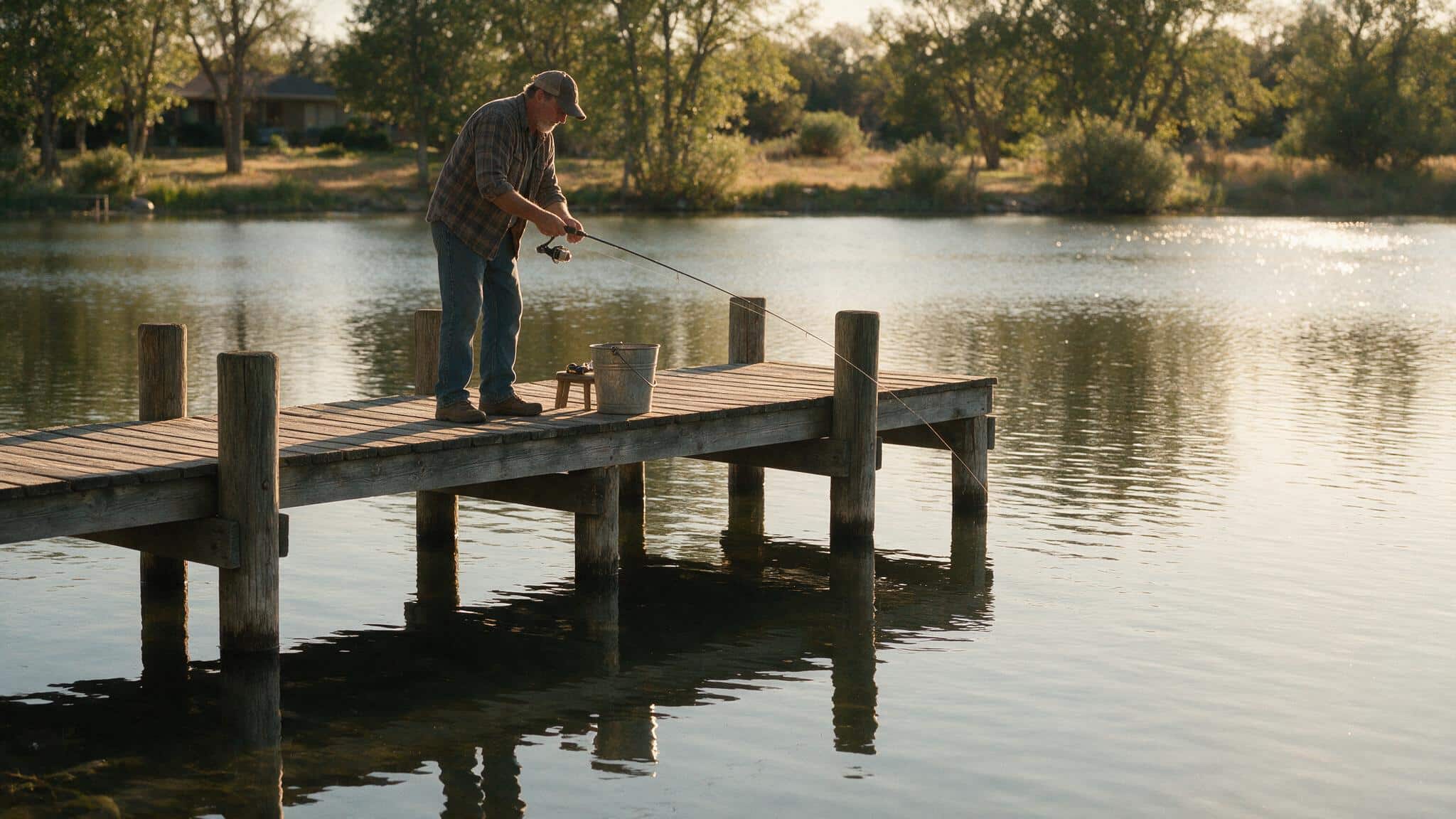
A dock is not just a platform to stand on, it is structure in the water, and that changes everything about how you approach it compared to open bank fishing. The pilings, the shaded water underneath, the ladder or brackets bolted to the sides, all of it gives fish something to relate to that a plain stretch of shoreline does not offer. Dock fishing rewards precision over distance. You are usually working a small, defined area rather than covering water, which means presentation and accuracy matter more than how far you can cast.
reading a dock’s structure
Not all docks fish the same, and figuring out why takes some observation before you start casting. Shade is the first thing I look at. A dock throwing a long shadow across deeper water holds fish longer into the day than one sitting in full sun, especially in summer. Age matters too. An older dock with algae growth and barnacle-crusted pilings supports more baitfish and small crustaceans, which pulls in the predators feeding on them. Floating docks move with wind and current and tend to fish differently than fixed docks on pilings, since the shade pattern and the structure underneath shift depending on water level. Walk the dock before you fish it and look for the darkest, most shaded water near the pilings closest to deeper water. That is usually where the better fish are sitting.
gear for dock fishing
Dock fishing calls for accuracy more than power. A medium spinning or baitcasting setup around 6.5 feet gives you enough control to skip a bait under low dock sections without needing a long rod to load up on the cast. Skipping is the single most useful skill for dock fishing and it takes practice on dry land before you try it over water. A sidearm cast that lets the bait skim the surface like a skipped stone gets your presentation into shaded pockets a normal cast cannot reach. Beyond that, keep your tackle simple: a handful of jigs, a few soft plastics for skipping under structure, and enough weight to get vertical presentations down to pilings without spooking fish on the drop.
private docks, public docks, and permission
This is where dock fishing gets more complicated than bank fishing. A lot of the best dock fishing sits in front of private residential property, and fishing from someone’s dock without asking is a fast way to get an unpleasant conversation, even where the water itself is legally public. Public marinas, boat launch docks, and docks inside public parks are fair game and often produce well precisely because they get less fishing pressure from anglers who assume every dock is private. If you are fishing public water near a private dock from a boat or by wading, you are usually within your rights, but casting directly under or tying up to someone’s private dock is a different matter and worth checking your state’s specific water access laws before you push the line.
techniques that work around docks
Skipping gets a bait deep under a dock where fish are holding tightest to shade and structure, and it is worth the practice time it takes to get consistent. Pitching works for docks with more open access, underhand and controlled, dropping a bait quietly next to a piling without the splash a full cast makes. Vertical jigging along pilings covers the whole water column in one spot, which matters because dock fish suspend at different depths depending on light and temperature through the day. I mix all three on a normal outing rather than committing to one, since a dock with six pilings and three different shade lines rarely rewards using the same approach on every piece of it.
time of day and seasonal patterns
Early morning and late evening produce the most consistent dock fishing, same as most shore-based fishing, but docks hold an advantage the open bank does not: shade. On a bright summer afternoon when open water fishing slows down, a well-shaded dock can still produce because the fish underneath it never left the comfortable water temperature and low light. Spring puts fish shallow around dock pilings during spawning season, and that is often the single best stretch of the year to fish a dock hard. Our full shore fishing guide covers how season and light affect bank access more broadly, and most of that logic carries over to docks directly.
common dock fishing mistakes
Standing at the end of the dock and casting straight out into open water is the most common one, and it wastes the entire point of fishing a dock in the first place. The fish are underneath you and to the sides, not forty feet out past the last piling. Making noise on the dock itself is another. Footsteps on wood transmit through the water more than most anglers expect, and walking heavy out to the end before you have made a single cast can put down fish that were sitting right under where you just stood. The third mistake is giving up on a dock too fast because the first few casts came up empty. Dock fish, especially bigger ones, often need a bait presented right at the base of a specific piling rather than anywhere nearby, so a dock that seems dead might just need a more exact presentation before you move on.
Dock fishing is one of the few types of fishing where showing up prepared to be patient and precise beats showing up with better gear. Learn to skip a bait quietly, respect who owns the structure you are fishing, and work the shade lines instead of the open water past them. The docks nobody else bothers with are usually the ones holding fish nobody else is catching.