Vertical jigging for walleye and trolling crankbaits or spinner rigs solve two different problems, and most anglers who struggle with walleye are leaning too hard on one and ignoring the other. Jigging puts precise, controlled bait right in front of fish holding tight to specific structure. Trolling covers water and finds fish scattered across a flat or suspended along a break line that jigging would take all day to search. Here’s how to use both, and how to know which one the day actually calls for.
why vertical jigging for walleye works so well
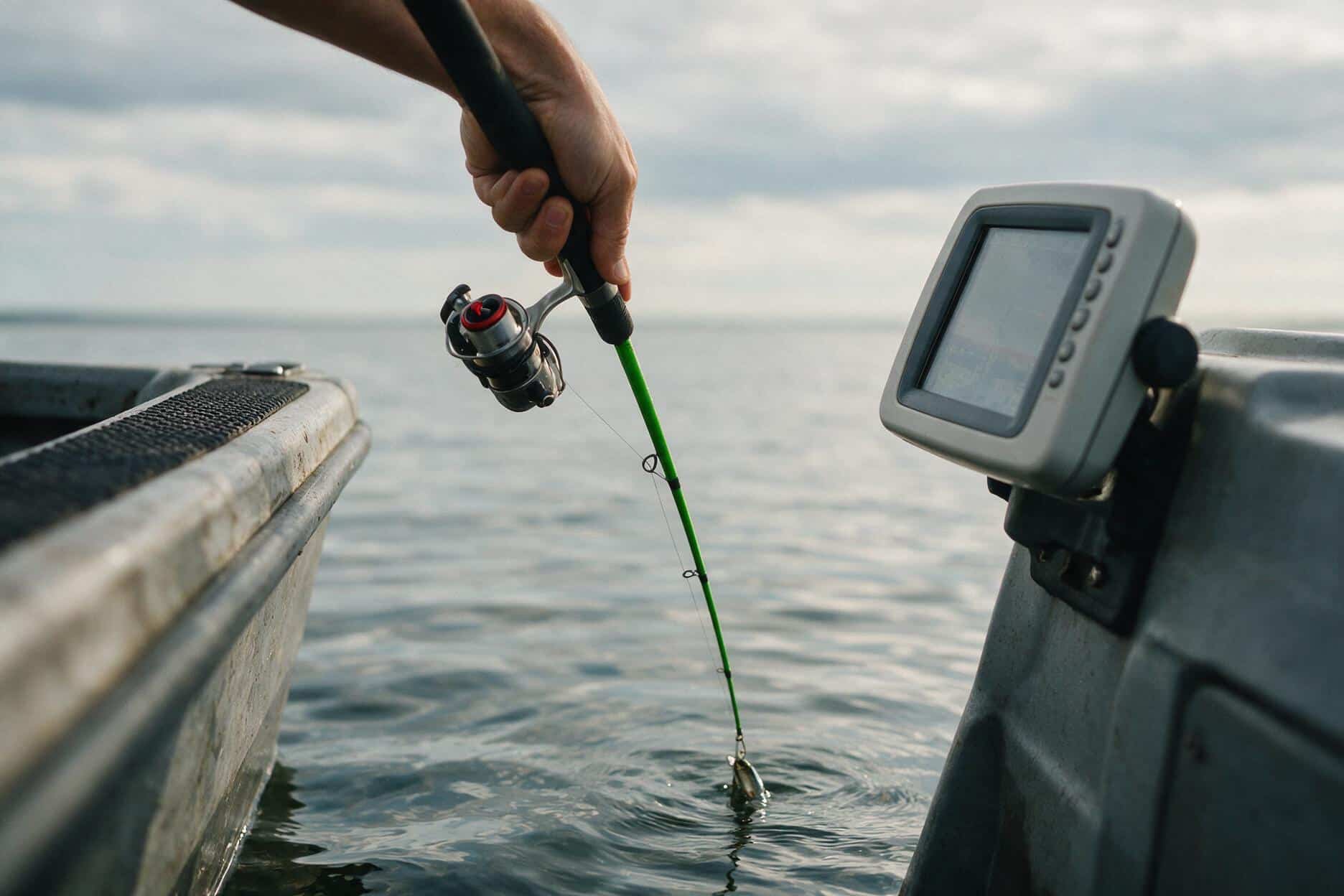
Vertical jigging for walleye means keeping the boat positioned directly over structure, using the trolling motor or wind drift to hold position, and dropping a jig straight down rather than casting and retrieving. That control matters because most walleye bites are subtle: a slight tap, a change in the weight of the jig, a moment where the line goes slack instead of continuing to fall. Fishing straight up and down keeps you in direct contact with the bait through the entire fall, which is exactly when most strikes happen.
reading the bite
A walleye usually takes a jig on the fall or the instant it touches bottom, not on a hard, aggressive pull the way a bass often hits. Watch the line where it enters the water rather than waiting to feel a thump in the rod. Any hesitation in the fall, a jump, a subtle tick, or the line simply stopping when it should still be sinking, means set the hook. Letting the jig sit motionless on bottom for a second or two after each drop gives a following fish time to commit rather than always keeping the bait moving.
matching jig weight to depth and drift
Weight selection for vertical jigging for walleye depends on depth and how much the boat is drifting, not a fixed preference. In calm conditions at 15 feet, an 1/8 to 3/16 ounce jig maintains a controlled fall and stays in contact with bottom. Add wind or current, or fish deeper water past 25 feet, and 1/4 to 3/8 ounce keeps the line close to vertical instead of sweeping out at an angle where bite detection and bottom contact both suffer. A jig that’s too light for the conditions is the single most common reason anglers lose contact with structure and blame the fish for not biting.
trolling: covering water when fish are scattered
Once walleye spread out across a flat, suspend along a thermocline, or scatter over a large area of open water, trolling out-produces jigging by covering far more ground per hour. Crankbaits trolled on a line-counter reel let you dial in a specific running depth and repeat it precisely, which matters when fish are holding at a narrow band, say 18 to 20 feet, and missing that window by a few feet costs you the bite. Spinner rigs pulled behind a bottom bouncer add scent and a slower presentation, useful when fish are less aggressive or water is stained enough that flash and vibration outperform a crankbait’s tighter wobble.
trolling speed and line control
Speed control separates a good trolling presentation from a mediocre one. Most spinner rig trolling works best in the 0.8 to 1.2 mph range, slow enough that the blade turns without spinning so fast it looks unnatural. Crankbait trolling generally runs a bit faster, often 1.5 to 2.5 mph, though slowing down in cold water and speeding up slightly to trigger aggressive fall fish both have their place. Watching your kicker motor’s speed rather than guessing keeps the presentation consistent across a long trolling pass instead of drifting faster or slower without noticing.
combining both in one trip
A common and effective pattern is trolling first to locate active fish and identify the specific depth and structure they’re using, then switching to vertical jigging once you’ve pinned down a tight group holding on a hump, break, or current seam. Trolling answers the "where" question over a large area. Jigging answers "how do I get this fish to eat" once you already know where to stop the boat. Anglers who only troll often leave fish behind on tight structure that rewards a precise vertical presentation, and anglers who only jig waste hours searching water that trolling would have covered in twenty minutes.
gear differences worth knowing
A jigging setup wants a shorter, sensitive rod, typically 6 to 6.5 feet, with a fast tip that telegraphs subtle bites straight to your hand. A trolling setup benefits from a longer rod, 7.5 to 8.5 feet, which helps spread lines out from the boat and provides a more forgiving bend that keeps hooks pinned in a fish that’s already moving away from the boat when it strikes. Line-counter reels are close to mandatory for serious trolling, since repeating a productive depth is the whole point, while a simple spinning reel in the 2500 to 3000 size handles jigging duty just fine.
mistakes that cost fish in both techniques
Jigging too fast, lifting and dropping the bait aggressively instead of letting it fall on a controlled semi-slack line, is the most common jigging mistake. On the trolling side, running too fast for the water temperature, and not adjusting line length to keep baits running at the depth fish are actually holding, both quietly kill a lot of otherwise well-planned trips. Skipping a good pair of planer boards when trolling multiple lines also limits how much water you can cover on any given pass.
For seasonal lure selection that applies to both techniques, our guide to walleye lures by season covers what to tie on as water temperature and forage change through the year. Our walleye fishing guide covers the broader behavior and structure patterns behind both tactics, our walleye gear and tackle guide goes deeper on rod and reel choices for each style, and our guide to walleye spinner rigs covers building the harnesses this trolling section relies on.
the takeaway
Vertical jigging for walleye and trolling are not competing techniques, they solve different problems on the same body of water. Troll to find fish and cover water efficiently, then switch to jigging once you’ve located a group tight enough to work vertically. Match jig weight to depth and drift, keep trolling speed honest, and use each technique for what it actually does well instead of forcing one to do both jobs.