Walleye lures that work great in April often sit untouched in the tackle box by August, and the anglers who catch fish consistently through the whole season are the ones who swap gear as the water and light change rather than sticking with whatever produced last trip. Walleye behavior shifts hard from spawn to summer to the shoulder season before ice, and matching walleye lures to those shifts matters more with this species than with almost any other freshwater gamefish. Here’s what to tie on and when.
why lure choice tracks light more than anything else
A walleye’s eyes are built for low light, which is why the fish pushes shallow at dawn, dusk, and after dark, and why lure choice through the season is really a proxy for chasing the right light and temperature window rather than a fixed calendar. Early in the year, cold water keeps walleye lethargic and close to the bottom no matter the hour. By midsummer, the fish spread out, suspend, and often feed hardest after sundown. Walleye lures that ignore this and just chase depth or structure without accounting for light usually underperform, even in the right general area.
spring: jigs and shallow minnowbaits
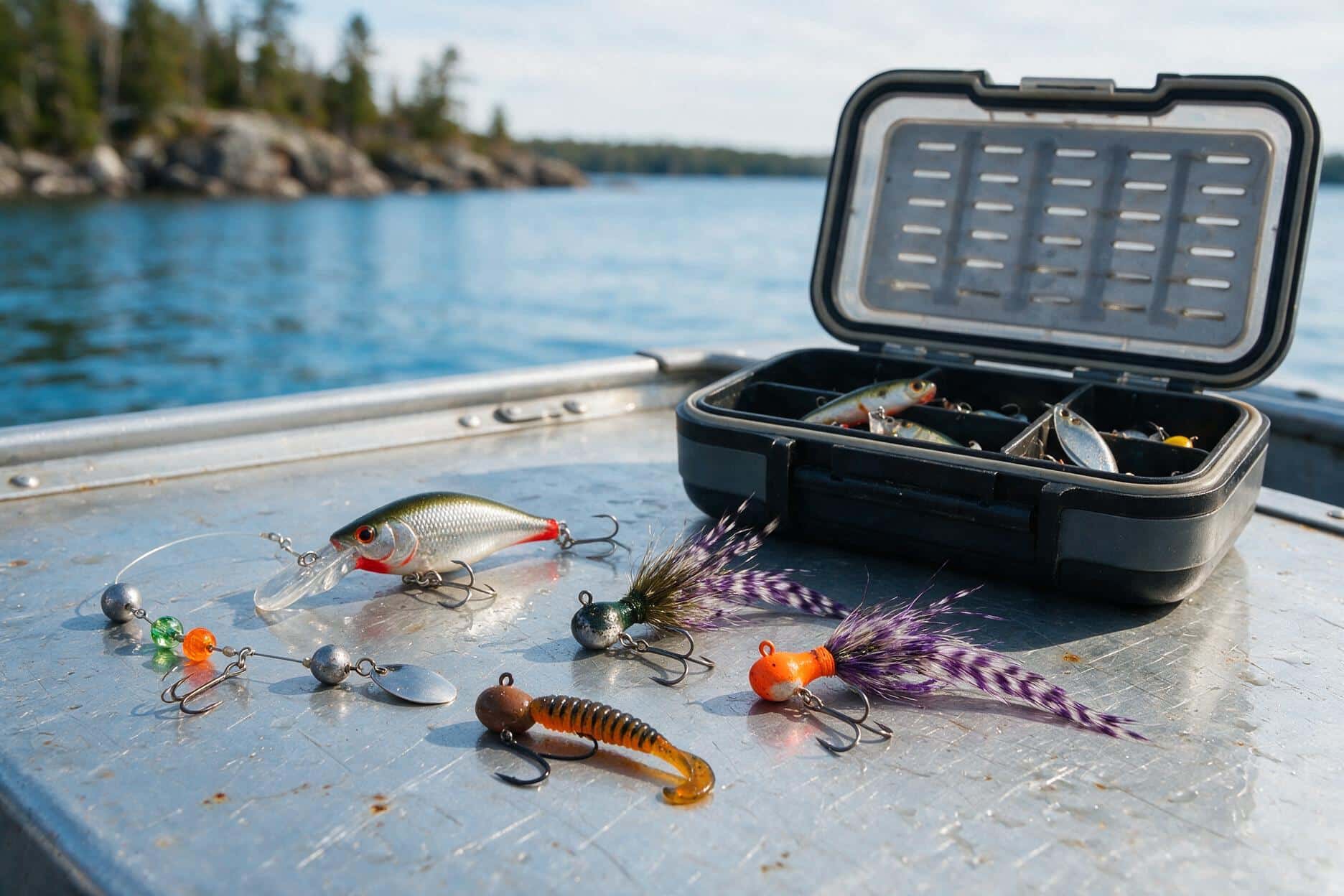
Right after ice-out or during the spring rise, walleye push onto shallow rock, gravel shoals, and river current to spawn, and a simple jig tipped with a minnow is the most productive lure of the season by a wide margin. A 1/8 to 1/4 ounce round jighead fished slow along bottom, letting the current or a light hop do the work, out-produces almost anything else in cold, still-recovering water. Shallow jerkbaits and small jointed minnowbaits also earn a spot once water nudges into the 40s, worked with long pauses since cold-water walleye rarely chase anything fished at a summer pace.
As the spawn wraps up, fish hold near their spawning areas for a week or two before scattering, and this post-spawn window still rewards the same slow jig presentation before fish transition into their summer pattern.
summer: spinner rigs and deep crankbaits
As water warms into the 60s and 70s, walleye scatter toward deeper structure and suspend at whatever depth matches the thermocline. This is when spinner rigs, also called crawler harnesses, earn their reputation as the classic summer walleye lures. Trolled slow behind a bottom bouncer, the blade’s flash and thump draws fish that have spread out too much for casting to cover efficiently. Deep-diving crankbaits trolled with a line-counter reel fill a similar role, letting you dial in a precise depth over humps, points, and drop-offs where fish are holding tight to the thermocline rather than roaming.
Summer is also when the after-dark bite kicks in on clear lakes. Shallow-running crankbaits and jigs worked on structure that looked dead all afternoon often produce best once the sun is down and walleye push up to feed.
fall: aggressive jigs and jointed baits
Fall triggers a feeding push as walleye key on baitfish schooling up before winter, and this is the season to fish faster and more aggressively than any other time of year. Bigger jigs, 3/8 ounce and up, tipped with a larger minnow or a paddle-tail plastic, match the bigger baitfish walleye are keying on. Jointed minnowbaits ripped erratically through baitfish schools trigger reaction strikes from fish feeding heavily ahead of the cold months. This is one of the few stretches where walleye will chase a fast-moving bait with real aggression, closer to how a bass or pike behaves than typical walleye caution.
matching lure size to what walleye are eating
Forage size grows through the season, and walleye lures should track that instead of staying static. Spring baitfish, including that year’s hatch, are small, which is part of why a compact jig and minnow combo outperforms bulkier baits early on. By late summer and fall, that same year class of shad or perch has grown considerably, and a walleye keyed on three-inch baitfish often ignores a lure sized for April. Bumping up jig weight, minnowbait length, and spinner blade size as the season progresses keeps the profile honest, even when the basic lure category stays the same.
casting versus trolling by season
Spring and the early post-spawn period favor casting, since fish concentrate shallow on specific structure like rock shoals and current seams where a jig can be worked precisely. Once walleye scatter across deeper, more open structure in summer, trolling spinner rigs or crankbaits covers water far more efficiently than blind casting, simply because the fish are spread too thin to justify working the same stretch one cast at a time. Fall splits the difference: casting aggressive jigs and jointed baits pays off when fish stack tight on specific structure chasing baitfish, while trolling still earns its keep on larger, more open water where schools are harder to pin down.
matching color and flash to water clarity
Across every season, water clarity drives color choice more than the calendar does. Natural patterns, silver, white, and perch scales, work best in clear water where walleye get a good look before committing. Chartreuse, orange, and gold earn their keep in stained or murky water, where flash and contrast matter more than a lifelike look. I carry both ends of that spectrum in every box rather than committing to a favorite color before I’ve even seen the water that day.
the mistakes anglers make choosing lures by season
Fishing summer speeds and summer depths in spring or fall is the most common one, dragging a bait too fast for lethargic, shallow fish. Ignoring the after-dark shift in summer is another, since anglers who only fish daylight hours are working against the exact window when clear-lake walleye feed hardest. And sticking with one or two confidence lures year-round, rather than adjusting jig weight, bait size, and retrieve speed to the season, leaves fish in the water that a small gear change would have caught.
For the full picture of walleye behavior and seasonal movement behind these lure choices, our walleye fishing guide covers where fish sit through the year in more depth. Our walleye gear and tackle guide breaks down the rods, reels, and line that pair with these lures, and our guide to walleye spinner rigs covers building and fishing the harnesses that carry summer trolling.
the bottom line
Walleye lures work best when they match what the fish can see and how aggressively it’s feeding, not just where it’s sitting on a map. Jigs and minnows in cold water, spinner rigs and deep crankbaits once fish spread out in summer, aggressive jigs and jointed baits during the fall feeding push. Track water temperature and clarity before you pick a lure, and you’ll spend a lot less time fishing gear that matched last month instead of today.