Every angler moving from spinning gear to a baitcaster asks the same question at the tackle counter: which reel should I actually buy for my first one. The honest answer is not the cheapest reel on the shelf and it is not the reel your favorite tournament angler uses either. Beginners need something specific, and most of the marketing out there is not built around that need at all.
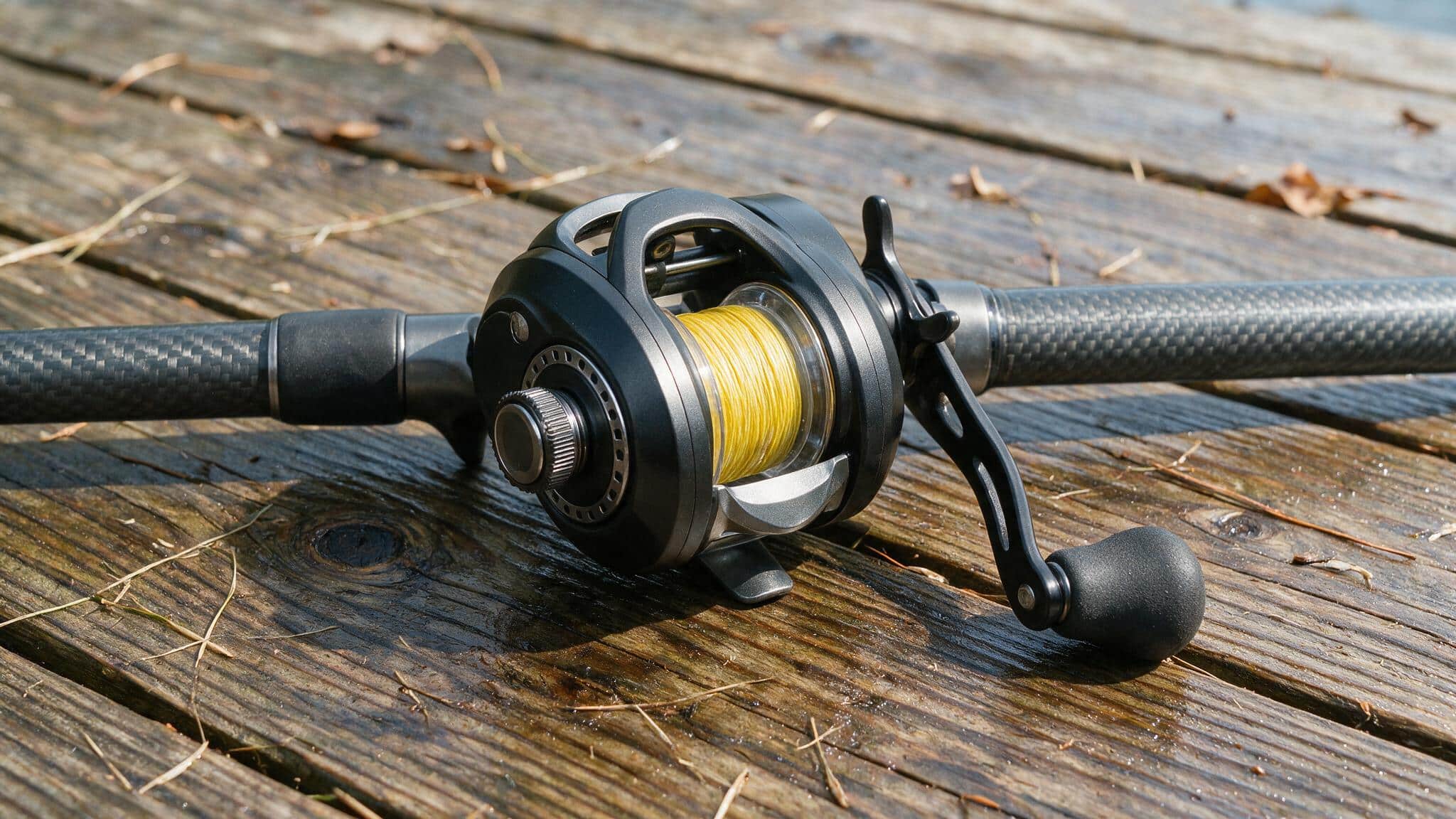
I switched over to baitcasters a few years back after getting tired of spinning gear twisting my line on every third cast with heavier lures. My first baitcaster was a mistake, an ultra-fast, minimal-brake reel a salesman talked me into because it was what he personally fished. I spent more time picking backlashes out of that spool than I spent actually fishing. The second reel I bought, a much more forgiving model built with new users in mind, is the kind of reel I would point any beginner toward now.
look for a moderate gear ratio, not the fastest one
Gear ratio tells you how much line comes in per handle turn, and manufacturers love to advertise their fastest reels as the best ones. For a beginner, a mid-range ratio somewhere around 6.4:1 to 7.1:1 is the more useful choice. It retrieves line fast enough for most techniques, from crankbaits to spinnerbaits to jigs, without demanding the kind of fine motor control a 8:1 or faster reel rewards once you already know what you are doing.
A slower ratio also forgives sloppy technique better. You are not fighting the reel to slow down your retrieve on techniques that need a methodical presentation, which matters more than most first time buyers realize.
prioritize a dual brake system over a single one
Baitcasters control spool speed with centrifugal brakes, magnetic brakes, or increasingly, both at once in a dual brake system. Magnetic brakes are the easier of the two to understand and adjust, since most models put a numbered dial right on the side plate that you can turn without opening the reel up. Centrifugal brakes usually require popping off the side plate and moving small weights around, which is more involved and easy to get wrong early on.
A dual brake reel gives you the external, easy-access magnetic dial for daily adjustments plus the centrifugal weights as a second layer of control once you want to fine-tune further. That combination is close to bulletproof for a new user, and it is worth paying a little more to get it. If you want the deeper mechanics of why backlash happens and how brake settings interact with your casting stroke, I laid all of that out in a piece on how to cast a baitcasting reel without backlash.
do not go bargain basement, but do not overspend either
There is a real sweet spot in baitcaster pricing for beginners, generally in the sixty to one hundred twenty dollar range. Below that, you are usually getting weaker brake systems, looser tolerances, and drag systems that will not hold up once you hook something with real size. Above that range, you start paying for tournament-grade features like carbon fiber drag stacks and ultralight builds that a beginner cannot yet appreciate or even feel the difference from.
Reels like the Abu Garcia Pro Max, the Daiwa Tatula, and Lew’s Mach series all sit in that beginner-friendly zone and show up constantly in recommendations for good reason. They are not flashy, but they are consistent, well supported by replacement parts, and forgiving of the mistakes every new baitcaster user makes in the first few months.
check the handle and star drag before you buy
Small details matter more than spec sheets suggest. A comfortable, properly sized handle knob reduces hand fatigue over a full day, and a star drag that adjusts smoothly rather than in stiff clicks lets you make fine tension changes mid-fight instead of overcorrecting. Pick the reel up in the store if you can and turn the handle a few times. If it feels gritty or the star drag jumps rather than turns smoothly, that reel is going to frustrate you long before you get good enough to blame your own technique.
match the reel to a forgiving rod and lure weight
A great reel paired with the wrong rod still casts poorly. Beginners do best with a medium to medium-heavy rod in the six and a half to seven foot range, paired with lures in the half ounce to three quarter ounce class. That combination loads the rod properly and gives the spool enough lure momentum to track smoothly, which is exactly the forgiving setup I recommend anyone practices with while they are still building thumb control.
why this actually matters long term
The reel you learn on shapes your relationship with baitcasters more than people expect. Buy something too advanced and too unforgiving, and you will spend months fighting backlash and possibly give up on baitcasters entirely, missing out on techniques that spinning gear just cannot do as well. Buy something built for beginners, put in a few weeks of practice, and you will outgrow the training wheels faster than you think while still owning a reel that holds up for years of casual fishing afterward.
If you are comparing specific models side by side, our complete buying guide to baitcasting reels covers the full range from entry level through higher end options and breaks down which features are worth paying extra for at each stage.
Buy for forgiveness first, speed second. A moderate gear ratio, a dual brake system, and a comfortable handle will get you casting confidently within a few weekends. Chase a tournament-spec reel before you are ready for one, and you will spend that same time untangling line instead of catching fish.