Crappie do not get the reputation bass and walleye get, and that is a mistake on the part of anglers who skip past them. They school tightly, they bite readily once you find them, and a good afternoon on crappie can put more fish in the livewell than most other species combined. I got into crappie fishing almost by accident, borrowing a neighbor’s dock one spring evening and catching more fish in two hours than I had all season chasing bass. That afternoon changed how I plan trips for the rest of the year.
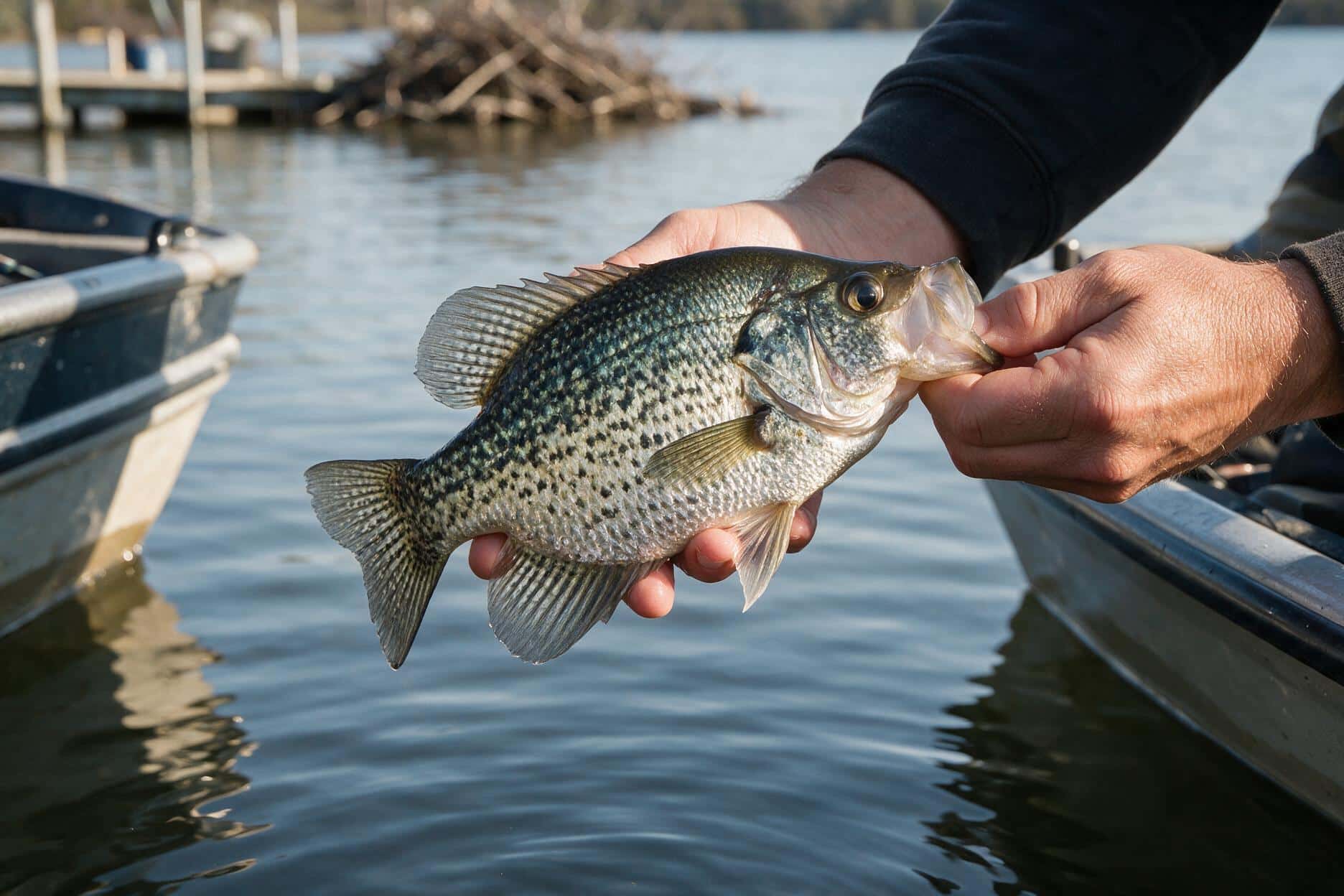
black crappie and white crappie: does it matter which one you catch
Two species carry the crappie name, black crappie and white crappie, and for most anglers the distinction barely changes how you fish. Black crappie tend to prefer clearer water with more vegetation, while white crappie tolerate murkier, more turbid water and slightly warmer conditions. You can tell them apart by the dorsal fin spines, black crappie run seven or eight, white crappie usually six, but honestly, most weekend anglers never bother counting. Both species school together in many lakes, hit the same baits, and taste the same on a plate.
the yearly pattern crappie follow
Crappie move through predictable seasonal stages, and understanding those stages matters more than any single lure choice.
In early spring, as water temperatures climb into the mid to upper 50s, crappie push toward shallow bays and creek arms to spawn. This is the most popular time to target them because fish concentrate in skinny water around brush, docks, and stumps, and they are aggressive. Spring fishing around spawning cover is where most anglers catch their personal best numbers for the year.
Once the spawn wraps up and water warms into summer, crappie retreat to deeper structure, suspending near creek channels, submerged brush piles, and standing timber, often in 15 to 25 feet of water. This is when electronics start to matter more than casting accuracy, because the fish are holding at specific depths around specific structure rather than roaming the shallows.
Fall brings crappie back toward mid-depth flats as they follow baitfish schools that move shallower with cooling water. It is a transitional season, less predictable than spring or summer, but often underrated because fewer anglers target crappie once football season starts.
Winter fishing holds up better than most anglers expect. Crappie group tightly around deep brush and standing timber, feeding less often but still catchable with patient, slow presentations directly on top of the fish.
where to find them once you are on the water
Crappie relate to structure more consistently than almost any other freshwater species. Brush piles, whether natural blowdowns or ones sunk deliberately by other anglers, hold fish through most of the year. Standing timber in reservoirs is a classic crappie location, especially where creek channels run nearby. Docks, particularly floating docks with deeper water access, concentrate fish in both spring and fall. If a lake map shows old roadbeds, bridge pilings, or creek channel bends, mark them, because crappie use these features as travel routes between shallow and deep water.
techniques that consistently produce fish
Vertical jigging directly over brush piles or suspended fish is the most efficient technique once you have located crappie on electronics. Drop a small jig, 1/16 to 1/8 ounce, tipped with a soft plastic or a live minnow, straight down to the depth where fish are marking, and hold it there with small twitches rather than an aggressive retrieve.
Spider rigging, running multiple long poles off the front of the boat with jigs or minnows at different depths, works well for covering water and locating the depth fish are holding at on a given day. It looks excessive to anglers who have not tried it, but once you dial in the right depth across several rods, it turns into an efficient way to put a pattern together fast.
Casting small jigs or tube baits around shallow cover during the spring spawn is the simplest technique to learn and the most rewarding for anyone new to the species. A slow, steady retrieve just above the cover, letting the jig fall on a semi-slack line after each twitch, draws strikes from fish holding tight to brush and stumps.
gear that gets the job done
Crappie do not require specialized tackle to catch consistently. A light or ultralight spinning rod in the 6 to 10 foot range, depending on whether you are casting or vertical jigging, paired with a small spinning reel and 4 to 6 pound line, covers the vast majority of situations. Longer rods help with spider rigging and reaching over docks without spooking fish in shallow water. We go into rod, reel, and line choices built specifically around crappie in more depth in a companion crappie gear and tackle guide, and cover crappie lures separately as well, since both topics deserve more room than a pattern overview can give them.
If you already fish for walleye or bass, a lot of your existing light tackle crosses over directly. Our spinning reel buying guide and fishing line guide cover the fundamentals that apply across species, crappie included.
common mistakes that cost anglers fish
Fishing too fast is the single biggest mistake I see, and one I made constantly when I started. Crappie often want a bait held nearly still, with barely any movement, especially in cold water or when fish are holding deep and inactive. Another common error is ignoring depth control. Crappie suspend at specific depths tied to temperature and light, and a jig fished six feet above or below that zone gets ignored even by fish sitting right next to it. Counting the jig down on a consistent count, and adjusting based on where bites happen, solves this faster than switching lures ever will.
Crappie fillets also spoil faster than most freshwater fish once out of cold water, so keeping a full livewell iced down matters if you plan on eating what you catch, which, with crappie, most anglers do.