Crappie gear does not need to be expensive, but it does need to be scaled down properly, and that is where a lot of anglers who cut their teeth on bass or walleye tackle go wrong. Heavier rods and reels mask bites, snap light line, and turn a fish that should feel like a light tug into nothing more than dead weight. I found this out the hard way, using a medium power bass rod on my first few crappie trips and missing more bites than I converted. Once you have read through our crappie fishing guide, the rest of this comes down to picking equipment that fits the way these fish actually bite.
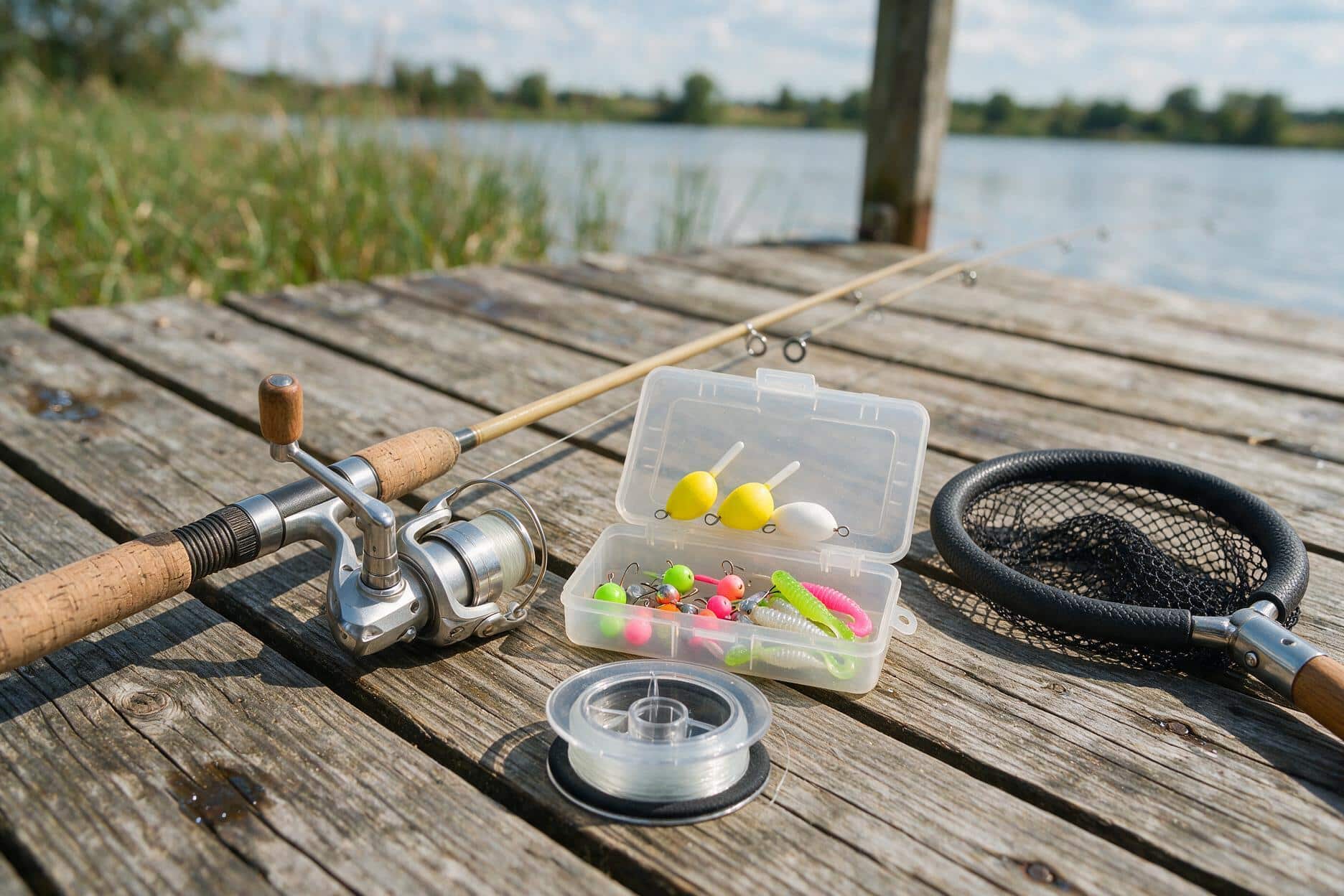
rods: length and action matter more than power
Crappie rods live in the light to ultralight range, but length varies a lot depending on technique. For casting small jigs around docks and shallow cover, a 6 to 7 foot light action rod with a soft tip gives enough feel without being too whippy to control a hookset. For vertical jigging over brush piles or standing timber, many anglers prefer something similar in length but with a slightly stiffer backbone to handle fish coming straight up from 20 feet down.
Graphite blanks dominate the crappie rod market because they transmit the subtle tap of a light bite far better than fiberglass, though fiberglass still shows up in jig poles and spider rig rods where a softer, more forgiving tip helps keep hooks pinned in fish on the way up through open water. Neither material is wrong, they just serve different techniques.
Spider rigging is a different animal entirely. Poles stretch anywhere from 10 to 16 feet, mounted in rod holders across the bow, letting you present several jigs at different depths simultaneously. If you are just starting out, skip the specialized spider rig poles and focus on one solid all-around rod first.
reels built for finesse
A small spinning reel, in the 500 to 1000 size range, matches crappie rods properly. Anything larger throws off the balance of the rod and adds weight you do not need for fish that rarely exceed two pounds. Smooth drag matters less here than it does for bigger species, since crappie do not make hard runs, but a reel that retrieves line evenly without any hesitation still makes a real difference when you are working a jig at a specific depth and need consistent feel. Keeping that reel clean matters more at this size too, since small internal parts have less tolerance for grit and old grease than a bulkier reel built for bigger fish; our reel maintenance guide covers the basics of keeping one running smoothly.
line: light, and lighter than you think
Four to six pound test covers nearly every crappie situation you will run into. Monofilament is still the most common choice because it has enough stretch to prevent pulling hooks on light action rods, and it is cheap enough that re-spooling before a trip is not a financial decision. Fluorocarbon works well in clear water or heavily pressured lakes where fish get line shy, though the extra cost is hard to justify if you are fishing stained reservoirs most of the season. Braid shows up mainly with spider rigging setups, where zero stretch helps detect subtle bites across multiple poles at once, usually paired with a short fluorocarbon leader.
floats and slip bobbers
A basic round bobber works fine for shallow, fixed-depth fishing around docks and shallow brush, but a slip float paired with a bobber stop lets you fish minnows or jigs at precise depths of 10 feet or more without the casting problems a fixed float creates at that length. Adjusting the stop up or down the line takes seconds and lets you dial in the exact depth fish are holding at once you mark them on electronics, rather than guessing and re-tying.
terminal tackle and small essentials
Light wire hooks in size 1 to 4, small slip floats for suspending minnows at a set depth, and split shot in a few small sizes round out a functional crappie box. A handful of small snap swivels speeds up jig changes when you are trying to dial in color or profile without re-tying every few casts. Keep a separate small box just for hooks and swivels since they sink to the bottom of a bigger tackle tray and become impossible to find exactly when you need a specific size mid-trip.
a rod holder is worth more than it sounds
If you plan on fishing minnows under a float or spider rigging even occasionally, a few rod holders mounted on the boat change how efficiently you can fish. Watching three or four rod tips at once for the subtle dip that signals a bite beats holding one rod and hoping you notice everything happening around you.
nets matter more for crappie than most fish
Crappie earned the nickname paper mouth for good reason. Hooks tear free easily on the way to the boat, especially with light wire hooks and soft rod tips designed to bend on the take. A small rubber-coated landing net saves fish at the boat that would otherwise throw the hook on a hard swing over the gunwale. It is a small piece of gear that gets overlooked until the exact moment you need it and do not have it.
what actually belongs in a starter setup
One light power spinning combo around 6 and a half feet, a spool of 4 or 6 pound monofilament, a small assortment of jig heads in 1/16 and 1/8 ounce, a few packs of soft plastics in two or three colors, and a handful of slip floats covers a full season of crappie fishing for most weekend anglers. Everything beyond that, the second and third rods, the electronics, the spider rig poles, gets added once you know how often you are actually going to use it. Buying the full setup before your first trip usually means half of it sits in a tackle box unused.