Bass fishing covers such a wide range of techniques that no single rod handles all of it well. A rod built to work a finesse worm through open water will fold under a heavy jig in thick cover, and a rod built for flipping mats will kill the action on a small crankbait. This guide breaks down what actually matters when picking a bass rod: action, power, length, and how those specs should change based on the technique you fish most.
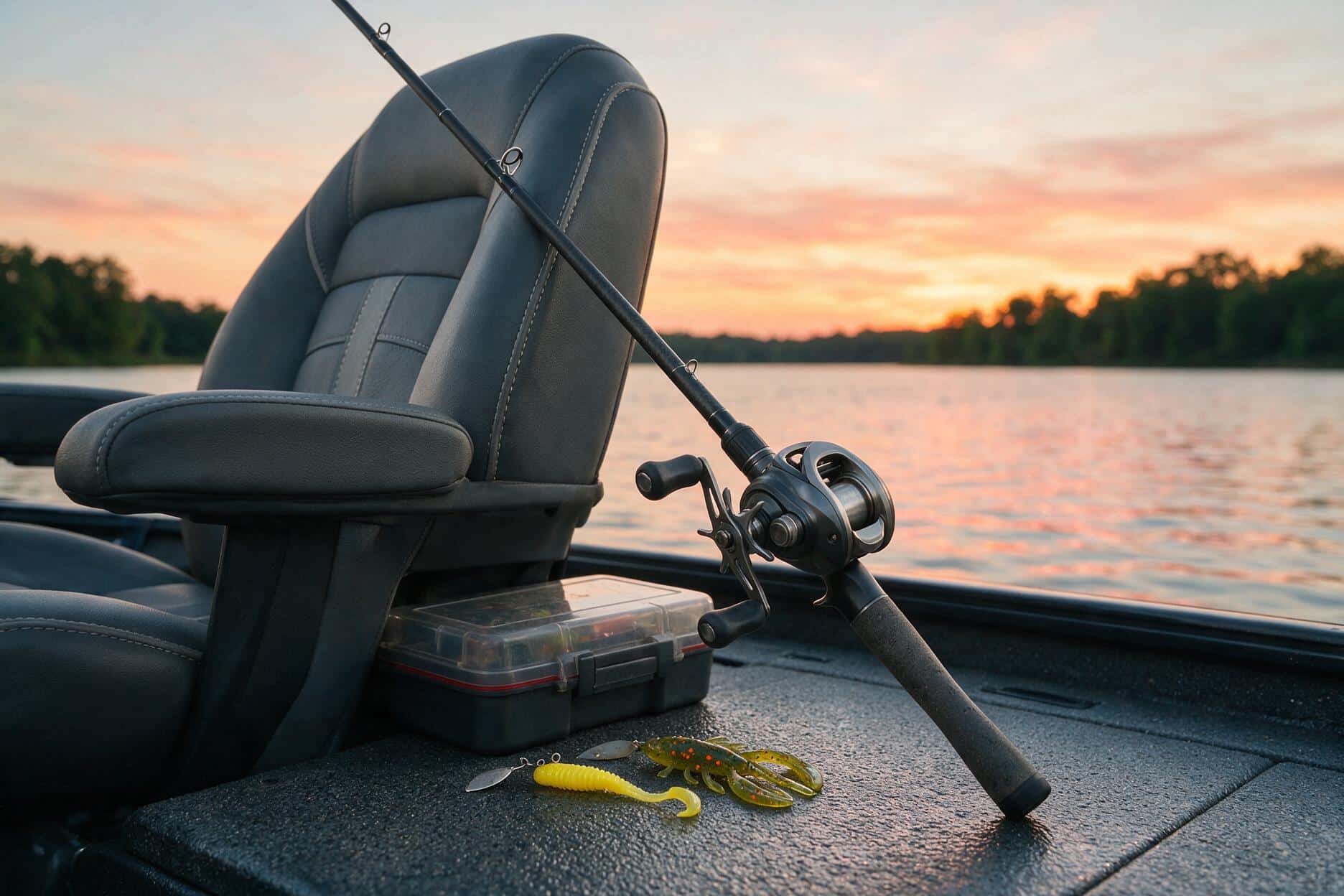
action and power: the two specs that actually matter
Power describes how much force it takes to bend the rod, ranging from ultralight to heavy. Action describes where along the blank that bending happens, from slow (bends through most of the length) to extra-fast (bends mainly near the tip). For bass fishing, medium-heavy power with fast or extra-fast action covers the largest share of techniques: enough backbone to drive a hook home on a hard hookset, with a tip sensitive enough to feel a subtle bite.
Moving to medium power suits smaller finesse baits and lighter line, where a stiffer rod would tear hooks out on the fight or fail to load properly on the cast. Moving up to heavy power is for punching through matted vegetation or fishing the biggest swimbaits, where you need enough lifting power to horse a fish out of cover before it wraps you around something solid.
rod length: longer isn’t automatically better
Seven feet has become close to a default length for bass rods, and for good reason. It casts farther than a 6’6" rod, offers more leverage for hooksets at distance, and still handles well from a boat deck. Going longer, to 7’6" or beyond, adds even more casting distance and hook-setting leverage, which specialist techniques like frog fishing over grass mats or flipping heavy cover actually benefit from.
Shorter rods, in the 6′ to 6’6" range, earn their keep in specific situations: fishing from a low, cramped position like a kayak, making accurate short-range pitches around docks, or working topwater baits where a shorter rod gives better control over walk-the-dog action. The right length depends on the cast you’re making more than any general rule.
matching the rod to the technique
Worm and jig fishing, where feeling a subtle pickup matters most, wants a rod with a sensitive tip and enough backbone in the lower half to drive a hook through a bass’s jaw on a hard sweep set. Medium-heavy, fast action casting rods in the 7′ range are the standard choice here.
Crankbait fishing works better on a softer, more parabolic rod, often medium power with moderate action. That softer tip and through-the-blank bend keeps a moving fish from tearing treble hooks free, which is a real risk with a stiffer rod and thin-wire hooks under constant pressure. A composite blend of graphite and fiberglass often outperforms pure graphite here because it flexes more forgivingly.
Topwater fishing splits into two camps depending on the bait. Walking baits like a Spook want a shorter, softer-tipped rod that makes side-to-side rod tip movement easy to control. Poppers and buzzbaits, which use a more direct hookset, do fine on a standard medium-heavy fast action rod.
Flipping and pitching into heavy cover wants a heavy power, fast action rod, usually 7’6" or longer, built to winch a big bass out of matted vegetation or brush before it can wrap the line around something solid. This is not the rod to buy if flipping heavy cover isn’t actually part of your fishing; the extra stiffness makes it a poor choice for anything finesse-oriented.
casting versus spinning for bass
Baitcasting reels pair better with heavier line and give more control over lure placement and retrieve speed, which is why most jig, worm, and crankbait fishing for bass happens on casting gear once an angler is past the learning curve. Spinning gear earns its place with lighter lines and smaller baits, where a baitcaster’s minimum lure weight makes accurate, backlash-free casting difficult. Drop shots, small finesse worms, and shaky heads almost always fish better on spinning tackle.
Anglers newer to baitcasting reels should expect a real adjustment period, since backlash is common until thumb control on the spool becomes automatic. Our baitcaster backlash guide covers the adjustments that fix most of the common causes.
material: graphite, composite, or fiberglass
Pure graphite blanks are light and highly sensitive, which suits techniques where feeling the bite matters most, like worm and jig fishing. The tradeoff is that graphite is more brittle under sudden shock loads compared to fiberglass. Composite blanks, blending graphite and fiberglass, give up some sensitivity for a more forgiving, durable action, which is why they show up often on crankbait-specific rods. Full fiberglass rods are heavier and less sensitive but nearly impossible to break under normal use, which is worth considering for techniques involving constant contact with cover and structure.
what to actually buy
One all-around rod, medium-heavy power, fast action, 7 feet, casting reel, covers a genuinely wide range of bass techniques and is the right starting point for anyone building their first serious bass setup. Add a second rod once a specific technique starts to feel limited by that first rod’s compromises, usually a softer crankbait rod or a spinning setup for finesse work, rather than buying five specialized rods before you know which techniques you actually fish most.
Our general fishing rod buying guide covers the fundamentals of action, power, and blank material if any of these terms are still unclear, and our complete guide to bass fishing covers the techniques and seasonal patterns these rods are actually built to fish.
the bottom line
Buy one medium-heavy, fast action, 7-foot casting rod first. It handles worms, jigs, spinnerbaits, and most reaction baits without forcing an obvious compromise. Add specialized rods only once a specific technique, usually crankbaits or heavy cover flipping, has earned a dedicated setup through actual use rather than a tackle shop upsell.