Line twist usually gets blamed on the reel, the line brand, or bad luck, when the real cause is almost always how the line went on in the first place. Fix the spooling, and most twist problems disappear before they ever start.
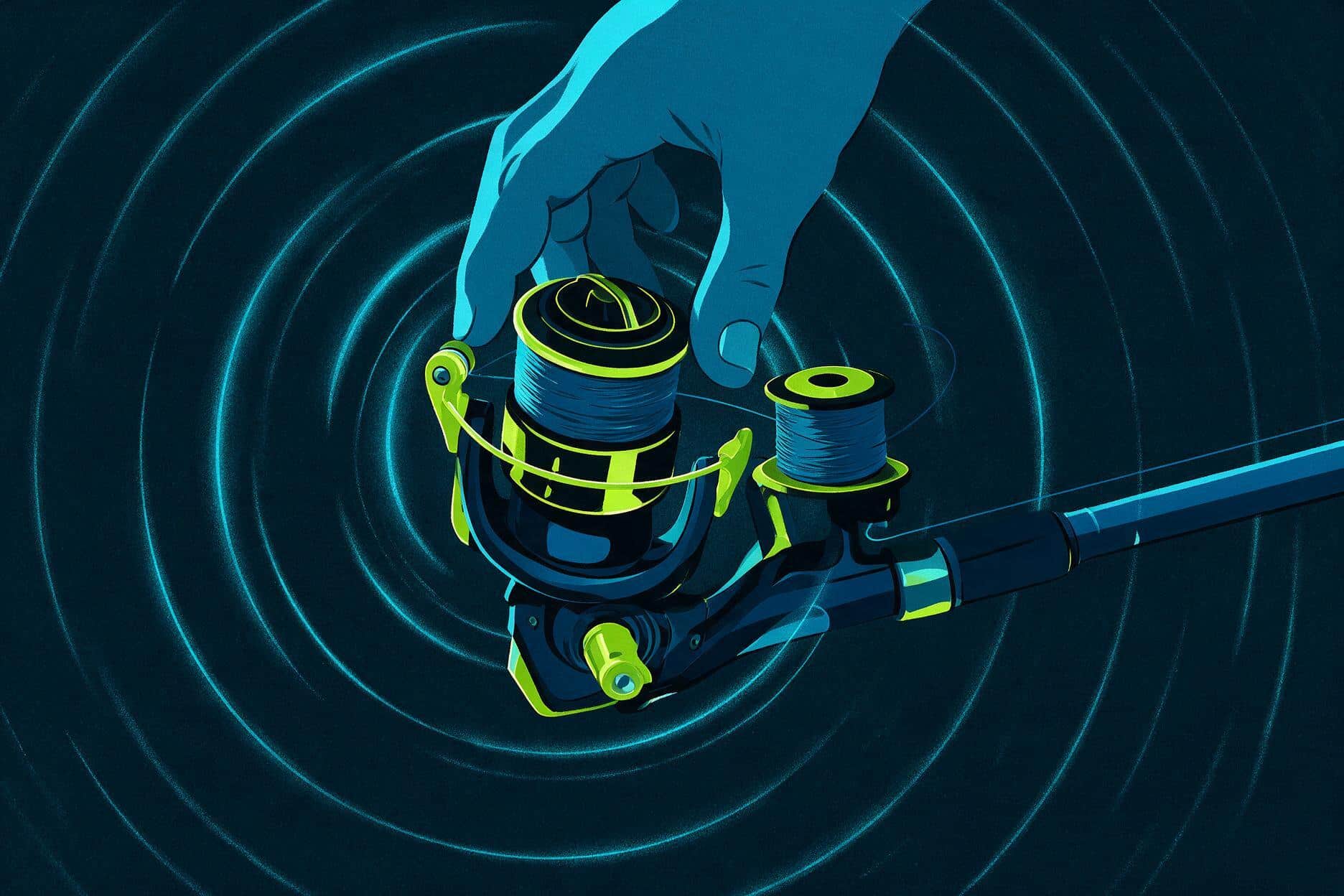
why twist happens when you load a reel
Line comes wound on the filler spool in one specific direction, and it needs to come off that spool the same way it naturally wants to lay relative to how your reel’s bail rotates it back on. Get that backward and you’re introducing a twist into every single foot of line before you’ve even made a cast. For a spinning reel, lay the filler spool flat on the ground or a table with the label facing up, and reel from there. Crank on a few wraps under light tension, using a pinched finger or a folded paper towel to add resistance, then stop and look at the line between the rod tip and the filler spool. If loops are forming in that slack section, the line is going on twisted. Flip the filler spool over and try again. It takes ten seconds and it saves you from twisting an entire spool of line before you’ve even left the driveway.
baitcasters need tension more than direction
A baitcaster loads spool to spool rather than through a rotating bail, so the directional mismatch that causes spinning-reel twist matters less here. What matters more is consistent tension the entire time you’re loading it. Uneven tension leaves some wraps tight and others loose, and a loose wrap buried under tighter wraps above it will dig in and grab during a hard cast, an effect that looks and feels a lot like backlash even though the brakes had nothing to do with it. Keep steady pressure on the line the whole time you’re spooling, using a pinch of folded cloth or a dedicated line-spooling station if you load reels often enough to justify owning one.
how full to fill the spool
On a spinning reel, stop about an eighth of an inch below the lip of the spool. Overfill it and loops jump the lip and tangle around the reel body on the next cast. Underfill it and you lose casting distance, since a fuller spool has a larger effective diameter and line comes off with less friction and resistance per crank. Neither mistake is dramatic on its own, but both are easy to avoid by just watching the spool as you fill it instead of cranking until the line runs out.
Baitcasters follow the same logic in reverse proportion: fill to just below the spool flange, not packed flush to the rim. A slightly underfilled baitcaster spool is more forgiving for a beginner still learning thumb control, since it’s harder to overrun a spool that isn’t loaded to maximum capacity.
the tension trick that solves almost everything here
Run the line through a folded paper towel or a soft rag pinched between your fingers the entire time you’re reeling line on from the filler spool. That small amount of consistent resistance is what keeps wraps tight and even instead of loose and sloppy, and loose, uneven wraps are the actual root cause behind a surprising number of problems that get blamed on the reel, the line, or the angler’s casting technique instead. A reel loaded under steady tension performs differently, in a good way, from the same reel loaded by just letting line free-spool on with no resistance at all.
the mistake that costs you a whole spool of line
Not testing for twist before cutting the connection to the filler spool and calling it done. Ten seconds of cranking under tension while you watch for loops is cheap insurance against discovering the twist three casts into your first trip, when the only fix left is stripping the line back off and starting over. Check it before you cut it, every time, no exceptions.
Good spooling is invisible when it’s done right, which is probably why it gets skipped so often. It only becomes obvious once it’s wrong, and by then you’re re-spooling instead of fishing. For choosing the right line in the first place, and the rest of what keeps a reel performing the way it should, the reel maintenance checklist rounds out the full picture.
Load line onto a spinning or baitcasting reel the right way to avoid line twist, using correct filler spool direction, steady tension, and the proper fill level.
Position the filler spool correctly
Lay the filler spool flat with the label facing up (for spinning reels) so line comes off in the direction that matches the bail’s rotation, and reel from there.
Test for twist before committing
Crank a few wraps onto the reel under light tension, then check the slack line between the rod tip and the filler spool for loops; flip the filler spool over and try again if it’s twisting.
Apply steady tension while loading
Keep consistent pressure on the line the entire time you’re reeling it on, using a pinched finger or folded paper towel; this matters even more than filler spool direction on a baitcaster.
Fill to the correct level
Stop about an eighth of an inch below the spool lip on a spinning reel, or just below the flange on a baitcaster; avoid overfilling, which tangles loops around the reel body, or underfilling, which costs casting distance.
Recheck for twist before finalizing
Confirm there’s no twist before cutting the connection to the filler spool and calling it done; ten seconds of checking is cheap insurance against discovering the twist three casts into your first trip.
Which way should the filler spool face when spooling a spinning reel?
Lay the filler spool flat with the label facing up and reel from there. Crank a few wraps under light tension and watch the slack line for loops; if it’s twisting, flip the filler spool over and try again.
How do I know if my reel is loaded with twisted line?
Crank a few wraps onto the reel under light tension and watch the slack line between the rod tip and the filler spool. If loops form in that slack section, the line is going on twisted.
How full should I fill a spinning reel spool?
Stop about an eighth of an inch below the lip of the spool. Overfilling causes loops to jump the lip and tangle around the reel body, while underfilling costs casting distance.
Does line twist matter as much on a baitcaster as a spinning reel?
No, a baitcaster loads spool to spool rather than through a rotating bail, so directional mismatch matters less. Consistent tension the entire time you’re loading it matters more than which way the filler spool faces.