A cracked guide or a broken tip doesn’t have to mean the end of a rod you like fishing. Most of the repairs below cost a few dollars in parts and an hour at the kitchen table, and I’ve brought rods back from damage that would have sent someone else straight to the trash can.
a cracked or grooved guide
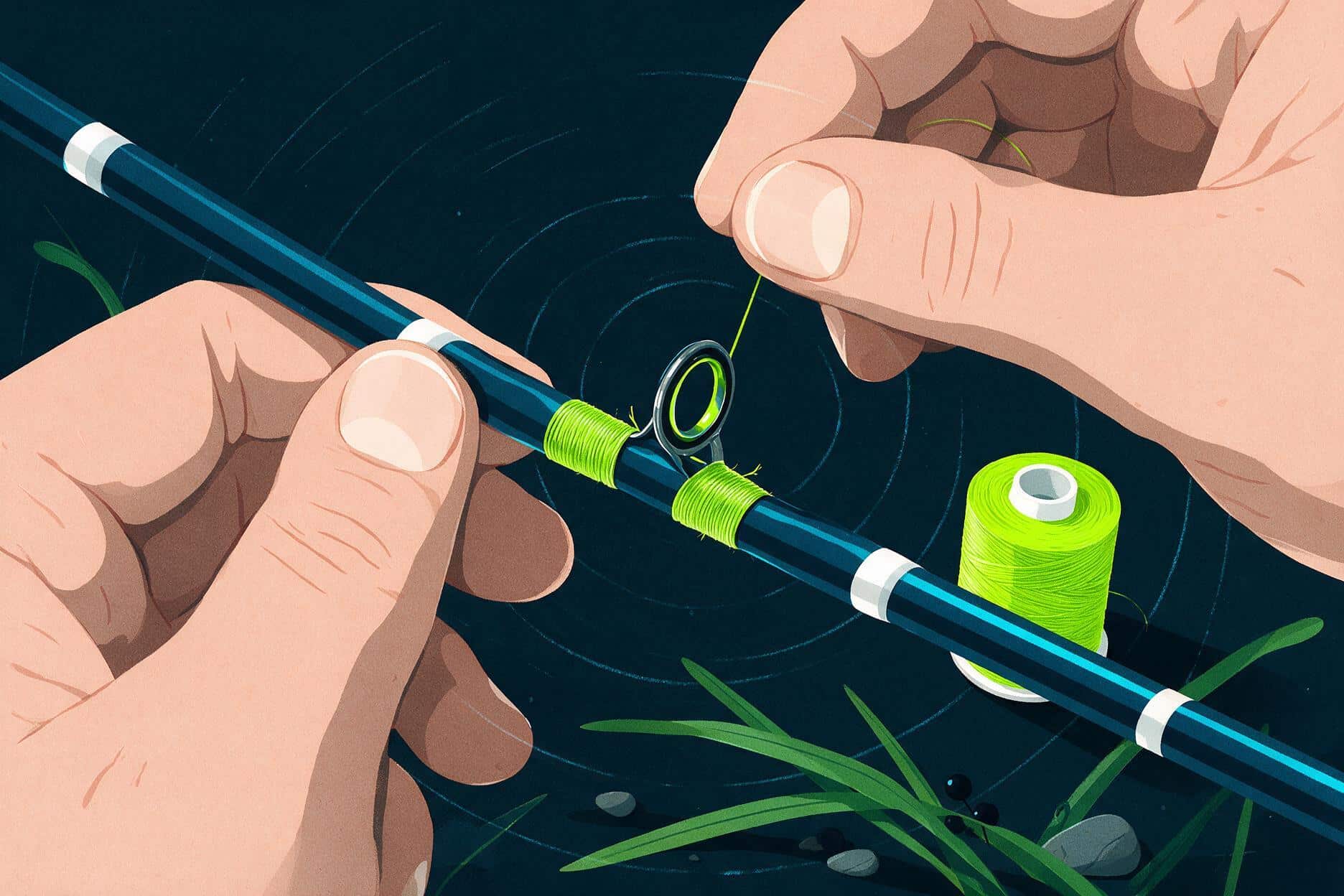
A guide with a visible crack in the frame needs to come off. Slice through the old wrapping thread with a hobby knife, being careful not to nick the blank underneath, then peel the guide free once the wraps are cut. Wrap the new guide on with rod-building thread, working in tight, even turns from one end to the other, then seal the wraps with a proper rod finish, not superglue.
Grooved inserts are sneakier, because the guide can look completely fine and still be cutting your line. Years of braid running through the same spot wears a groove into the ceramic or metal insert, and that groove frays line even on a guide with no visible damage. Run a cotton swab or a piece of nylon stocking around the inside of every guide. If it snags or pulls fibers, the insert is grooved and the guide needs replacing, no matter how good it looks.
a broken rod tip
If the break is close to the very end of the rod, you can often salvage it by removing the broken section and installing a new tip-top sized to the new, slightly larger diameter where the break happened. The rod ends up a fraction shorter and marginally stiffer at the tip, which is a real tradeoff but usually a minor one. Heat the old tip-top gently to soften the glue, twist it off, measure the blank’s new diameter, and set the replacement with hot-melt tip-top adhesive.
For a break further down the blank, you’re generally better off retiring the rod than paying for a professional splice, unless it’s a rod expensive enough that the repair cost still makes sense next to a replacement. I’ve had this conversation with myself more than once, and past a certain price point, the honest answer is to buy a new blank.
a loose or spinning reel seat
A reel seat that spins independently of the blank, or a handle that’s come loose from the cork or EVA grip, usually means the epoxy bond underneath has failed. Clean out as much of the old adhesive as you can reach, rough up the bonding surfaces lightly, and reseat everything with a proper rod-building epoxy rather than a general hardware-store glue. Let it cure the full time on the label before putting any load on it. Rushing this step is how you end up doing it twice.
the mistake that ruins guide repairs
Reaching for superglue instead of real rod finish. Superglue sets hard and brittle, and a fishing rod blank flexes constantly under load. That flex cracks a superglue seal in a season or two, sometimes sooner, and the guide wrap starts lifting at the edges. A proper two-part rod finish stays flexible enough to move with the blank instead of fighting it.
The second mistake is skipping the spine check when replacing multiple guides. Every rod blank has a spine, a natural stiff side from the manufacturing process, and guides are meant to be mounted in line with it for the rod to load and cast the way it was designed to. Slap guides back on without checking alignment against the spine and the rod can cast and set hooks noticeably worse than before the repair, even though nothing looks wrong to the eye.
the toolkit worth keeping around
Rod-wrapping thread, a spare guide set in a few sizes, two-part rod finish, hot-melt tip-top cement, a hobby knife, and a small torch or lighter for removing old tip-tops. None of this is expensive, and once you’ve done a guide replacement or two, it stops feeling like a specialized skill and starts feeling like basic gear maintenance.
when to actually retire the blank
A cracked, spider-webbed, or delaminated blank, usually from a high-stick break under load, is not something to keep fishing. Unlike a bad guide or a loose reel seat, a compromised blank can fail suddenly and violently under pressure, and that’s not a repair worth trusting your hand to. If the damage is in the blank itself rather than the hardware attached to it, replace the rod.
Most of what looks like a dead rod is actually just a bad guide or a loose reel seat, both cheap and quick to fix. Pair rod care with keeping the reel on it in good shape too. The reel maintenance checklist and the common reel fixes worth knowing cover the other half of the gear that usually fails first.
A cracked guide or a broken tip doesn’t have to mean the end of a rod you like fishing. Most of the repairs below cost a few dollars in parts and an hour at the kitchen table, and I’ve brought rods back from damage that would have sent someone else straight to the trash can.
Replace a cracked guide
Slice through the old wrapping thread with a hobby knife, being careful not to nick the blank underneath, then peel the guide free once the wraps are cut. Wrap the new guide on with rod-building thread in tight, even turns from one end to the other, then seal the wraps with a proper rod finish, not superglue.
Check for a grooved guide insert
Run a cotton swab or a piece of nylon stocking around the inside of every guide. If it snags or pulls fibers, the insert is grooved, even on a guide that looks completely fine, and the guide needs replacing no matter how good it looks.
Repair a broken rod tip near the end
Heat the old tip-top gently to soften the glue, twist it off, and measure the blank’s new diameter where the break happened. Set a replacement tip-top sized to that new diameter using hot-melt tip-top adhesive. The rod ends up a fraction shorter and marginally stiffer at the tip, a real but usually minor tradeoff.
Fix a loose or spinning reel seat
Clean out as much of the old adhesive as you can reach, rough up the bonding surfaces lightly, and reseat everything with a proper rod-building epoxy rather than a general hardware-store glue. Let it cure the full time on the label before putting any load on it.
Can I use superglue to fix a rod guide wrap?
No. Superglue sets hard and brittle, and a fishing rod blank flexes constantly under load. That flex cracks a superglue seal in a season or two, sometimes sooner, and the guide wrap starts lifting at the edges. A proper two-part rod finish stays flexible enough to move with the blank instead of fighting it.
How do I know if a guide insert is grooved even though it looks fine?
Run a cotton swab or a piece of nylon stocking around the inside of the guide. If it snags or pulls fibers, the insert has a groove wearing into it, usually from years of braid running through the same spot, and the guide needs replacing no matter how good it looks from outside.
What is a rod’s spine and why does it matter when replacing guides?
It’s the blank’s natural stiff side from the manufacturing process. Guides are meant to be mounted in line with it for the rod to load and cast the way it was designed to. Slap guides back on without checking alignment against the spine, and the rod can cast and set hooks noticeably worse than before the repair, even though nothing looks wrong to the eye.
When should I retire a rod instead of repairing it?
When the blank itself is cracked, spider-webbed, or delaminated, usually from a high-stick break under load. That’s a structural failure risk, not a guide or reel-seat problem worth fixing, and a compromised blank can fail suddenly and violently under pressure.