I did my first real surf fishing trip on a whim, standing on a beach in the Outer Banks with a rod I’d bought for bass and a bag of bloodworms I didn’t know how to rig. I caught nothing but sand and seaweed for two hours before an older guy fishing twenty yards down the beach walked over and showed me how to read the water. That conversation taught me more in ten minutes than anything I’d read online, and most of what follows here is what stuck from that lesson plus a decade of weekend trips since.
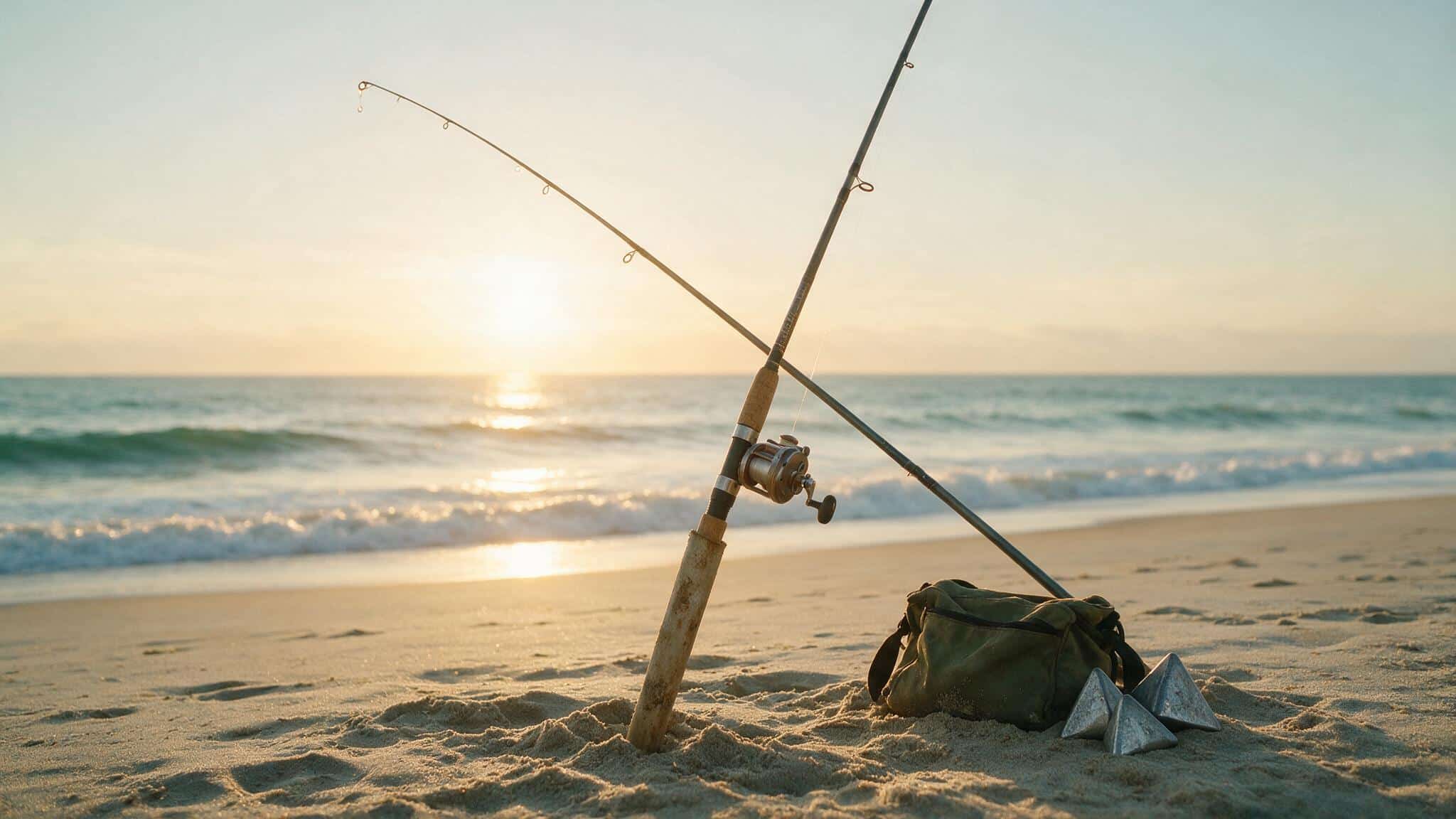
Surf fishing is exactly what it sounds like: casting from the beach into the ocean, no boat required. It’s one of the most accessible forms of saltwater fishing because you don’t need a captain, a slip fee, or calm seas to launch anything. You need a rod, some patience, and a basic read on how water moves along a beach.
gear that actually works in the surf
Surf rods run long, usually nine to twelve feet, because the extra length helps you cast weighted rigs past the breaking waves and keeps your line up out of the surging water at your feet. Pair that with a large spinning reel, something in the 6000 to 8000 size range, spooled with braided line for casting distance and a monofilament or fluorocarbon leader for abrasion resistance against sand and shells.
You’ll also want a sand spike, which is just a hollow tube you jam into the beach to hold your rod upright while you wait. Without one you’re either holding the rod the whole session or laying it in the sand where it collects grit in every guide. A few pyramid sinkers in different weights round out the basics, since the right weight depends on how much current you’re fighting that day.
reading the beach before you cast
This is the part that separates people who catch fish from people who just get a tan. Look for troughs, the deeper channels that run parallel to the beach between the shore and the first sandbar. Fish travel and feed in these troughs, and you can often spot them as a slightly darker, calmer band of water.
Also look for cuts, gaps in a sandbar where water rushes through as the tide moves. These cuts funnel baitfish and whatever’s chasing them, and they’re usually a better target than blind casting straight out. A rip current can look similar to a cut from shore, and I’ll get to why that matters in the safety section below, but the short version is that features which concentrate moving water concentrate fish too, for better or worse.
Structure matters even where you can’t see it. Jetties, piers, and rock groins all disrupt the natural flow of the surf and create ambush points. Fish often stack up near piers because the pilings act like structure, holding baitfish in their shade and current breaks, which is one reason surf anglers work the water within casting range of a fishing pier even without ever stepping onto it.
when to fish
Tide matters more than time of day in most locations. An incoming tide pushes baitfish and crabs toward the beach, and predators follow. The two hours around a tide change, whether incoming or outgoing, tend to produce the most consistent action in my experience, though this varies by beach and by species.
Early morning and dusk are typically better than the middle of a sunny afternoon, partly because there’s less foot traffic and boat noise, and partly because a lot of surf species feed more actively in low light. That said, I’ve caught fish at every hour of the day when the tide and structure lined up right. That same tide-driven feeding shows up behind the beach too, on the flats and in the marsh, where our inshore fishing guide covers reading the tide from the other side.
bait and lures for the surf
Cut bait and live bait still out-produce lures for most surf species most of the time. Shrimp, sand fleas, cut mullet, and bloodworms cover a huge range of what swims along sandy beaches. A fish finder rig with a sliding sinker lets the bait move naturally in the current without much resistance when a fish picks it up.
Lures work too, especially for species actively chasing bait near the surface. Metal spoons and soft plastic swimbaits on a jighead can cover water fast when you see birds working or bait getting pushed around by predators. I keep both bait and a couple of lures in my bag because conditions change through a session and I’d rather adjust than pack up early.
a word on safety
Surf conditions can turn on you faster than lake or pond fishing ever does. Rip currents are real and they kill people every year, mostly swimmers rather than anglers, but wading anglers get caught out too. If you’re wading past your knees, know which way the current is pulling and don’t turn your back on incoming sets of waves. Check the local surf and tide report before you go, and if a beach has posted rip current warnings, fish from dry sand instead of wading out. None of this needs to be dramatic. It’s the same kind of basic awareness you’d want near any large body of moving water.
species you’ll actually catch
What you catch depends entirely on your coastline. Atlantic and Gulf beaches produce redfish, pompano, whiting, and black drum regularly, with striped bass showing up seasonally further north. Pacific beaches run more toward surfperch and the occasional halibut in the right spots. Local bait shops are worth the five minutes it takes to ask what’s been biting, since surf fishing patterns shift week to week in a way that generic advice can’t fully cover.
getting started without overspending
You don’t need a twelve-foot rod and a cart full of gear for your first trip. Our rundown of beach fishing basics covers the minimum setup in more detail. A shorter surf-capable rod, a mid-size spinning reel, a handful of pyramid sinkers, and some fresh shrimp will get you into fish while you figure out whether this is a hobby worth investing in further. I fished with a mismatched, budget setup for two full seasons before buying a proper surf rod, and I still caught plenty in the meantime.