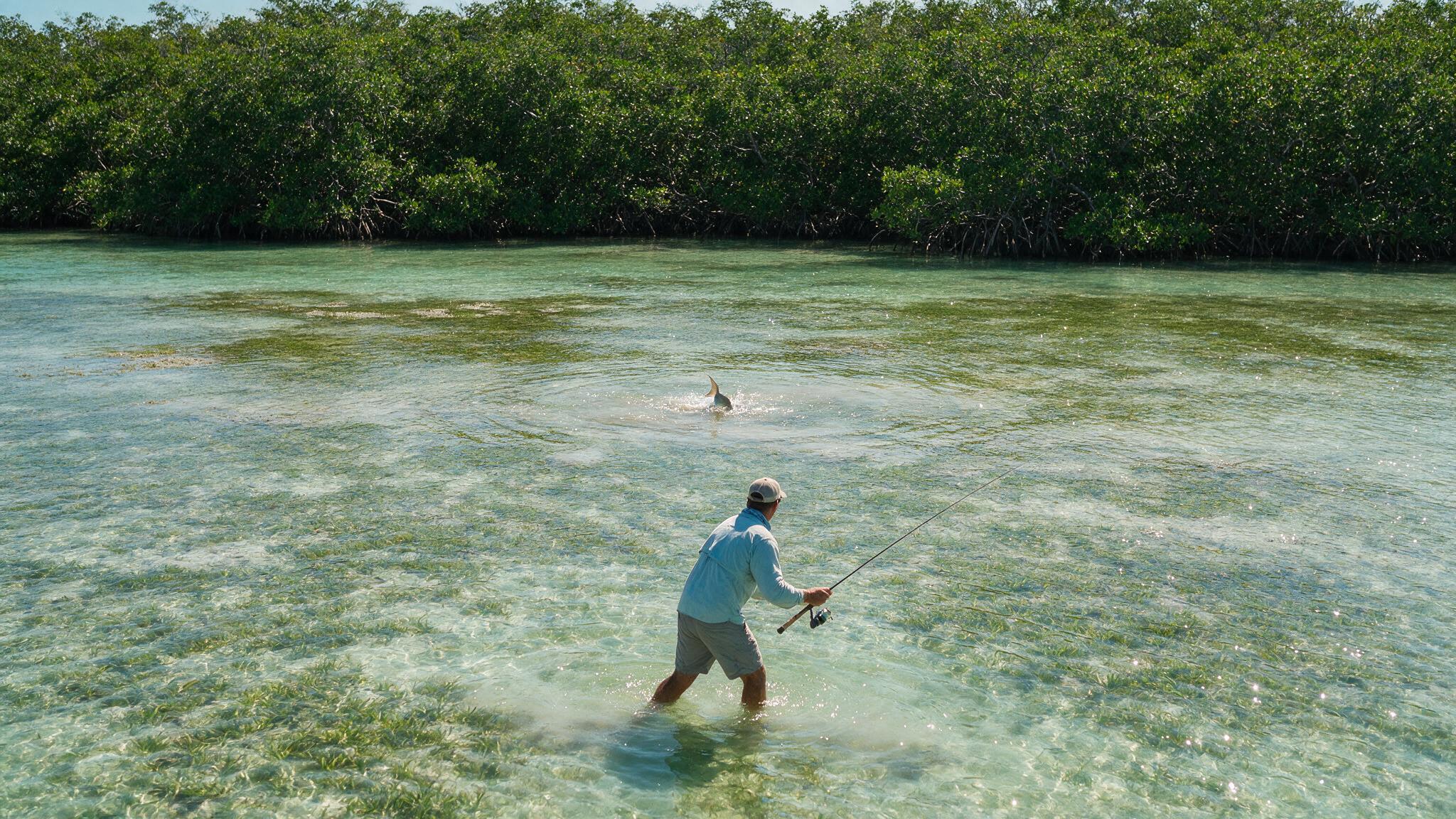
The first redfish I ever sight-cast to was tailing in six inches of water on a grass flat near Cedar Key, and I spooked it twice before I figured out how quietly you actually have to wade. Inshore fishing rewards that kind of patience more than almost any other style of fishing I have tried, since you are usually close enough to see the fish you are casting to, which changes how careful you need to be with every step and every cast.
what inshore fishing actually covers
Inshore fishing means fishing the protected saltwater close to shore, bays, estuaries, marshes, flats, and the mouths of rivers where fresh water meets salt, as opposed to offshore fishing that runs miles out over open ocean. The water is shallow enough in a lot of inshore spots that a boat with any real draft cannot get there, which is part of why flats boats, kayaks, and wading exist as their own categories of access. Inshore fishing also tends to be more sight-based than offshore trolling or bottom fishing, since clear, shallow water often lets you spot fish before you cast rather than blind-fishing structure.
the main inshore species and where to find them
Redfish, spotted seatrout, and flounder make up the core of most inshore fishing trips along the Gulf and southern Atlantic coasts, with snook joining that list further south in Florida. Redfish push onto grass flats and around oyster bars to feed, often in water shallow enough to expose their backs and tails while they root around for crabs and shrimp. Seatrout tend to sit over grass beds and drop-offs rather than the skinniest water, ambushing baitfish rather than rooting for crustaceans. Flounder hold tight to the bottom near channel edges and current breaks, using their camouflage to ambush anything that swims past rather than chasing food down. Learning which species you are targeting on a given day changes where you should be looking before you even rig a rod.
gear for inshore fishing
A 7 foot medium spinning rod with 10 to 15 pound braided line covers most inshore fishing situations, from tossing a topwater plug across a flat to working a soft plastic along an oyster bar. Add a short fluorocarbon leader, since inshore water is often clear enough that fish notice bare braided line and refuse a bait that would otherwise get eaten. Corrosion is the other thing that separates inshore gear from freshwater gear. A reel that is not actually rated for saltwater will seize up within a season regardless of how well you rinse it, so buying gear labeled for saltwater use matters here more than in almost any other style of fishing.
reading structure in skinny water
Grass flats, oyster bars, mangrove edges, and channel drop-offs are the four features that account for most inshore fishing success. Grass flats hold bait and give redfish and trout cover to ambush from, especially where a slightly deeper pothole breaks up an otherwise uniform flat. Oyster bars concentrate current and food in a small area, and fish stack up on the downcurrent side waiting for whatever the moving water pushes past. Mangrove edges function like a fixed structure similar to a laydown tree on a freshwater lake, giving fish shade and cover close to deeper water they can retreat to. Channel edges where skinny water drops into deeper water are where a lot of the bigger fish sit, feeding up onto the flat and dropping back as the tide and light change through the day.
tides and how they drive inshore fishing
Tide matters more in inshore fishing than almost any other single factor, arguably more than it matters even in surf fishing. Moving water on an incoming or outgoing tide pushes bait around and triggers feeding, while slack tide at the top or bottom often shuts things down for an hour or two on either side. A falling tide pulls bait off the flats and concentrates it, and fish, around the drains and channel edges where that water funnels through, which is often the single most reliable pattern in inshore fishing once you learn to read a tide chart for your specific spot. Our surf fishing guide covers a lot of the same tide logic from the beach side, and the two styles of saltwater fishing share more tactical overlap than people expect.
wading, kayaks, and small boats
Wading gets you closest to the fish and is the quietest way to approach skinny water, but it limits your range to what you can walk to safely, and stingray shuffle steps are not optional in a lot of inshore terrain. A kayak extends your range considerably while staying quiet enough not to spook fish the way a motor does, and it is how I fish most of my own inshore trips since it does not require owning or trailering a boat. A dedicated flats boat with a poling platform is the serious step up from there, letting an angler fish from an elevated, silent position, but that is a different investment level than most weekend anglers need to get started.
common inshore fishing mistakes
Wading or paddling in too fast and pushing a wake or noise ahead of you spooks fish before you ever get a cast off, and it is the single biggest mistake I see from anglers new to inshore fishing. Ignoring the tide chart is another, since showing up at dead low or dead high slack without a plan wastes a trip that better timing would have saved. The third is overlooking small details in the water, a nervous baitfish, a subtle wake, a tailing fish thirty yards off, because inshore fishing rewards noticing things most other fishing does not require you to see.
Inshore fishing takes longer to learn than most freshwater styles because tide, structure, and species all shift together rather than one variable at a time. Start by learning one flat or one stretch of marsh through a full tide cycle before trying to cover more water. The patience that costs you a spooked redfish early on is the same patience that eventually lets you see fish before they see you.