Beach fishing was the first kind of saltwater fishing I ever tried, and I got it almost completely wrong. I showed up with a bass rod, a handful of freshwater jigs, and no idea the surf would strip half my tackle and most of my patience inside an hour. A guy at the local bait shop set me straight in two minutes, teaching me more than anything I had read online beforehand.
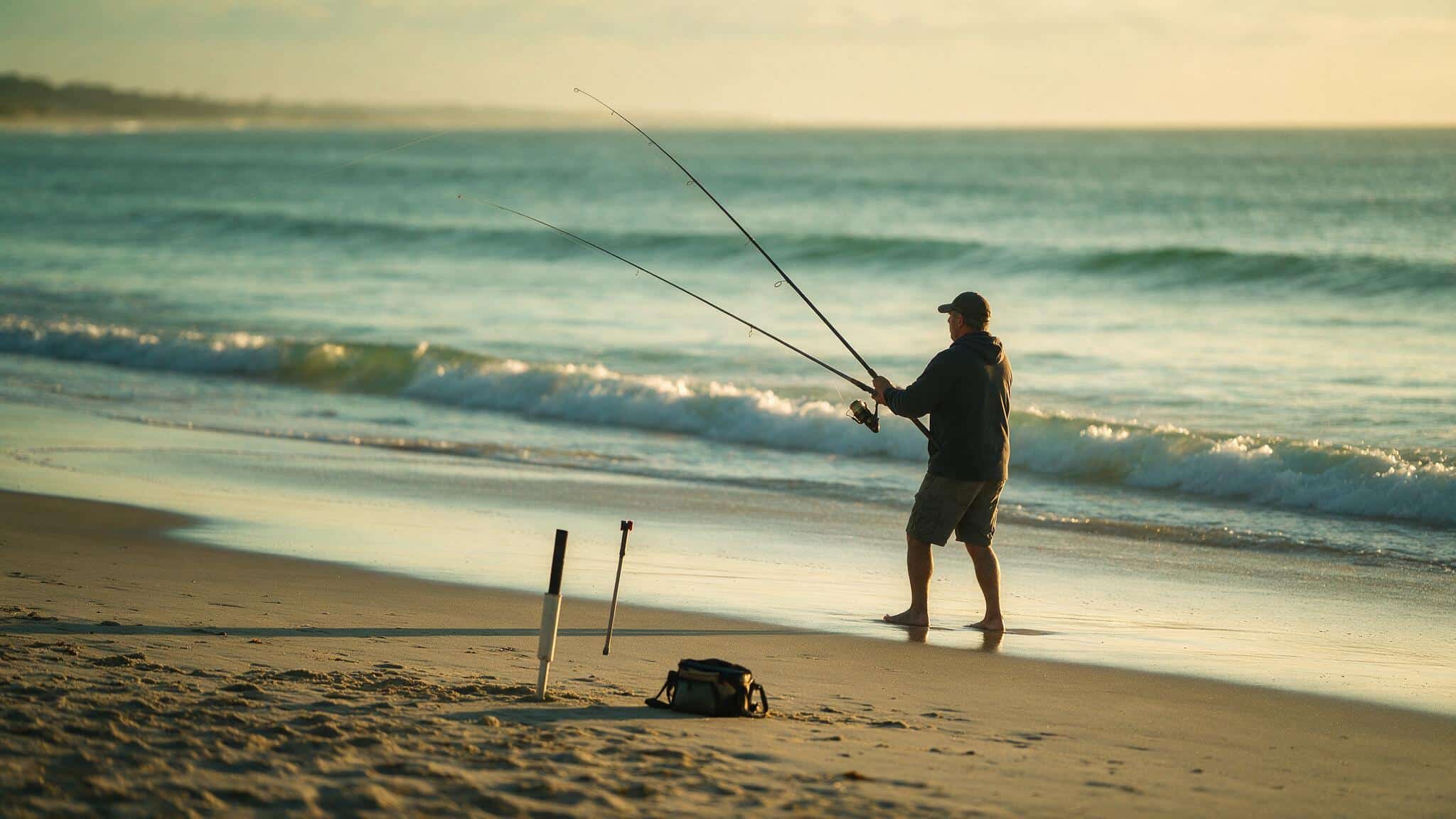
why beach fishing works for beginners
Beach fishing is one of the easier ways into saltwater fishing because the barrier to entry is low. You do not need a boat, a launch fee, or a captain’s license to stand on public sand and cast a line. Most coastal states have long stretches of beach open to anyone with a rod and a license, much of it within casting range of dry sand. Compare that to inshore fishing from a boat, juggling a trolling motor and tide charts at once, and beach fishing looks like the calmer on-ramp it actually is. You learn the water on foot, at your own pace, without anyone else’s schedule.
gear that actually holds up in the surf
A freshwater spinning setup survives a single beach fishing trip if you rinse it well afterward, but not a whole season of them. Salt works into the drag washers, the guides, the reel seat threads, all of it. A basic saltwater-rated spinning reel in the 4000 to 6000 size range, paired with a 7 to 9 foot rod, covers most beach fishing situations without costing a fortune. Longer rods help punch a bait past the first wave break, which matters since a lot of fish feed in that churned-up zone rather than far offshore. Keep the tackle simple at first: pyramid sinkers that hold bottom in moving water, circle hooks, and pre-made bottom rigs if you would rather not tie your own yet.
reading a beach before you cast
Every beach looks the same to someone who has never fished one, flat sand and rolling waves, but real structure hides under the surface. Look for troughs, the darker, calmer channels running parallel to the beach between sandbars, where fish travel and feed within easy casting range of dry land. Cuts, where a trough breaks through a sandbar toward deeper water, funnel baitfish and the predators chasing them into a tight lane. Watch for color changes too. Darker patches usually mean deeper water or a mussel bed, and lighter, foamier water often marks a sandbar near the surface. None of this takes special equipment, just a few minutes of standing still and looking before your first cast, a step beginners skip entirely.
tides, wind, and timing
Tide matters more in beach fishing than almost any other variable you can control. Moving water, whether coming in or going out, pushes baitfish and crabs into range of bigger predators. Dead slack tide, the short window at the very top or bottom, tends to be the slowest part of the day. An outgoing tide close to sunrise or sunset is usually my first choice, since low light adds another edge on top of the moving water. Wind matters too. A moderate wind blowing into the beach stirs up the surf zone and can trigger a feeding window, while a hard onshore wind during a storm makes the water unfishable and unsafe to wade into.
what to expect to catch
What you catch beach fishing depends entirely on your coastline, but a few groups show up almost everywhere. Surf perch, whiting, croaker, and pompano are common on sandy beaches and will readily take shrimp or a sand flea on a simple bottom rig. Striped bass and bluefish show up seasonally on parts of the East Coast and will hit cut bait or a metal lure worked through the wash. Redfish and other inshore species sometimes push into the surf zone near inlets, which is where beach fishing starts to overlap with what our inshore fishing guide covers in more depth. A local bait shop will tell you in thirty seconds what is actually biting that week, and that beats any generic list.
rigging basics for the sand
A basic fish finder rig, a sliding sinker above a swivel and a short leader to a circle hook, handles most beach fishing situations on sandy bottom. The sliding weight lets a fish pick up the bait and move without feeling resistance right away, which matters with light biters like whiting and pompano. Pyramid sinkers hold better than round ones in moving surf because the points dig into sand instead of rolling with the current. Tie two rigs before you leave the house. Re-tying line with wet, sandy hands while fish are biting is a good way to miss the bite window entirely. Once the basics feel automatic, our surf fishing guide goes deeper into casting distance and rigging for rougher surf.
beach fishing etiquette and safety
Public beaches get crowded, and beach fishing next to swimmers is a real hazard if you are careless with a cast. Give swimmers a wide lane, check both directions before throwing a heavy sinker, and reel in if someone wanders into your casting zone. Rip currents are the bigger danger. If you are wading past your knees to reach a trough, know what a rip current looks like, a channel of choppier water moving away from shore, and stay out of it. Lifeguard flags exist for a reason even on a beach fishing trip that has nothing to do with swimming. Check local rules too, since beach driving, closed nesting areas, and slot limits vary by state and county.
mistakes that cost me fish early on
My first mistake was gear, showing up with tackle built for a farm pond instead of the surf. My second was fishing the prettiest-looking stretch of open sand instead of hunting for a trough or a cut, which is where the fish actually were. My third was ignoring the tide chart and just showing up whenever I felt like it, so I fished dead slack water more often than moving water without understanding why results were so inconsistent. None of this is complicated to fix, just a trip or two of paying attention to what worked instead of blaming the ocean for a slow day.
Beach fishing rewards patience more than it rewards expensive gear. A rod under a hundred dollars, a handful of the right rigs, and ten minutes reading the water before your first cast puts you ahead of most people who show up and just start throwing line at the ocean. Start close to home, fish a falling tide if you can time it, and give yourself a few trips before deciding whether beach fishing is for you. Most people who try it properly end up sticking with it.