My first kayak fishing trip lasted about twenty minutes before I capsized trying to net a decent-sized catfish in water barely four feet deep. Nobody was hurt, the kayak floated fine once I dumped the water out, and the fish got away laughing, presumably. That was eight years ago, and I still fish from a kayak more than anything else, partly because it’s cheap and partly because it gets me into water a bass boat never could.
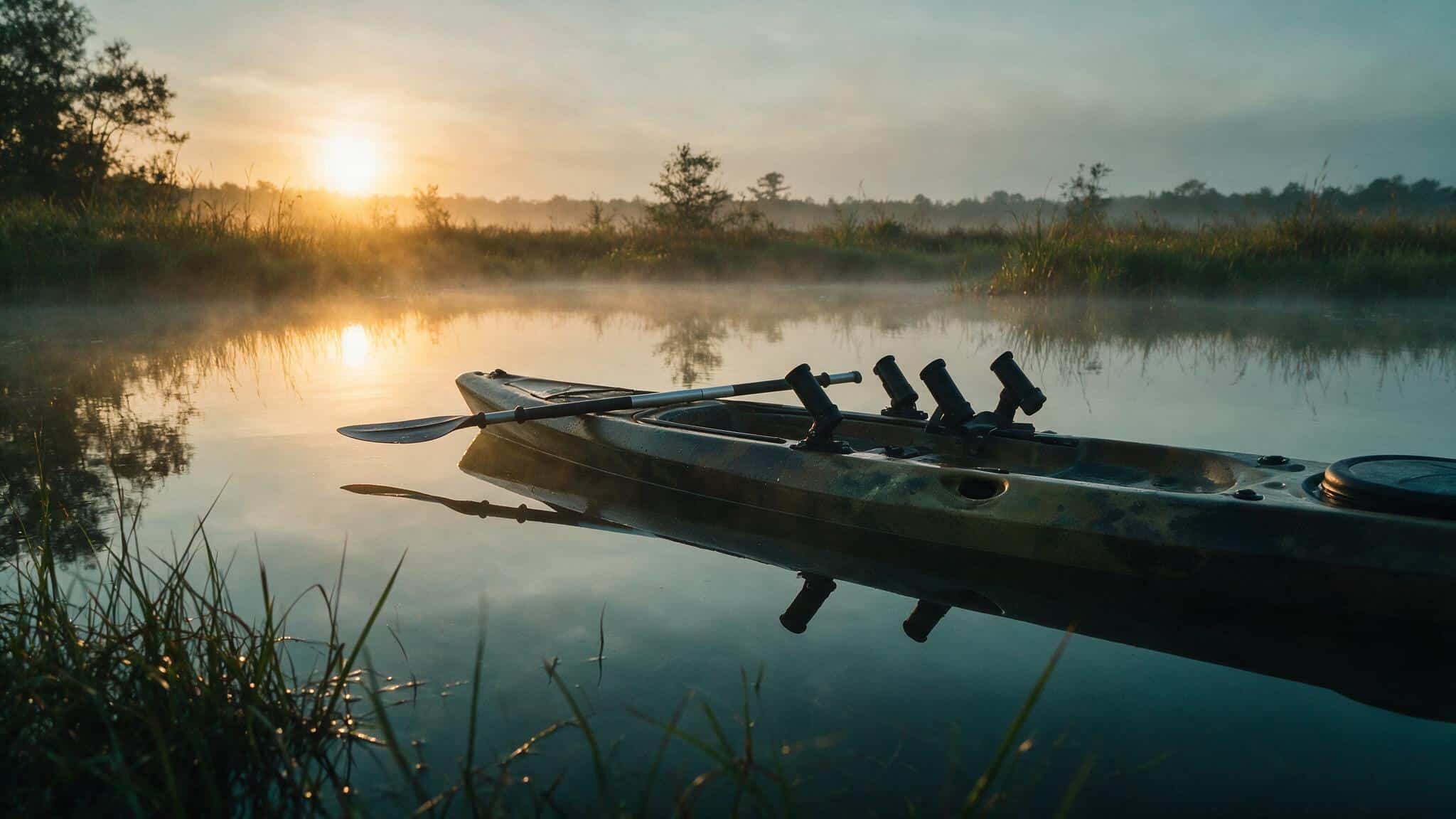
Kayak fishing means exactly what it says: fishing from a kayak instead of a traditional boat or the bank. It sits in a strange, useful middle ground. You get access to water a shoreline angler can’t reach, without the cost, storage headache, or launch-ramp hassle of owning a powered boat.
why anglers switch to kayaks
The obvious reason is price. A capable fishing kayak with rod holders and a basic seat runs a fraction of what you’d spend on even a modest bass boat, and there’s no trailer, no boat ramp fee at some lakes, and no engine to maintain. The less obvious reason is access. Kayaks draft almost nothing, so you can paddle into skinny water, tight creek mouths, and weedy coves that push a motorized hull away. I’ve caught bass sitting in six inches of water off the back of a swamped log because nothing with a motor could get near it.
choosing your first kayak
Sit-on-top kayaks dominate the fishing market for good reason. They’re more stable than sit-inside models, self-drain through scupper holes if water gets in, and let you move around and even stand up in calmer conditions. Sit-inside kayaks keep you drier and can be faster to paddle, but they’re a harder sell for fishing once you factor in gear storage and stability.
Pedal-drive kayaks free up your hands for fishing while your legs do the work, which matters a lot on windy days or long paddles to a spot. They cost considerably more and weigh more too, which is a real consideration if you’re loading and unloading solo. For a first kayak, I’d tell most beginners to start with a stable paddle model in the twelve to thirteen foot range rather than jumping straight to a pedal drive. Learn the basics cheap, then upgrade once you know what you actually want out of the boat.
rigging without overdoing it
It’s easy to watch kayak fishing videos and feel like you need a milk crate full of electronics before your first trip. You don’t. A rod holder or two, a small anchor or drift chute, and a way to store your catch or tackle within reach covers most situations. Add a fish finder later if you find yourself fishing water where structure isn’t visible from the surface.
Gear choice matters more on a kayak than in a boat, mostly because of storage space and the annoyance of losing something overboard. This is where compact setups earn their keep. A shorter, well-balanced rod is easier to manage in a cockpit than something built for casting off a bass boat’s deck, and picking the right one is worth the time; our guide on how to choose the right fishing rod covers the tradeoffs in more depth. Pair it with a reel sized to match, since an oversized reel just adds bulk you’ll be fighting with in a tight cockpit. If you’re unsure what size makes sense, our spinning reel buying guide walks through sizing for exactly this kind of compact setup.
paddling and boat control basics
You don’t need advanced paddling skills to fish from a kayak, but a few habits make the day easier. Keep your paddle within reach at all times, even mid-fight with a fish, because current or wind will turn you sideways the moment you set it down. Learn to brace the paddle against the water for stability rather than gripping the sides of the kayak when a wake or wave rocks you. Practice getting in and out at your local launch before you try it somewhere with current or a steep bank, since that transition is where most beginner mishaps happen.
a straightforward safety note
Wear your personal flotation device. Not clipped to the deck, not stuffed in the hatch, actually worn, the whole time you’re on the water. I capsized in four feet of calm water on my first trip, which was embarrassing but harmless. Capsizing in cold water, current, or after dark is a different situation entirely, and a PFD is the one piece of gear that makes almost every version of that mistake survivable. Tell someone where you’re launching and roughly when you plan to be back, check the wind forecast before you go, and know that cold water drops your swimming ability fast even when the air temperature feels fine. None of this should scare you off the water. It just means treating a kayak like the small watercraft it is.
where kayaks really shine
Kayaks are made for lakes, ponds, protected coves, slow rivers, and marshes, basically any water where wind chop and boat traffic stay manageable. Big open water and heavy current are tougher and demand more experience and different gear than a beginner setup provides. If lake fishing is your main target, a kayak is often the single best way to reach water that shore anglers and boat owners both struggle to fish effectively.
getting on the water for the first time
Rent before you buy if a local outfitter offers it. Our guide for anyone just getting started covers that rent-versus-buy decision in more depth. An afternoon in a rented kayak will tell you more about seat comfort, stability, and whether you actually enjoy paddling than any amount of reading. When you do buy, resist the urge to max out your budget on the boat itself. Spend a bit less on the kayak and put the difference toward a good PFD, a paddle leash, and the rod and reel combo that actually fits how you fish.