Kayak fishing for beginners looks simple in videos: paddle out, drop a line, reel in dinner. My first real trip took longer to rig than to fish, because I bought a kayak two sizes too small for my gear and spent fifteen minutes redistributing tackle boxes just to get the thing sitting level in the water.
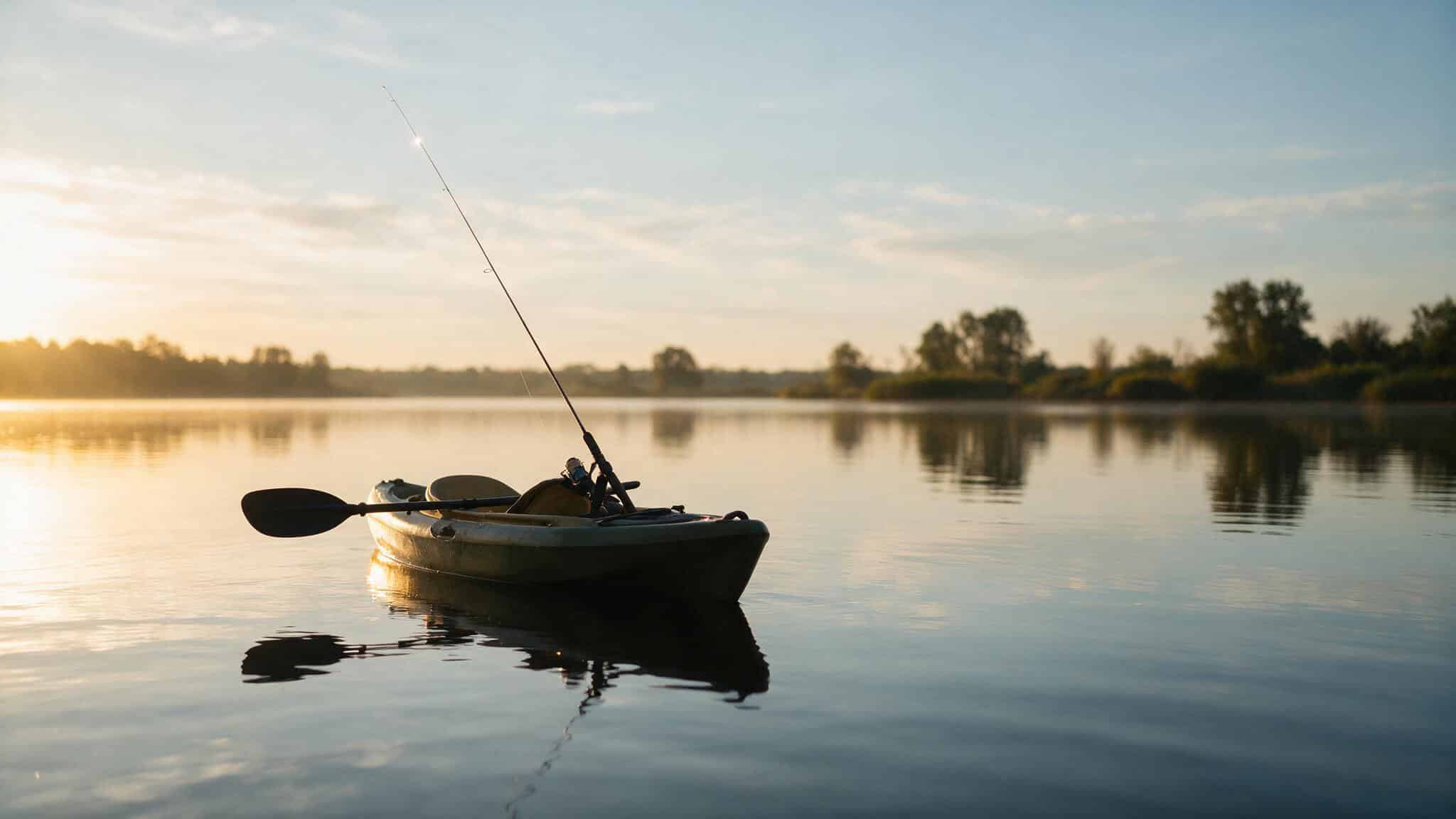
why kayak fishing for beginners is worth the learning curve
Kayak fishing for beginners is worth the early frustration because it opens up water that boat owners and bank anglers both struggle to reach. You can slide into skinny coves, glide over grass flats without a motor spooking every fish in range, and launch from spots with no ramp at all. The cost of entry is also a fraction of what a bass boat runs, which matters if you are not sure yet how serious this hobby is going to get. None of that means kayak fishing for beginners is effortless. You are learning boat control, casting from a seated position, and managing a rod, a paddle, and sometimes a net all within arm’s reach of each other. It just means the learning curve is short enough that most people clear it within a few trips.
choosing your first kayak
Sit-on-top kayaks dominate kayak fishing for beginners for good reason: they self-drain, they are harder to flip than a sit-inside, and falling off one in warm water is a minor inconvenience rather than an emergency. Width matters more than length when you are new. A wider hull in the 30 to 34 inch range trades a little top speed for stability, and stability is what lets you stand up to cast or fight a fish without white-knuckling the sides. Pedal-drive kayaks free up your hands for fishing the entire time, but they cost significantly more and add mechanical parts that can fail. A paddle kayak in the 10 to 12 foot range is a completely reasonable place to start, and plenty of experienced anglers still prefer one for how light it is to load and unload alone.
must-have gear beyond the kayak itself
A proper fitting life jacket is not optional, and kayak-specific vests exist because a bulky standard life jacket makes casting awkward for hours at a time. A paddle leash keeps your only way home from drifting off if you set it down to fight a fish. A milk crate or purpose-built crate system behind the seat holds rod holders, a tackle tray, and anything else you need within reach, since there is no floor space to spread gear out like you would in a boat. A whistle, a dry bag for your phone, and a basic anchor or drift chute round out the list. None of this needs to be expensive on day one. Most of it gets added gradually as you figure out what your water and target species actually demand.
getting on the water safely
Check wind and water temperature before every trip, not just the weather forecast for rain. Wind under ten miles an hour is manageable for most beginners, but anything higher turns a calm-looking lake into real work and makes paddling back to the launch exhausting. Cold water is the bigger hazard most new paddlers underestimate. If the water is cold enough that an unplanned swim could cause shock, dress for the water temperature, not the air temperature, and tell someone where you are launching and when you expect to be back. A cheap marine radio or a fully charged phone in a waterproof case covers you if something goes wrong out of shouting range.
paddling and basic boat control
Good paddling technique matters more than raw strength. Use torso rotation instead of just your arms, and keep strokes close to the hull rather than reaching wide, which wastes energy and pulls you off a straight line. Practice a simple stationary brace, dipping the paddle flat against the water for extra stability, before you ever need it to save yourself from tipping. Drift socks slow you down in wind and current so you can fish a stretch of water properly instead of blowing past it in thirty seconds. None of these skills take long to learn, but practicing them on a calm afternoon beats figuring them out for the first time while fighting a fish.
where to launch and where to fish first
Small ponds, protected coves, and slow sections of river are the best classroom for kayak fishing for beginners, since the water stays calm and mistakes cost you very little. Public boat ramps work, but a lot of paddlers prefer soft launch points, grassy banks or sandy shorelines where you can slide a kayak in without hauling it over a dock. Our kayak fishing guide covers launch site selection and reading water from a kayak in a lot more depth once you are ready to go beyond the basics covered here. Start close to home on water you could swim back from if you had to, and expand your range only after a handful of uneventful trips.
landing and handling fish without flipping
Fighting a fish from a seated position changes the geometry of everything you already know about landing one. Keep the rod tip up and let the kayak absorb some of the fight instead of muscling everything from your arms alone. A short-handled net designed for kayaks beats a long-handled model, which is awkward to swing in a confined cockpit. Bring the fish alongside the kayak rather than trying to lift it up and over the side, and keep your weight centered as you net it. Most flips happen not from the fish itself but from an angler leaning too far to one side while reaching for something.
mistakes that slow beginners down
Overpacking is the most common one. A milk crate stuffed with four rods and six tackle boxes throws off your balance and clutters a cockpit that is smaller than it looks in photos. Skipping the practice paddle is another, since your first time on the water should not also be your first time bracing against a wake or a gust. Ignoring anchor and drift management wastes more fishing time than any gear mistake, since you spend half the trip paddling back to a spot the wind already pushed you away from. Fix those three habits early and everything else about kayak fishing for beginners gets easier fast.
Kayak fishing for beginners rewards patience with the setup more than it rewards spending more money. Get the seating, the leash, and the life jacket right before you worry about a second rod holder or a fish finder mounted on the bow. Start on water flat enough to make mistakes safely, and let your comfort level expand one trip at a time instead of all at once.